Ideas · Home office
20 Paper and Document Organization Ideas for Small Homes
Inbox-to-archive workflows, wall pockets, receipt envelopes, manual files and a shred box that stop paperwork piling up when you have no filing cabinet.
This guide has affiliate links. As an Amazon Associate we earn from qualifying purchases, at no extra cost to you. Learn more
Paperwork is small but it never stops arriving: mail, receipts, manuals, forms, recipes. Without a system it lands on the nearest flat surface and stays there.
Every idea below follows the same route: in, act, file or shred. Keep each stage small and vertical, and secure anything with personal details.
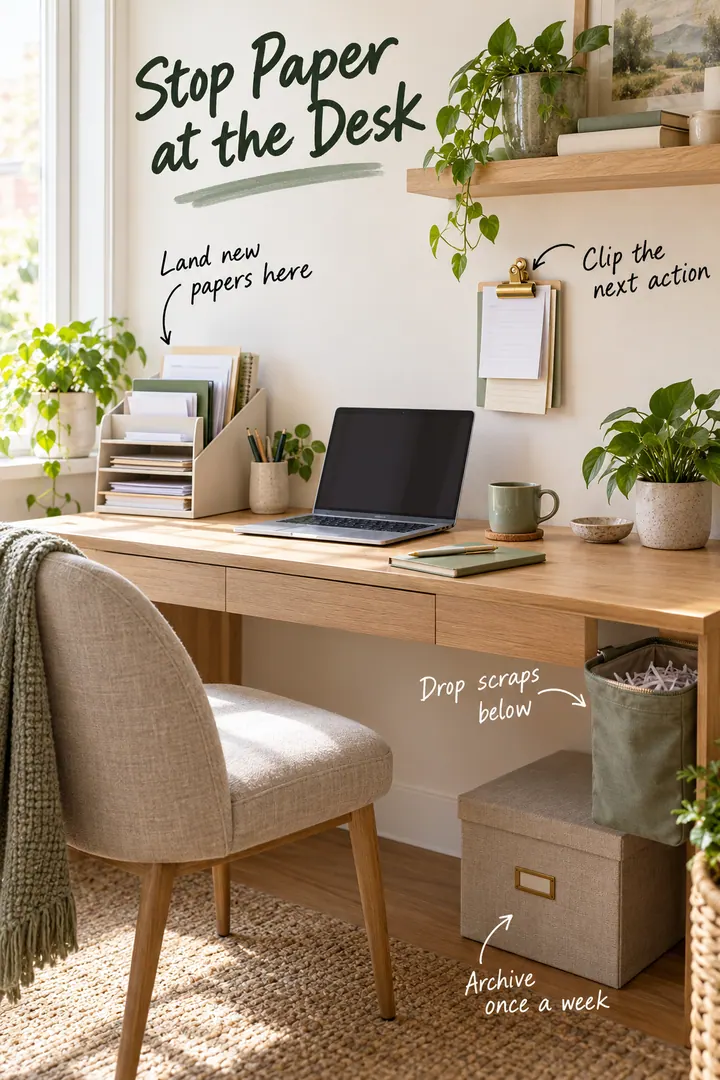
1. Inbox, next action, discard, archive
Give papers a route with four stops, each in a small vertical or under-desk space, so the writing area stays clear.
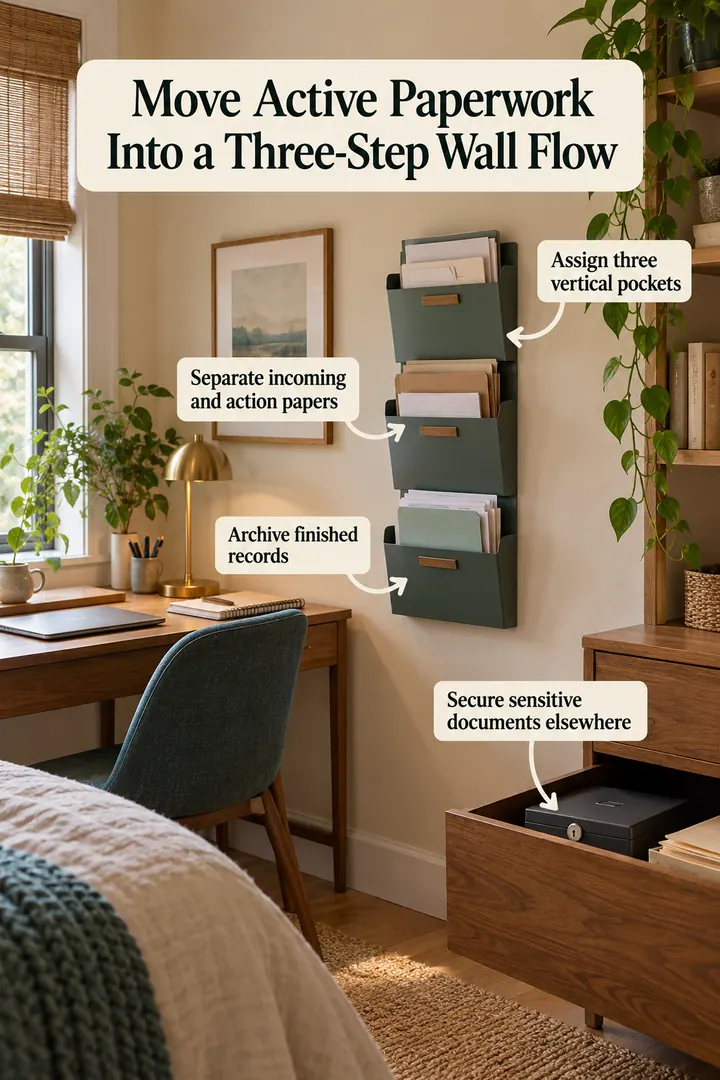
2. Three wall pockets
Separate incoming and action papers in vertical pockets on the wall and archive what's finished.
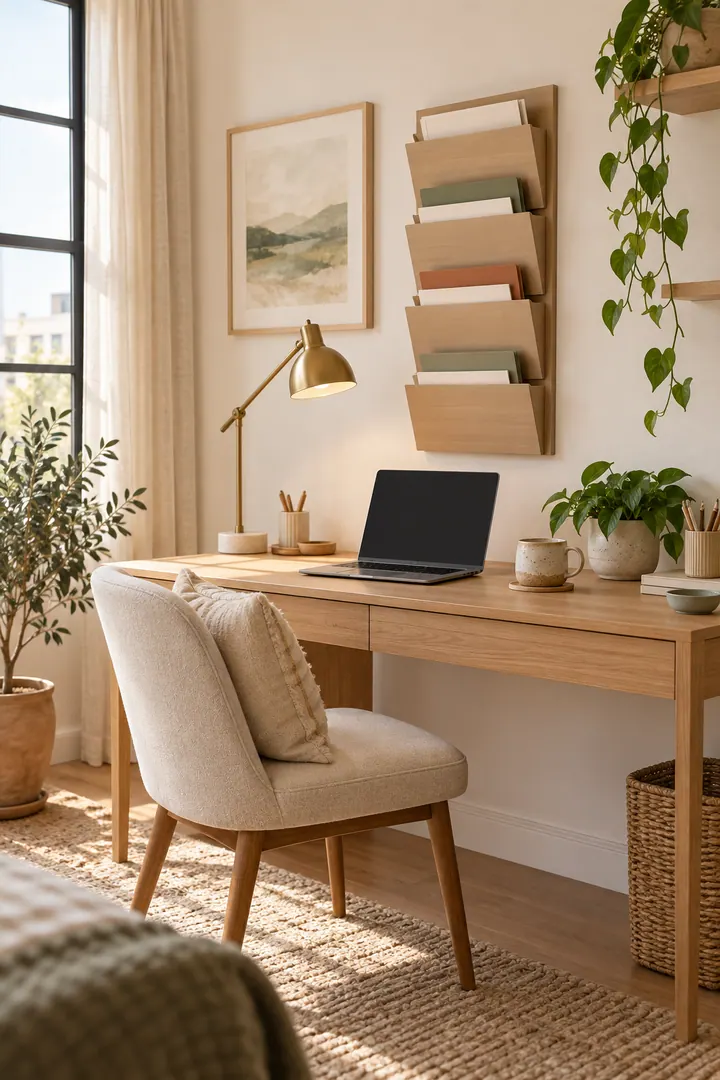
3. A vertical wall file sorter
A wall file keeps papers sorted and off the desk.
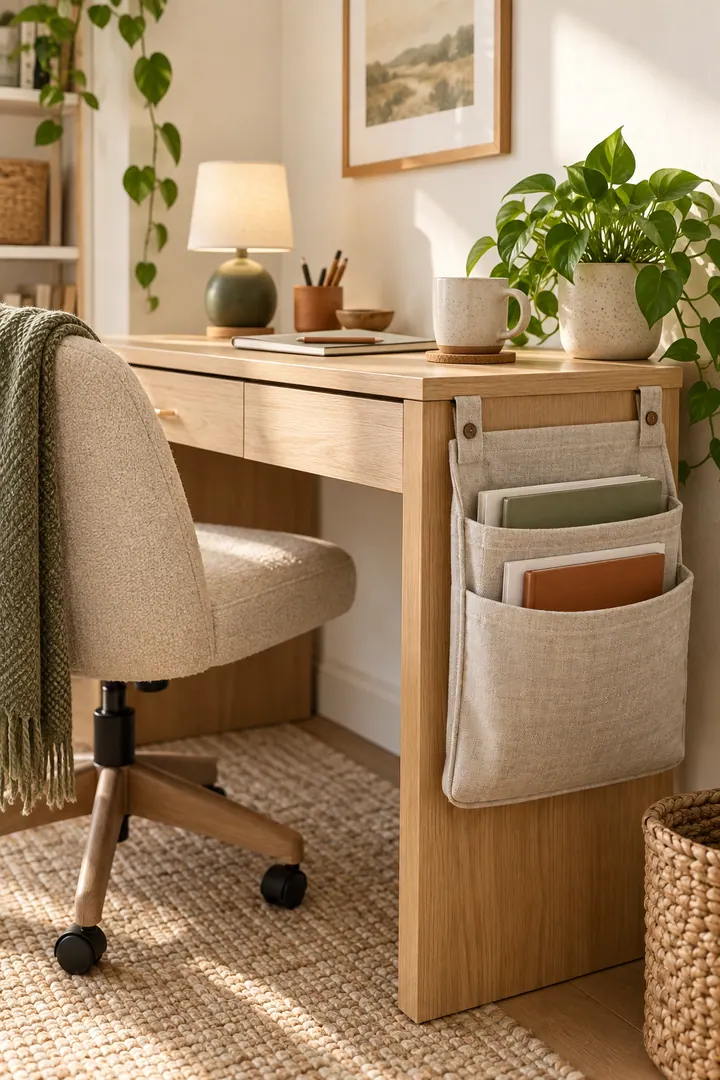
4. A file pocket on the desk side
A fabric pocket hanging on the side of the desk replaces a bulky filing unit.
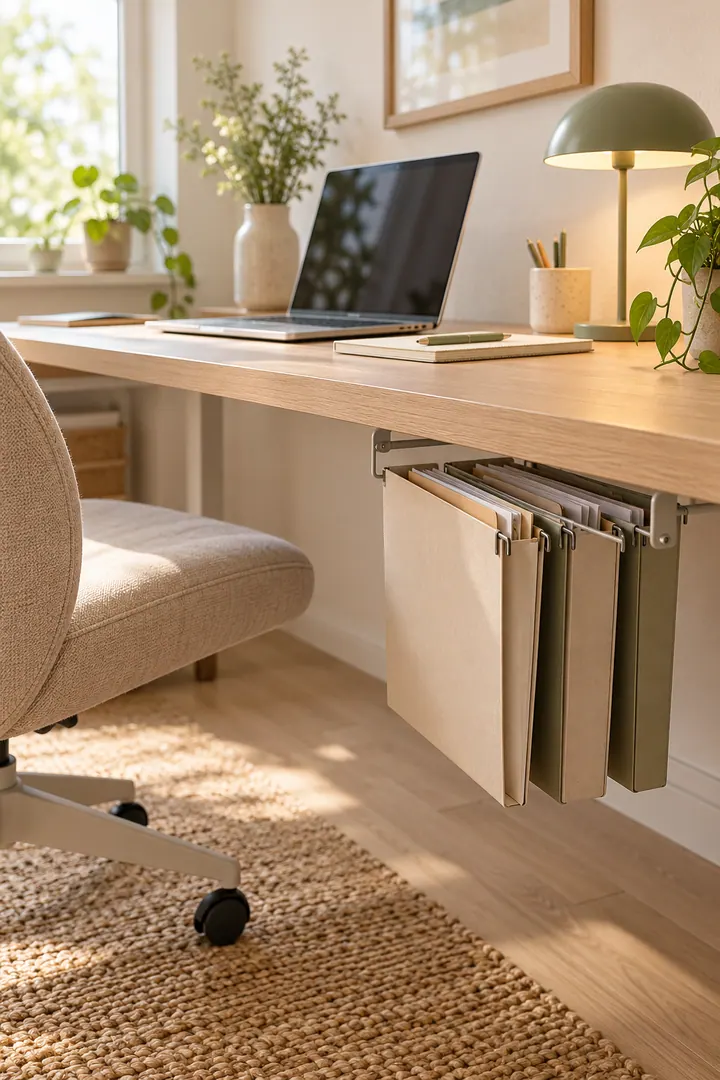
5. A rail for active folders
A slim rail under the side edge keeps current folders upright, visible and within reach.
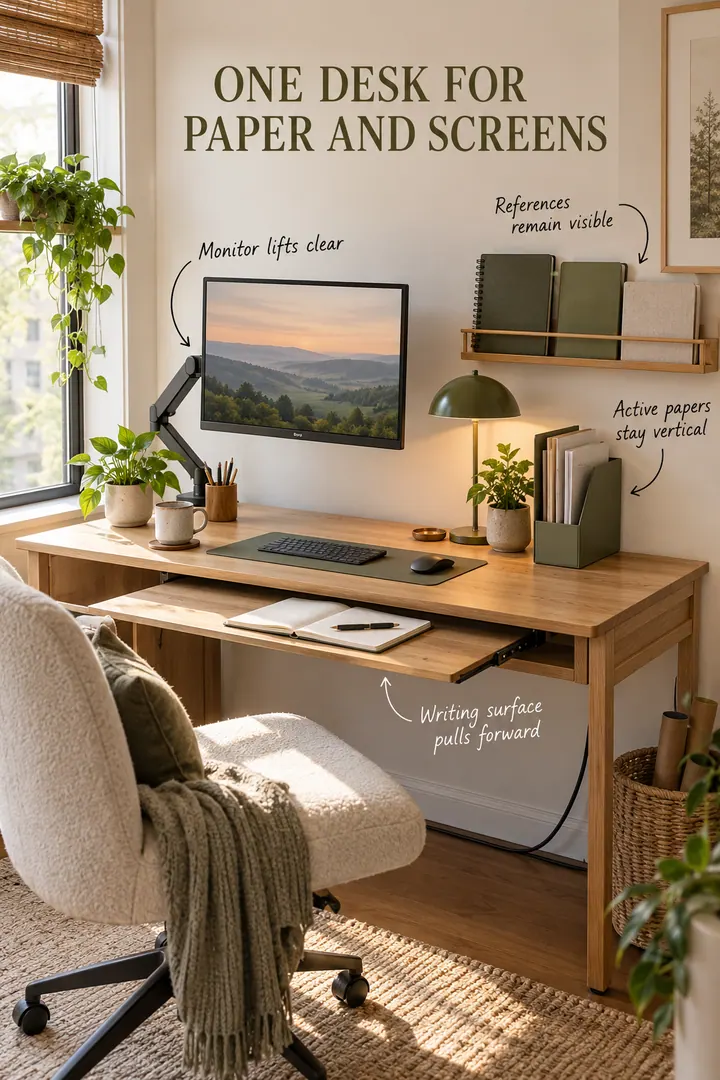
6. Layers for screen and paper
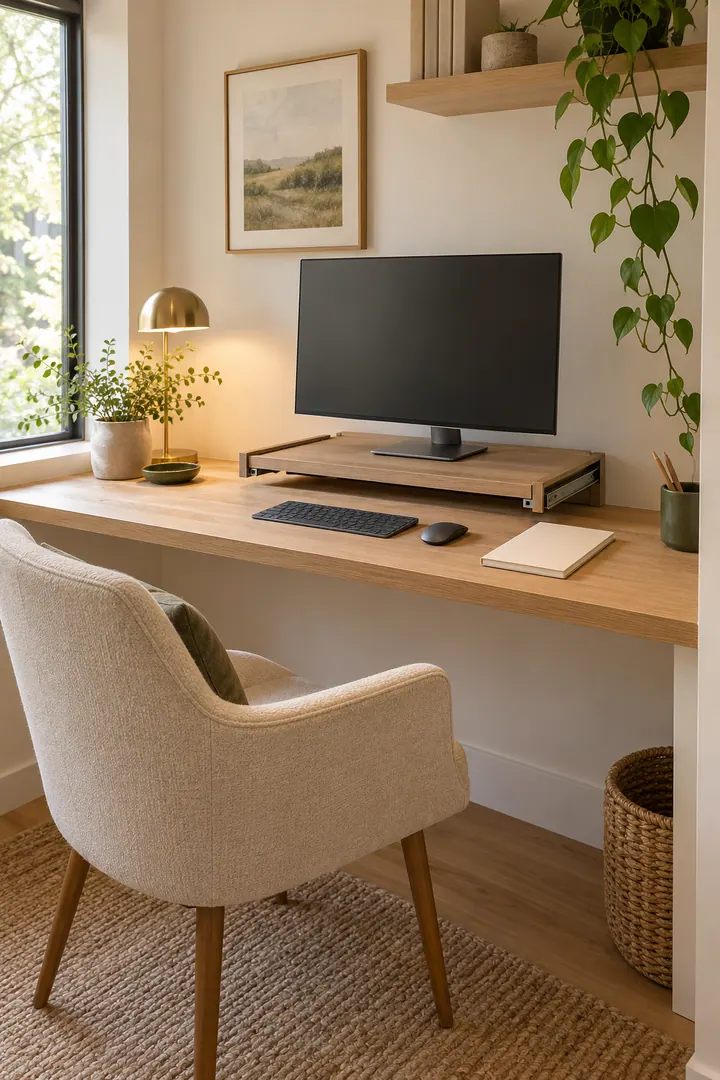
Lift the monitor, add a pull-forward writing surface and keep active papers upright beside it.
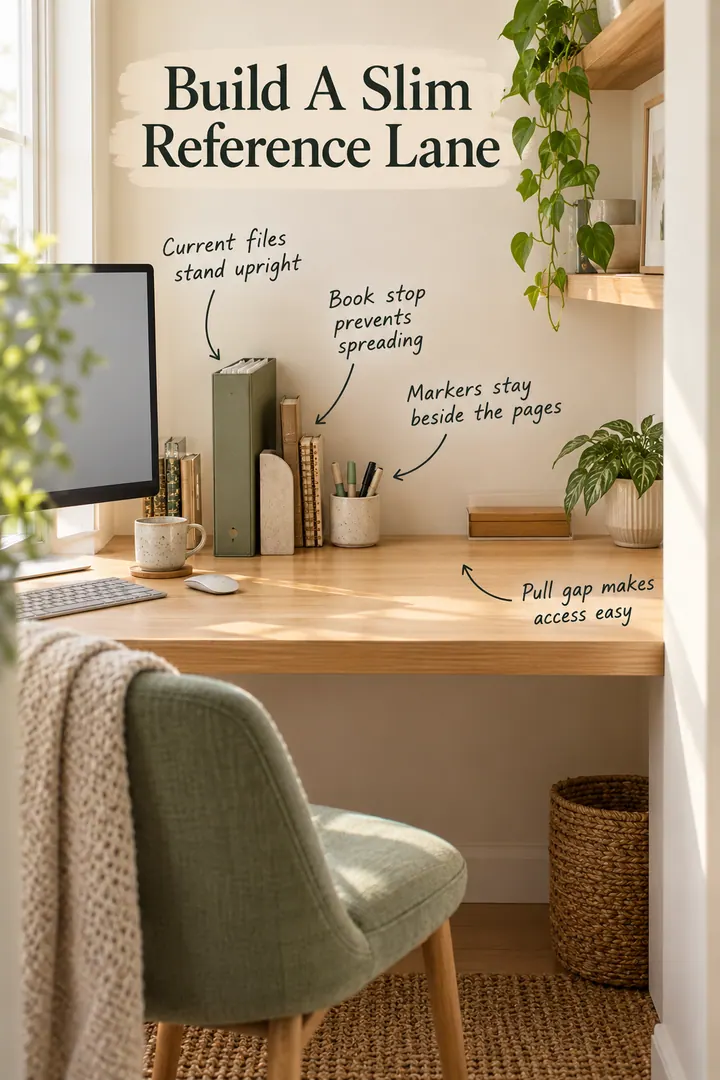
7. A narrow lane for reference
Keep current files and books upright in a lane beside the monitor with a book stop and marker cup.
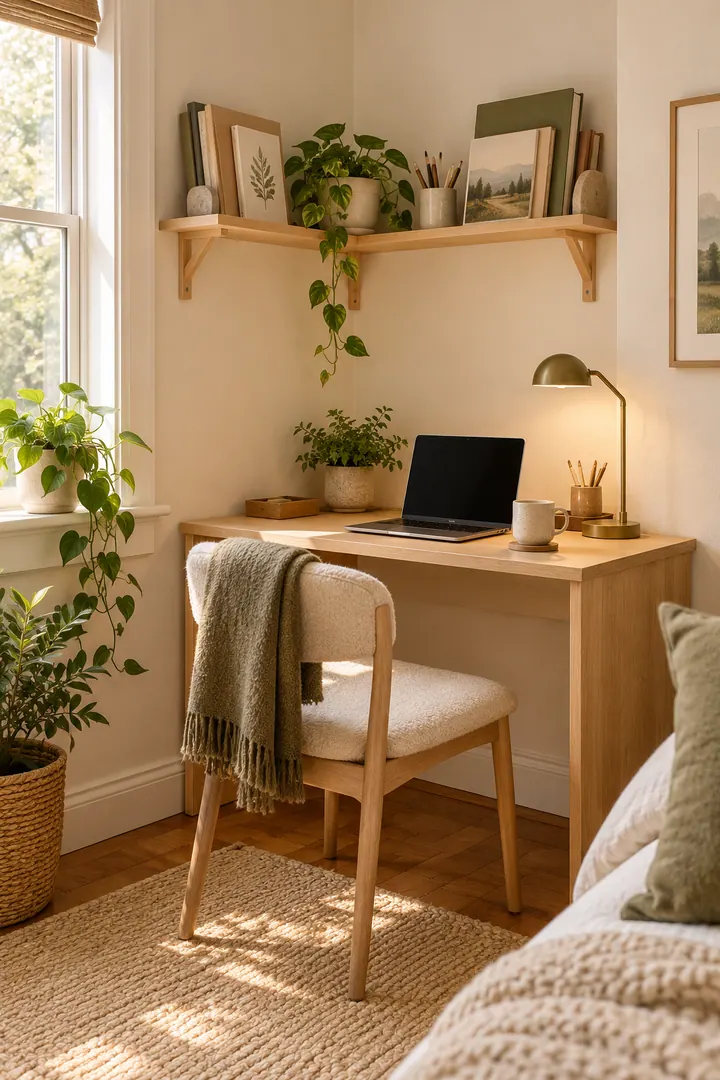
8. A corner shelf for references
A shallow shelf only around the back outside corner holds a few face-out folders and books.
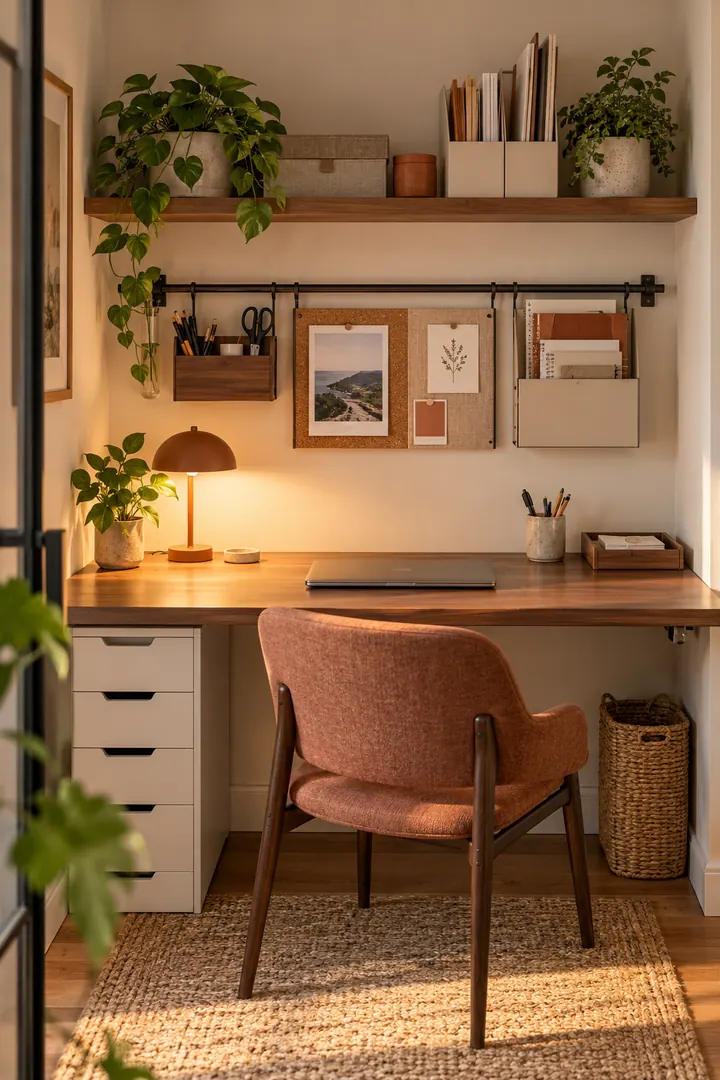
9. One reference rail
A single rail holds active notes and a pen cup above the desk; everything else gets archived.
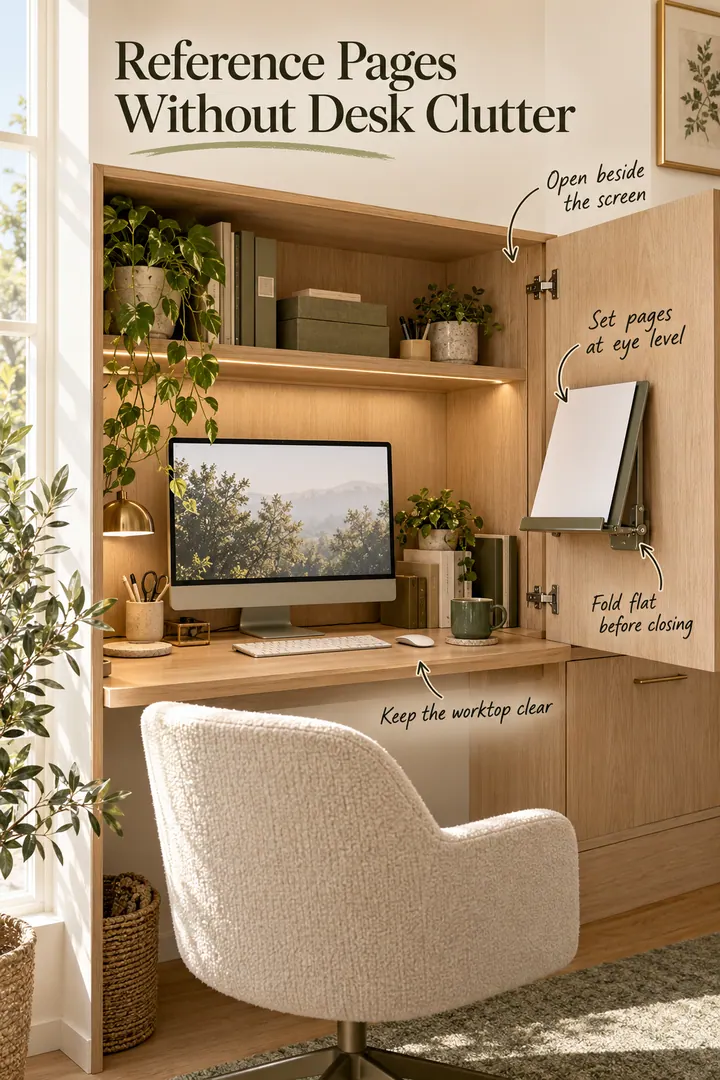
10. A fold-flat document holder
A slim stand inside a desk cabinet holds reference pages at eye level beside the monitor.
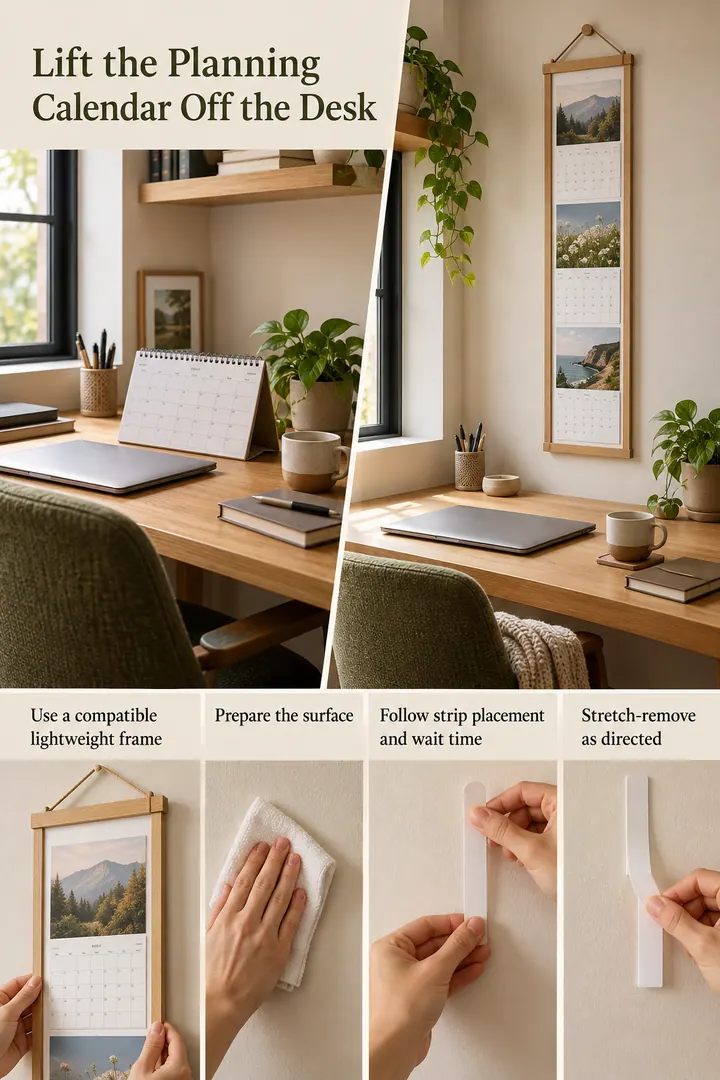
11. A calendar frame on removable strips
In a rental office, a lightweight calendar frame hangs on picture strips. Follow the wait time before hanging.
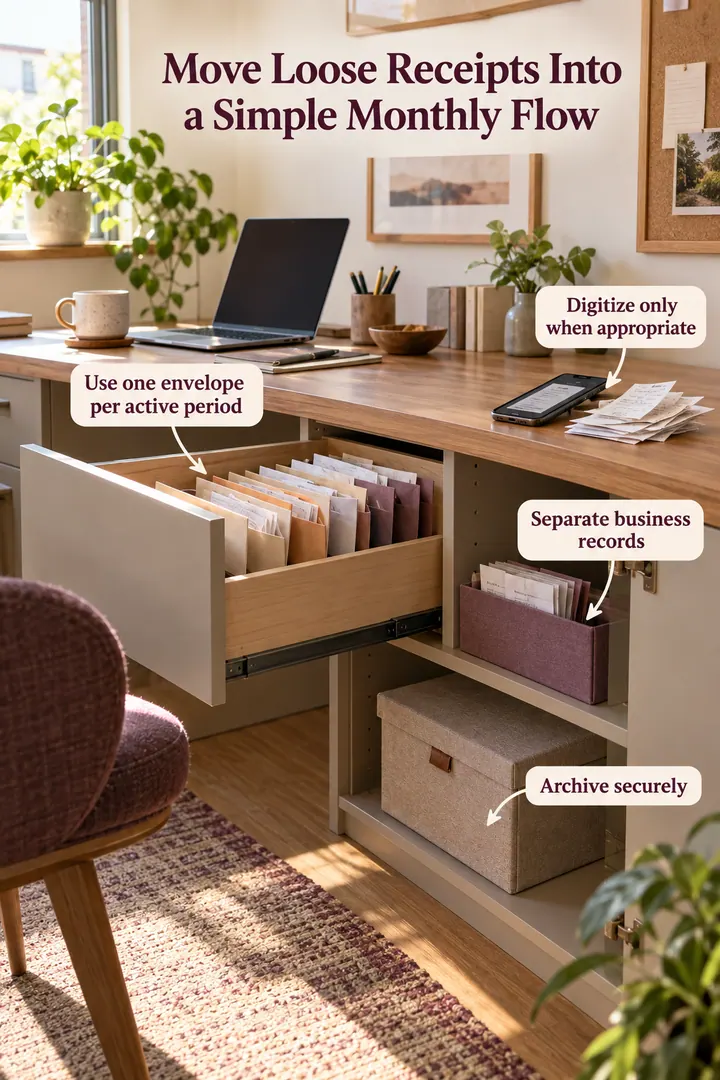
12. Monthly receipt envelopes
One envelope per month for receipts, business records separate, archived securely.
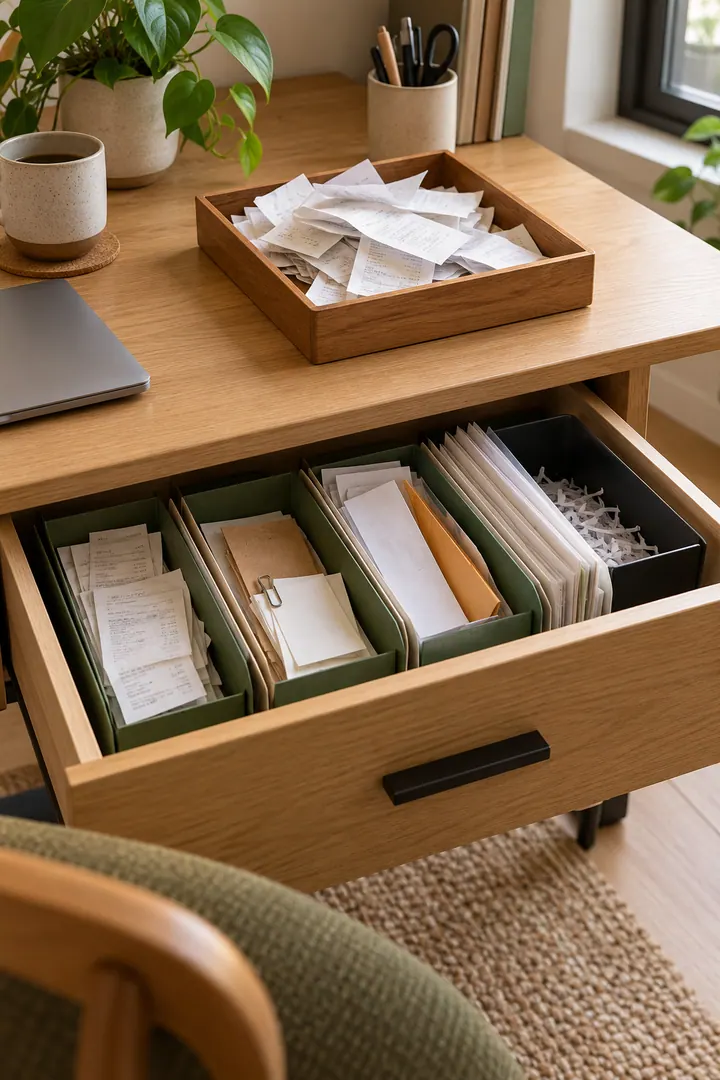
13. Receipt action folders
File, review and archive sections, processed on a routine and shredded when appropriate.
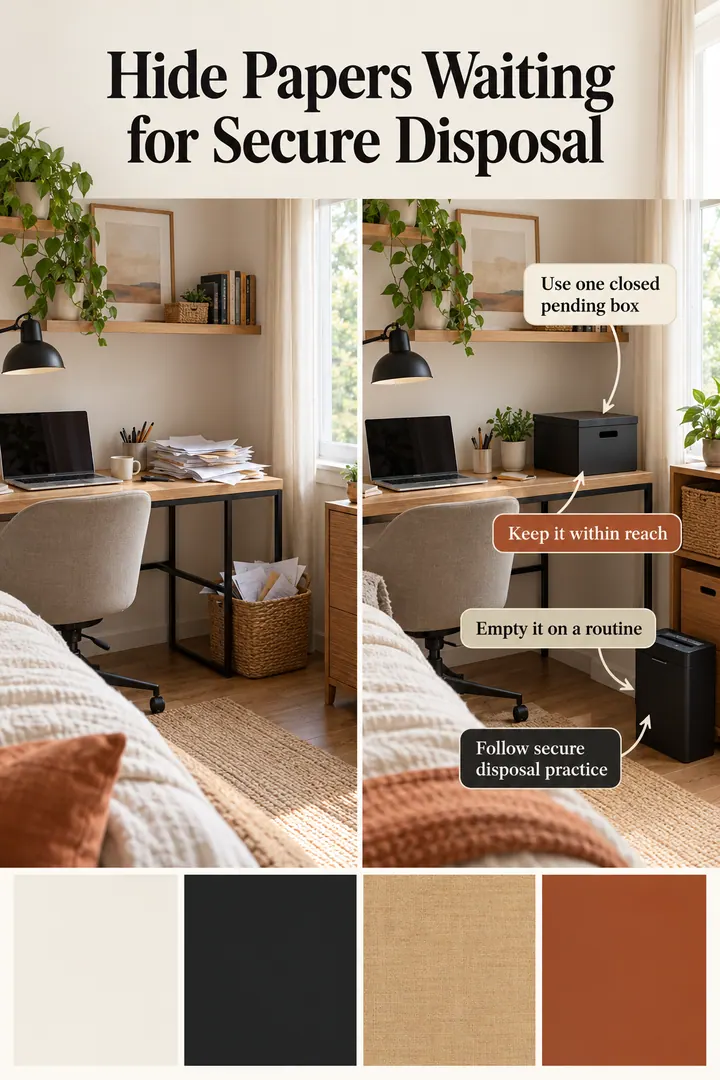
14. A shred-pending box
One closed box within reach for papers to shred, emptied on a routine.
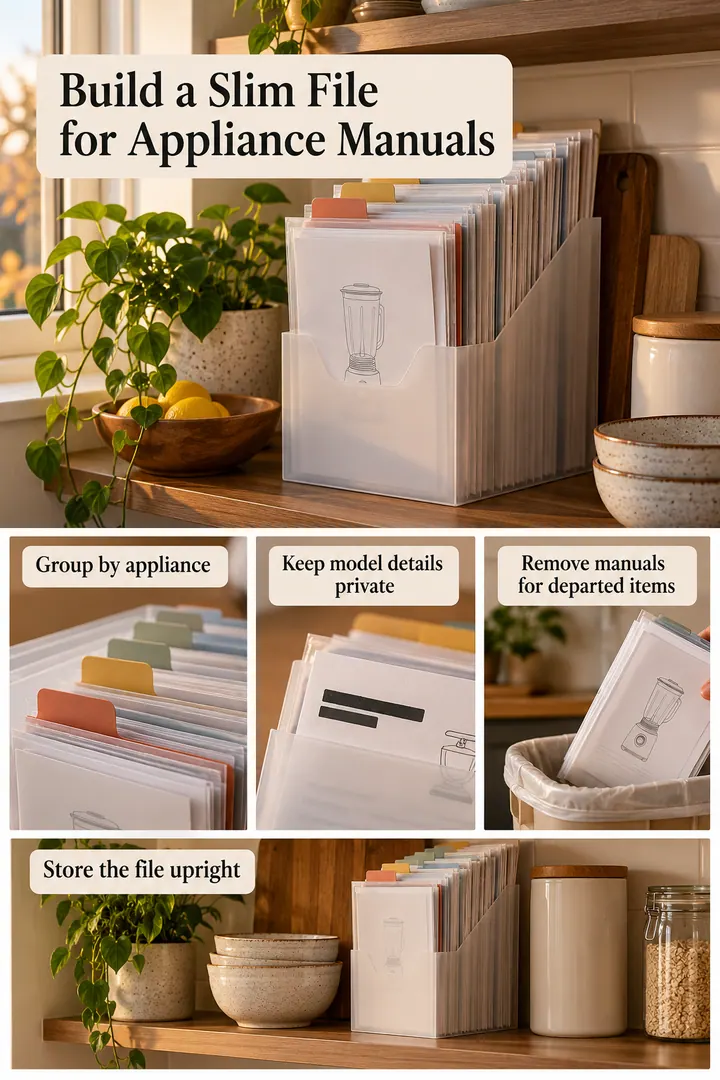
15. An accordion file for manuals
Group appliance manuals by appliance in one upright file and remove them when the item goes.
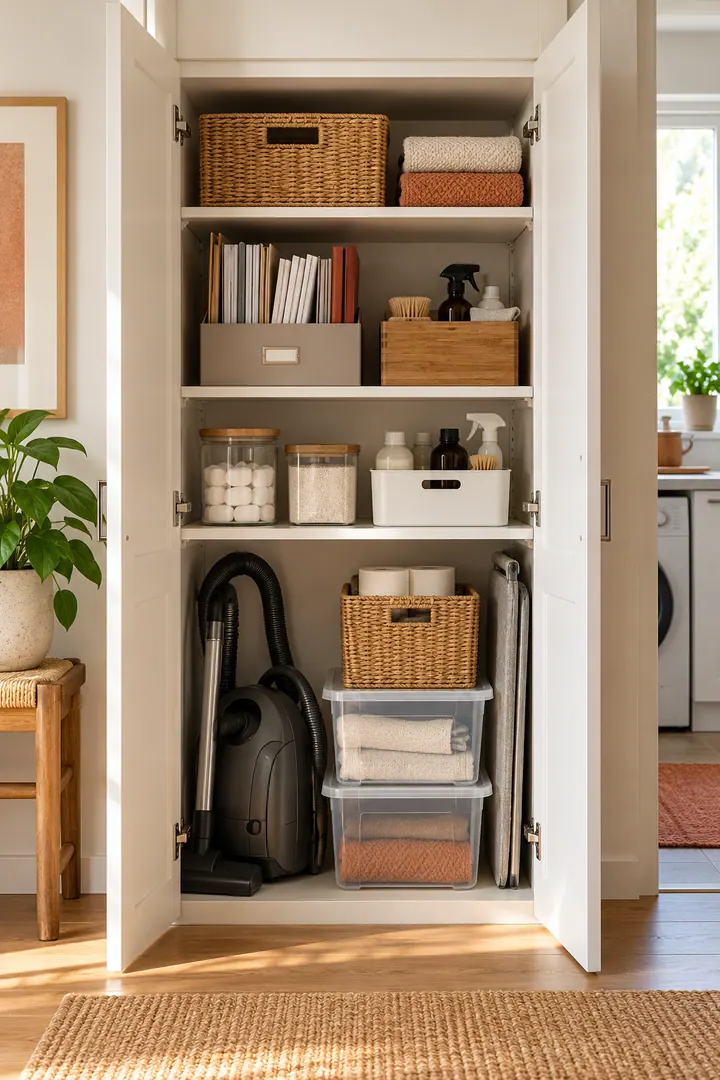
16. A manual folder in the utility cupboard
Keep current manuals together in one folder above the dry supplies.
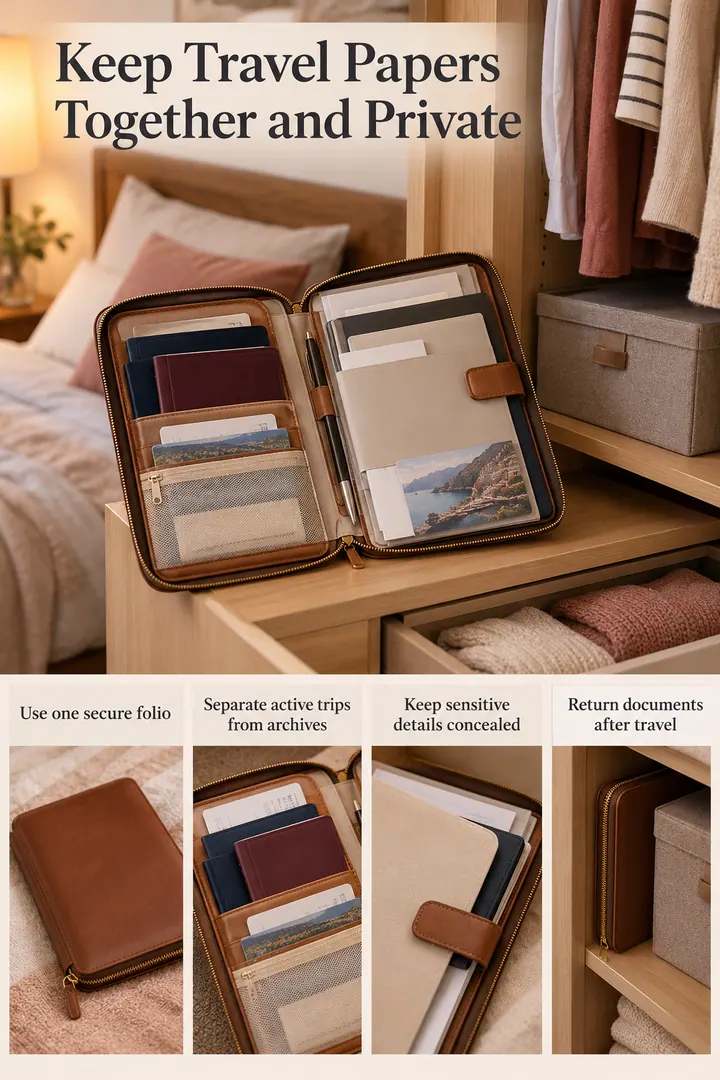
17. A secure travel document folio
One folio for active trip documents, separate from archives, returned after travel.
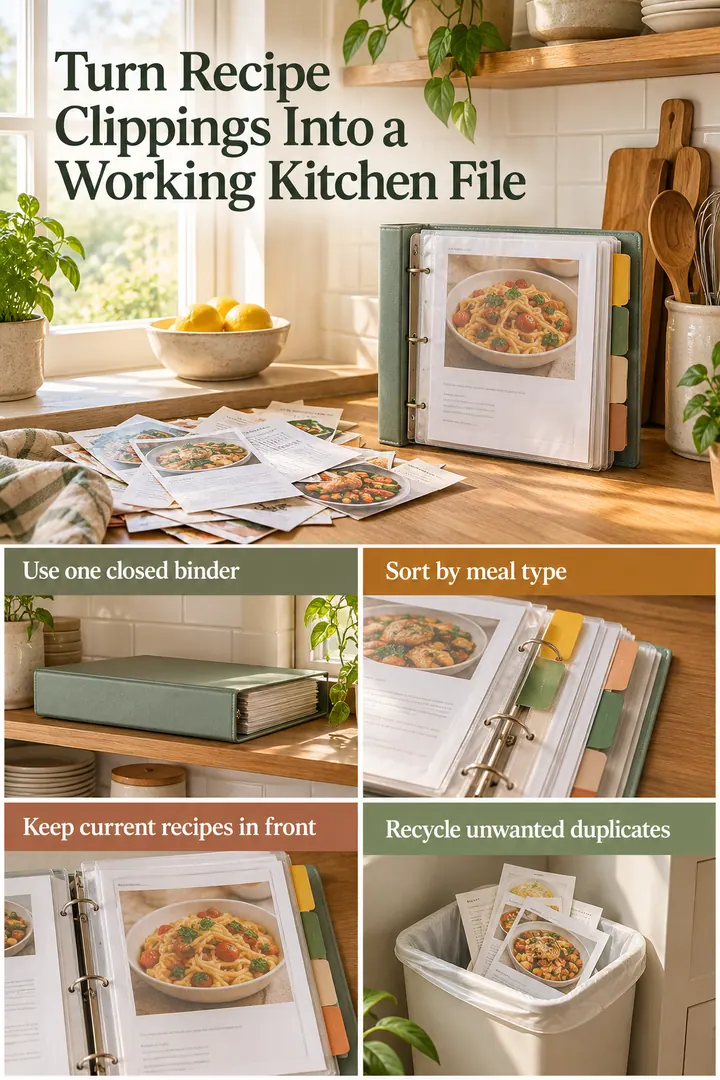
18. A recipe clipping binder
One closed binder sorted by meal type keeps loose recipes off the counter.
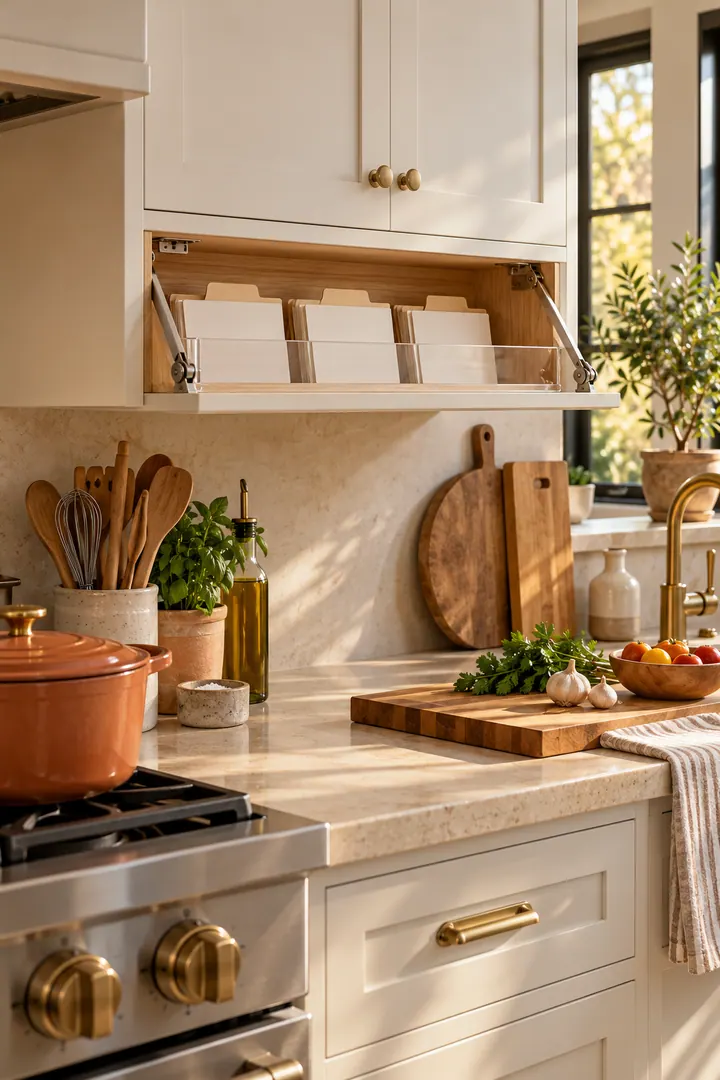
19. A recipe drawer under the cabinet
A shallow drop-front holder under an upper cabinet keeps a working set of recipe cards off the counter.
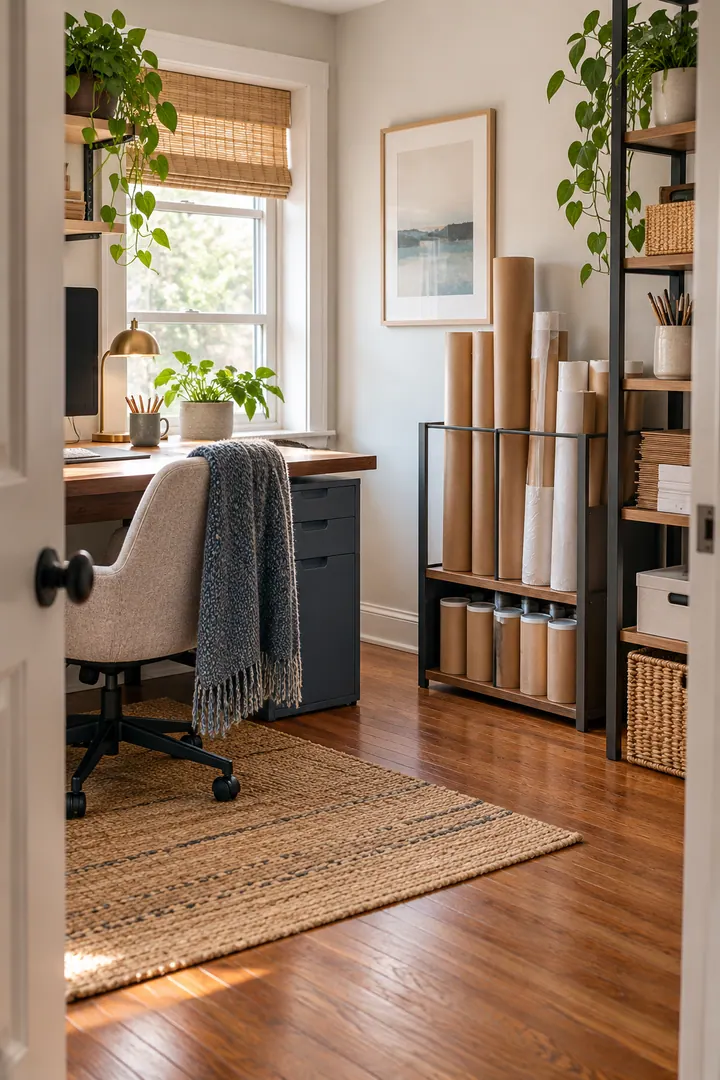
20. A corral for mailing tubes
Stand tubes in a tall corral, empty ones separate from packed ones.
Before you buy anything
- Process paper weekly; a small inbox can only overflow for seven days.
- Shred anything with account numbers or personal details.
Questions people ask
How do I organize paperwork without a filing cabinet?
Use a wall file or desk sorter for active papers, monthly envelopes for receipts, an accordion file for manuals and a box for shredding.
How do I stop mail piling up?
Sort it at the door: recycle junk right away, put action items in one slot and file the rest weekly.