Ideas · Bedroom
23 Small Bedroom Layout Ideas for Narrow, Shared and Attic Rooms
Where to put the bed, desk and dresser in a narrow, shared, sloped or awkward small bedroom, while keeping a clear path and safe space around windows and radiators.
This guide has affiliate links. As an Amazon Associate we earn from qualifying purchases, at no extra cost to you. Learn more
Before you buy any storage, get the layout right. In a small bedroom one good decision, like shifting the bed a foot toward one wall, can make the room easier to live in than any new piece of furniture.
The first rule is to protect one clear route from the door to the bed. After that, work around the fixed things: the window, the door swing, the radiator and any sloped ceiling.
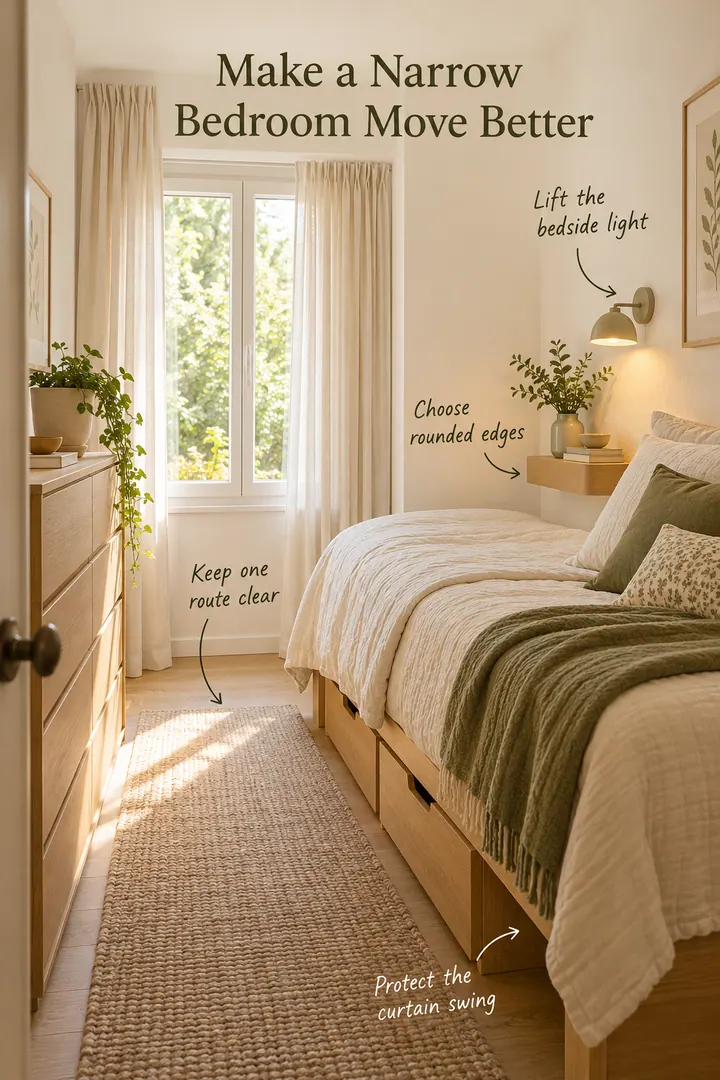
1. Protect one clear route in a narrow bedroom
Offset the bed so one side has a comfortable walkway from the door. Use a shallow rounded shelf and a wall light on the tight side, and low drawers under the bed.
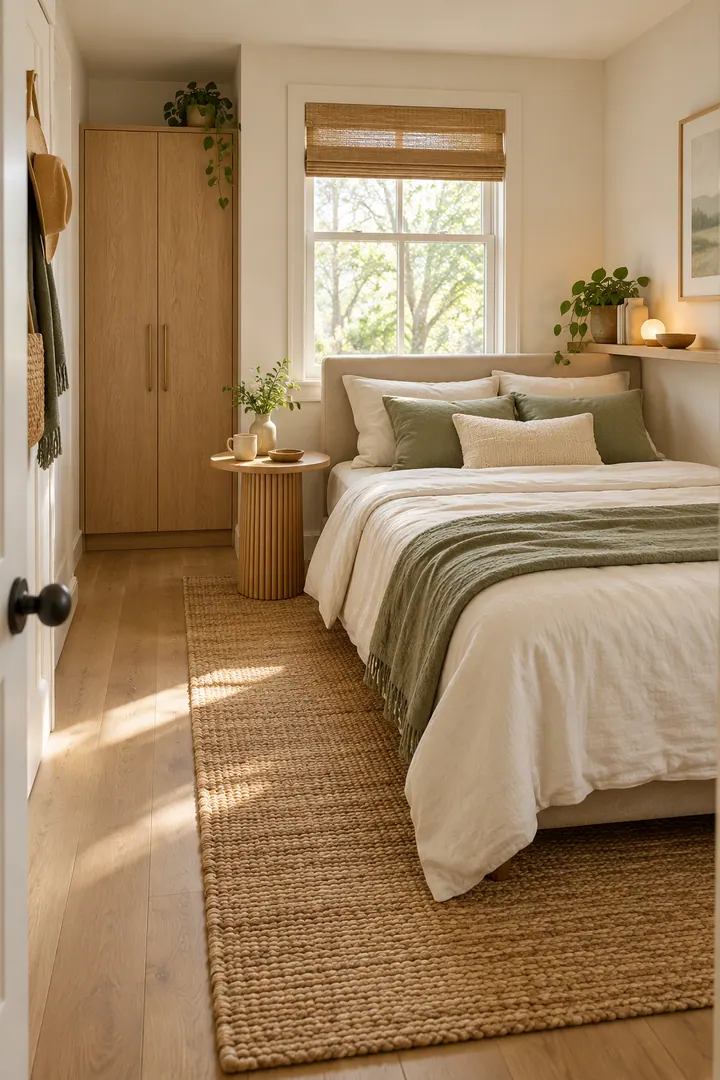
2. Skip the symmetry and offset the bed
Moving the bed closer to one wall gives you a wider lane on the side you use most. A narrow shelf covers the tight side and a small table fits on the open side.
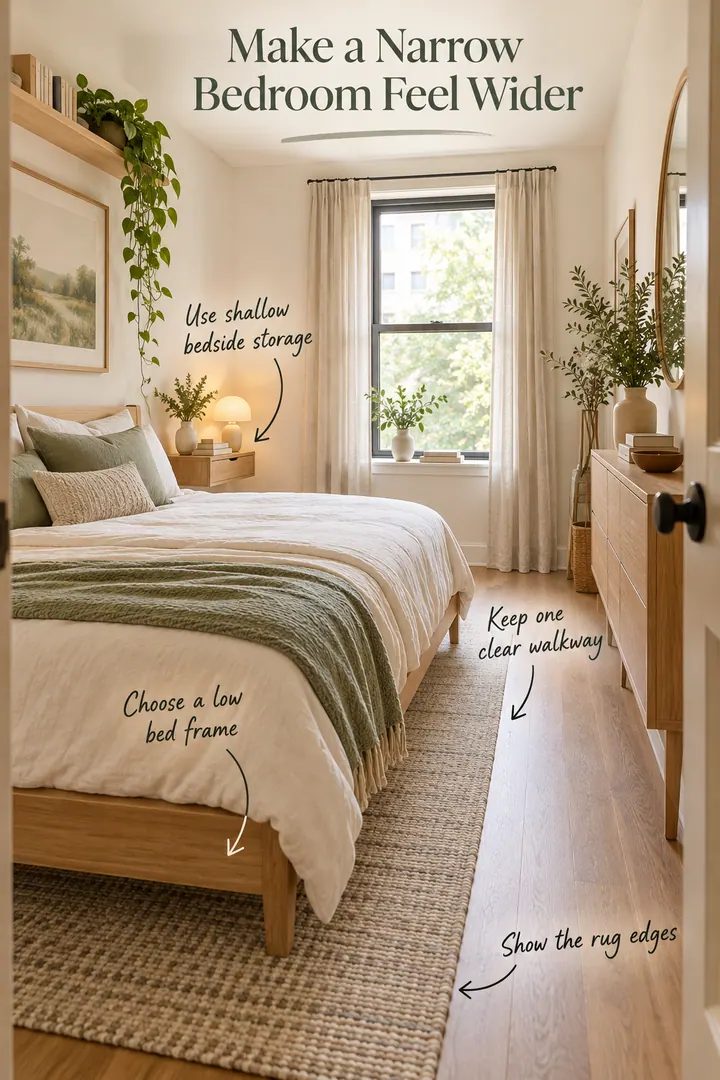
3. Low bed, visible rug edges, shallow storage
In a narrow room, a low bed, a rug that shows floor around it and shallow bedside storage all help the room feel less cramped while keeping the path open.
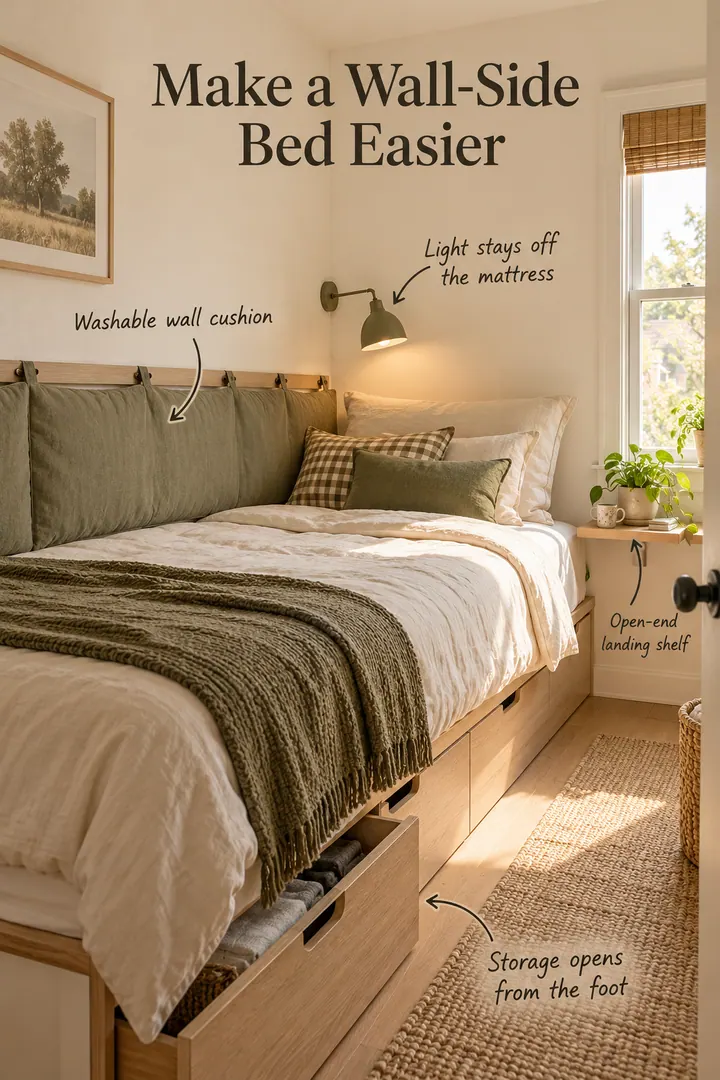
4. A bed against the wall that's still comfortable
If the bed has to touch the wall, add a washable wall cushion, a mounted reading light, a shelf at the open end and storage you reach from the foot.
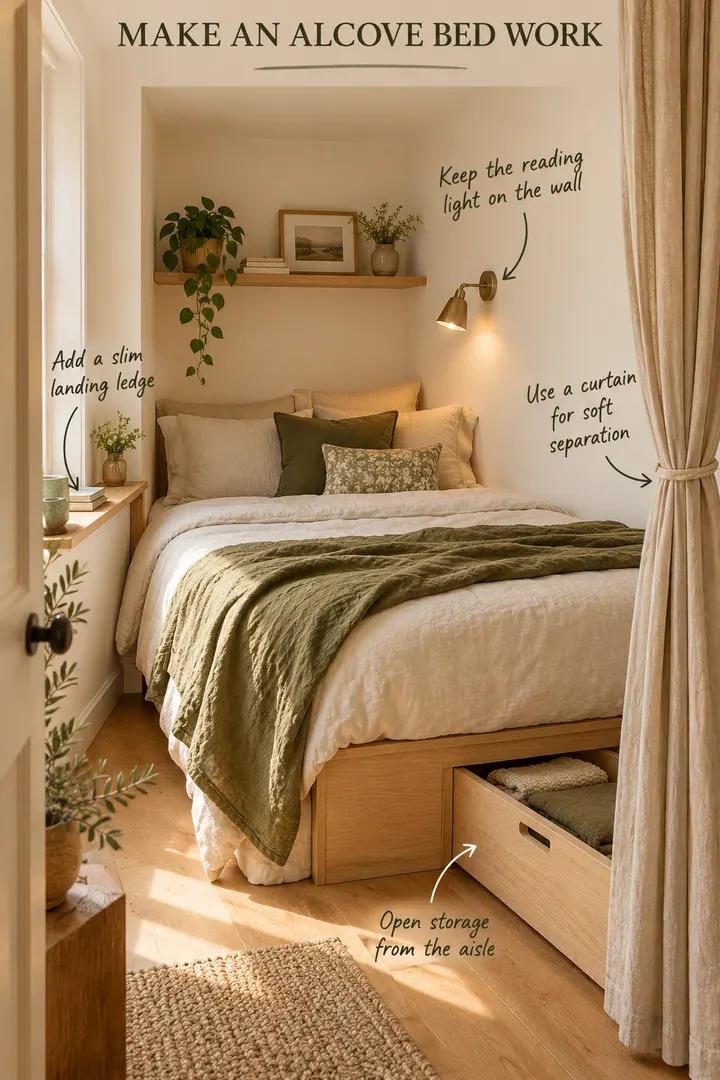
5. A bed tucked into an alcove
An alcove bed feels cozy when the essentials are easy to reach. Add a narrow ledge, a wall light, a soft curtain and storage that opens toward the aisle.
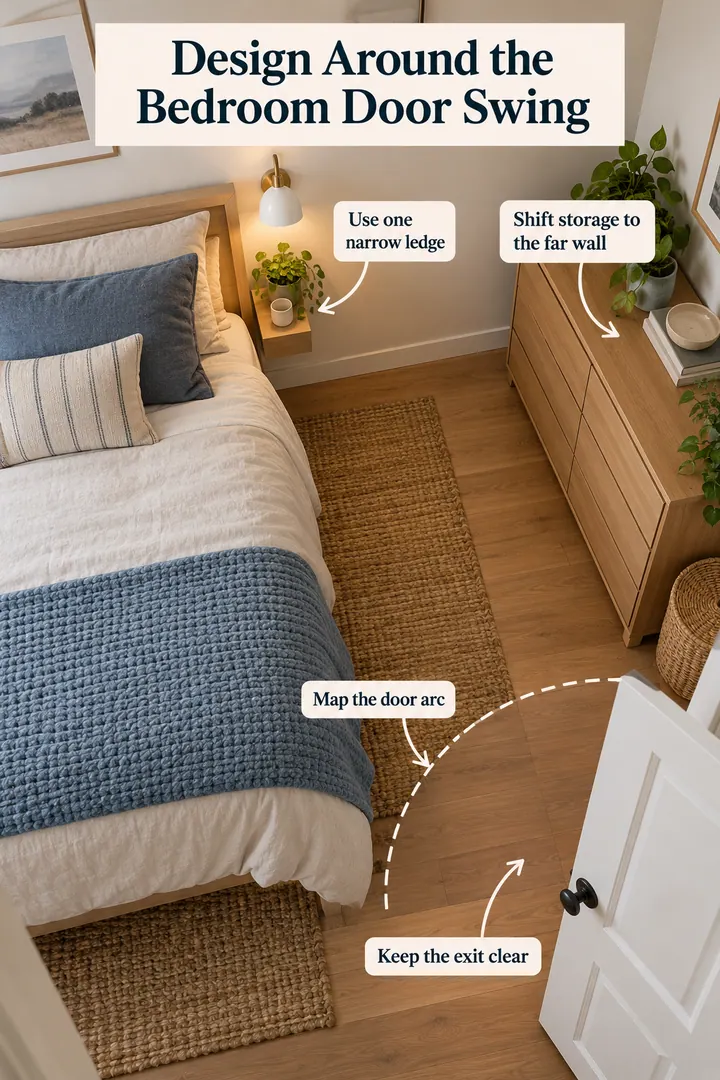
6. Map the door swing first
If the door swings into the room, mark its arc on the floor. Keep that zone clear, use a narrow ledge by the bed and move bigger storage to the far wall.
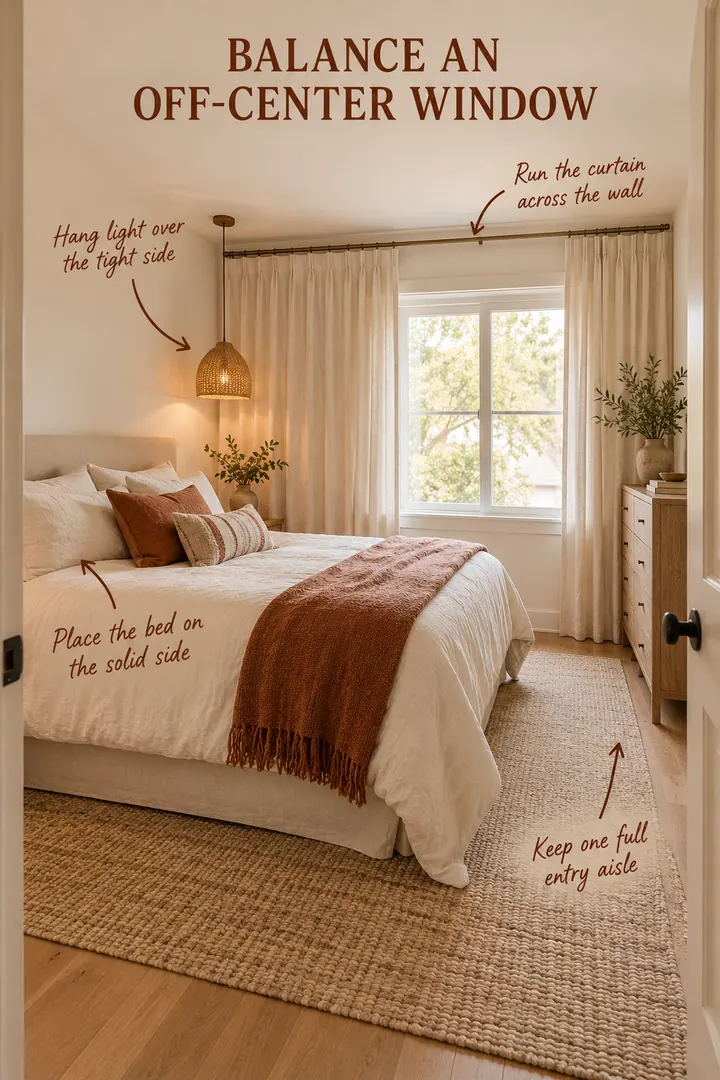
7. Work with an off-center window
Shift the bed toward the longer solid wall, hang one curtain across the whole window wall so it looks even, and put lighting over the tight side.
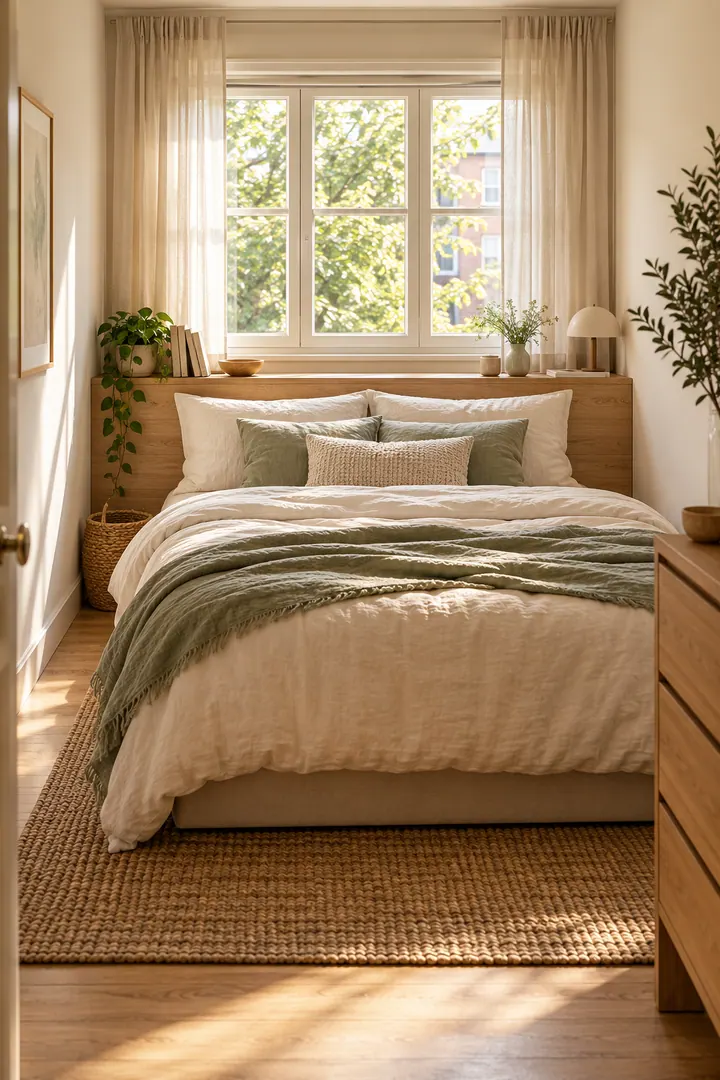
8. A bed under the window
A low headboard that runs across the window wall becomes a shallow ledge without blocking daylight. Make sure the curtains can still move.
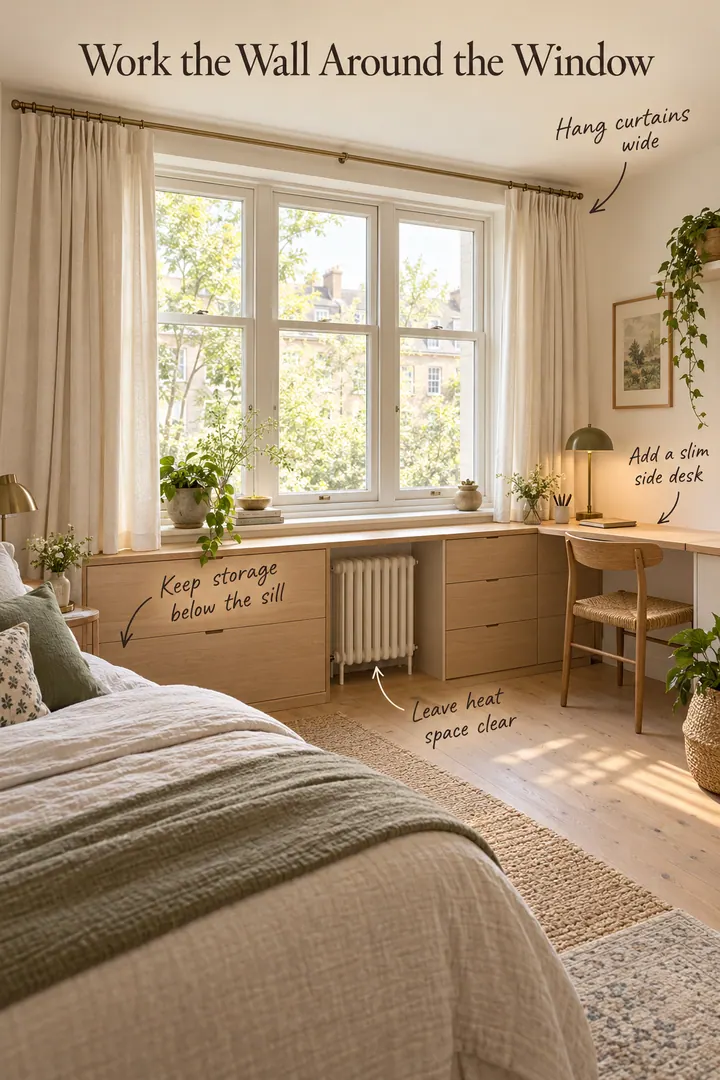
9. Low storage along the window wall
Low drawers and a narrow writing surface under the window add storage without blocking light. Keep the radiator gap open for airflow.
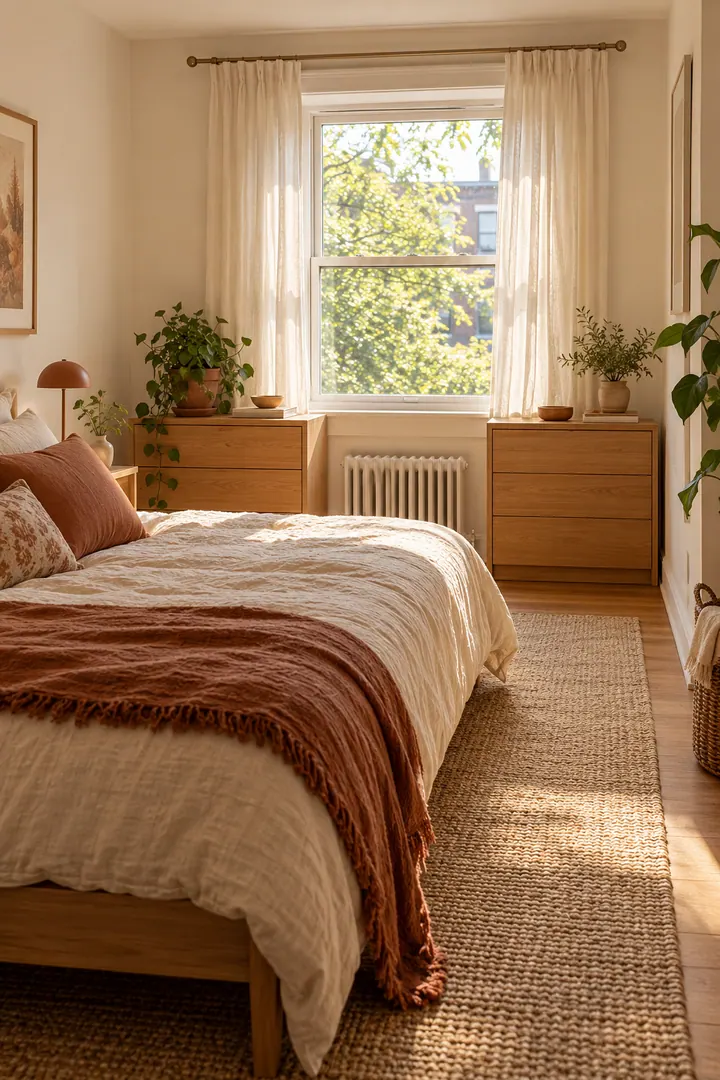
10. Two low dressers at the window edges
Two drawer units below the sill, one at each edge of the window, add clothing storage and leave the center open for light and curtains.
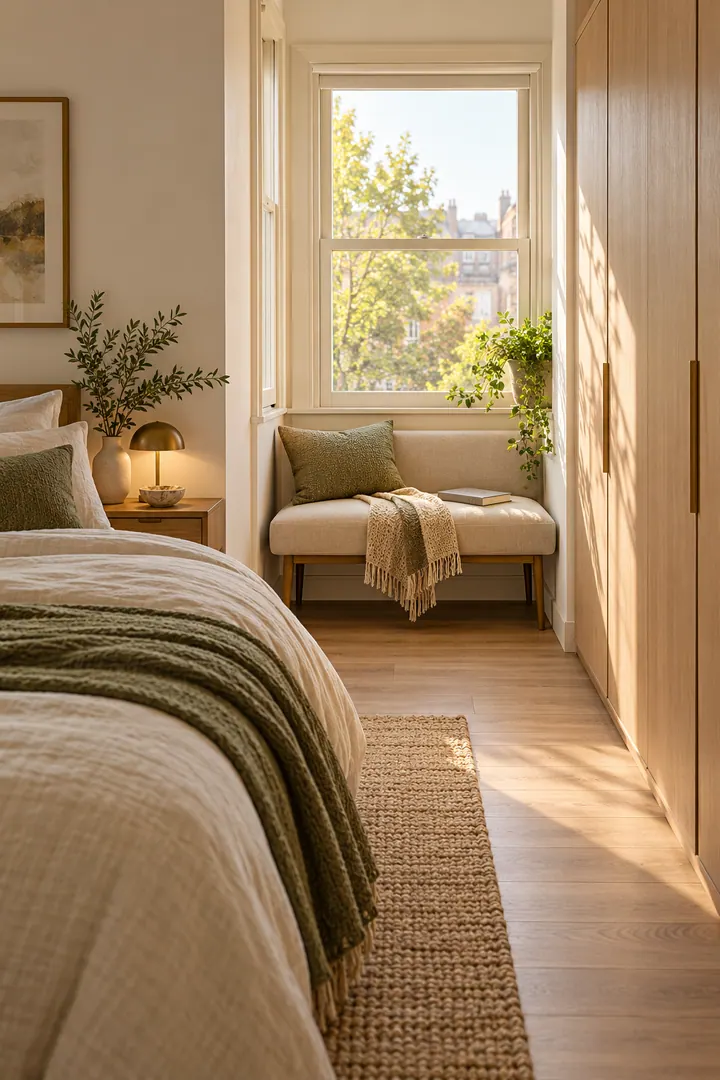
11. A low perch in the window corner
A short armless seat with a low back and open legs adds a place to sit without blocking light or the route beside the bed.
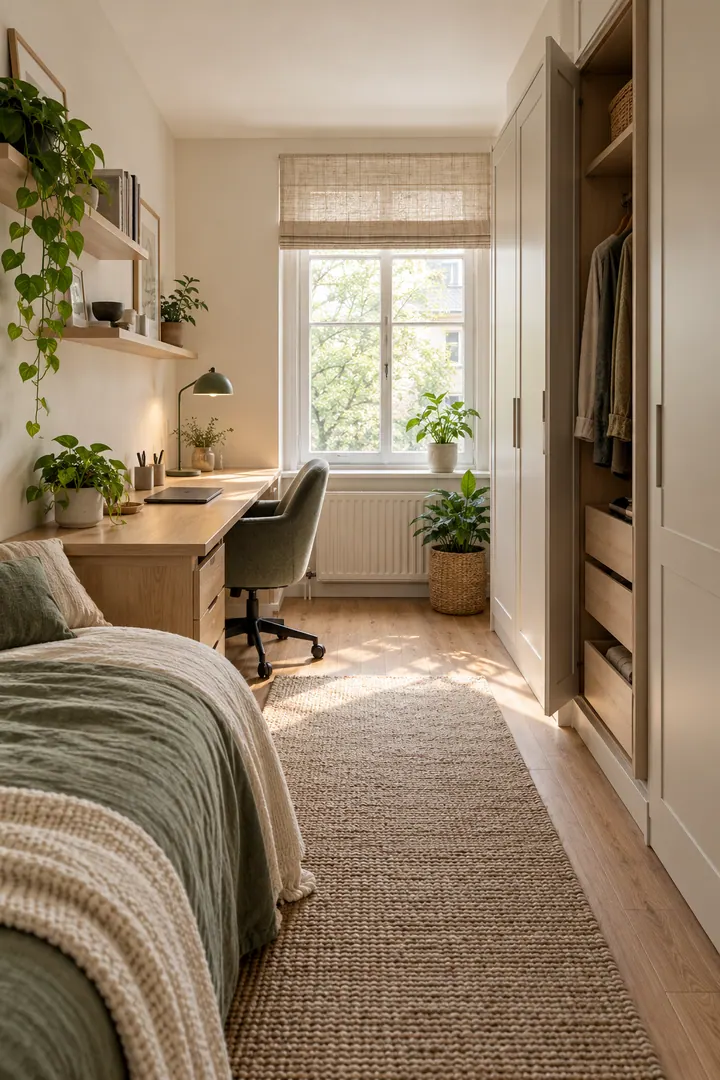
12. Turn the desk sideways
If a desk facing the wall blocks the wardrobe, rotate it along the wall. Make sure drawers can still open and the chair tucks in completely.
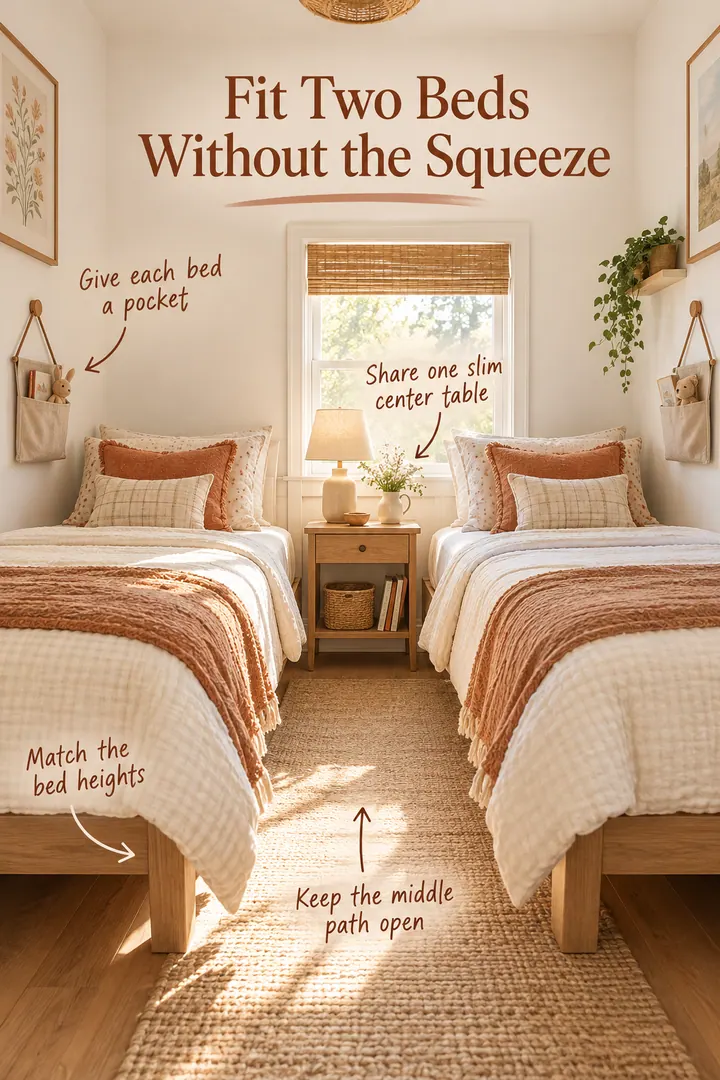
13. Two beds that share one table
In a shared room, place one slim table between two beds of the same height, give each person a wall pocket and keep the middle path open.
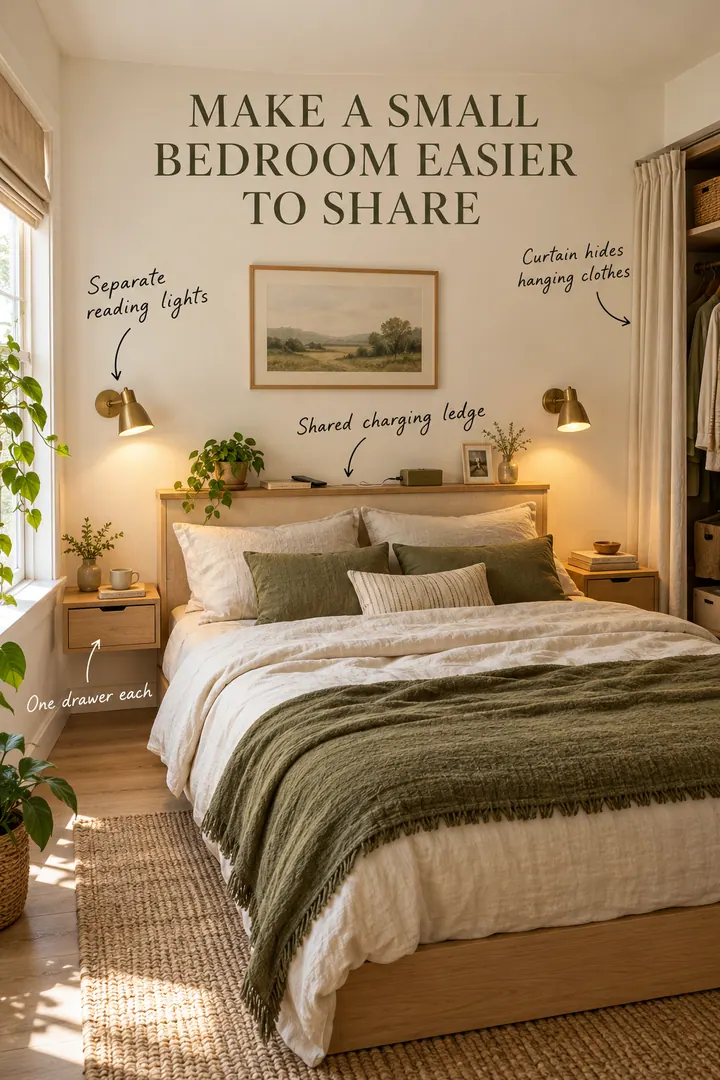
14. Separate lights and drawers for a shared room
Give each person their own reading light and drawers, share one charging ledge, and hide the open clothes rail behind a curtain.
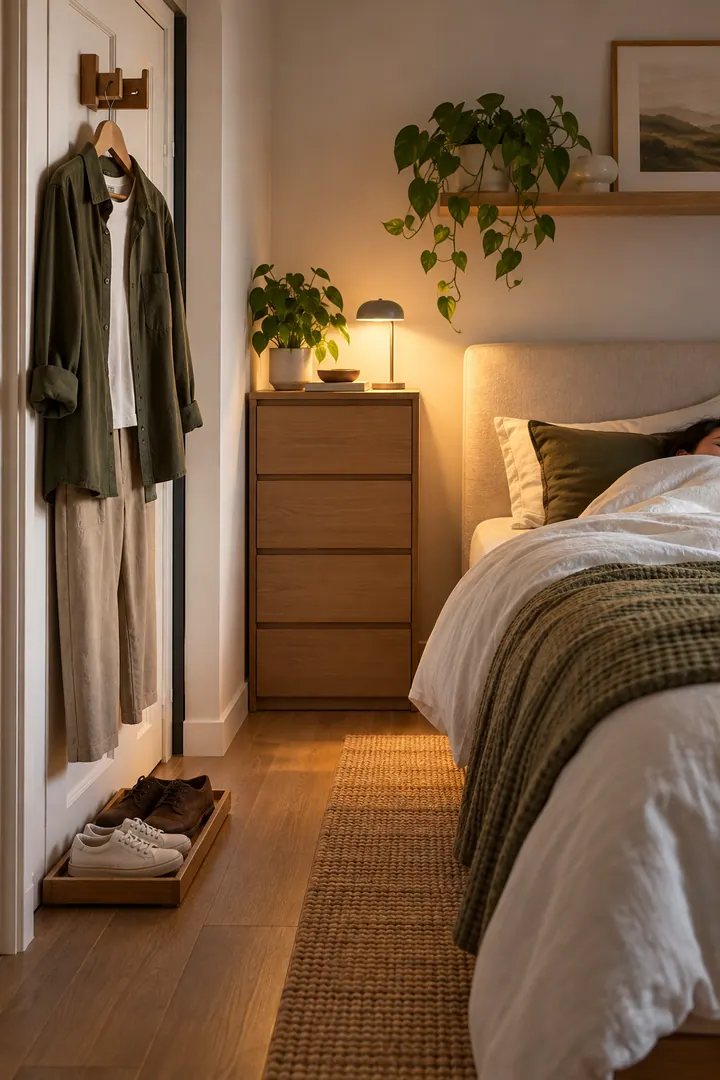
15. A quiet wake-up zone for different schedules
If one person gets up earlier, stage their outfit on a hook outside the sleep path, keep shoes by the door and use a dim task light.
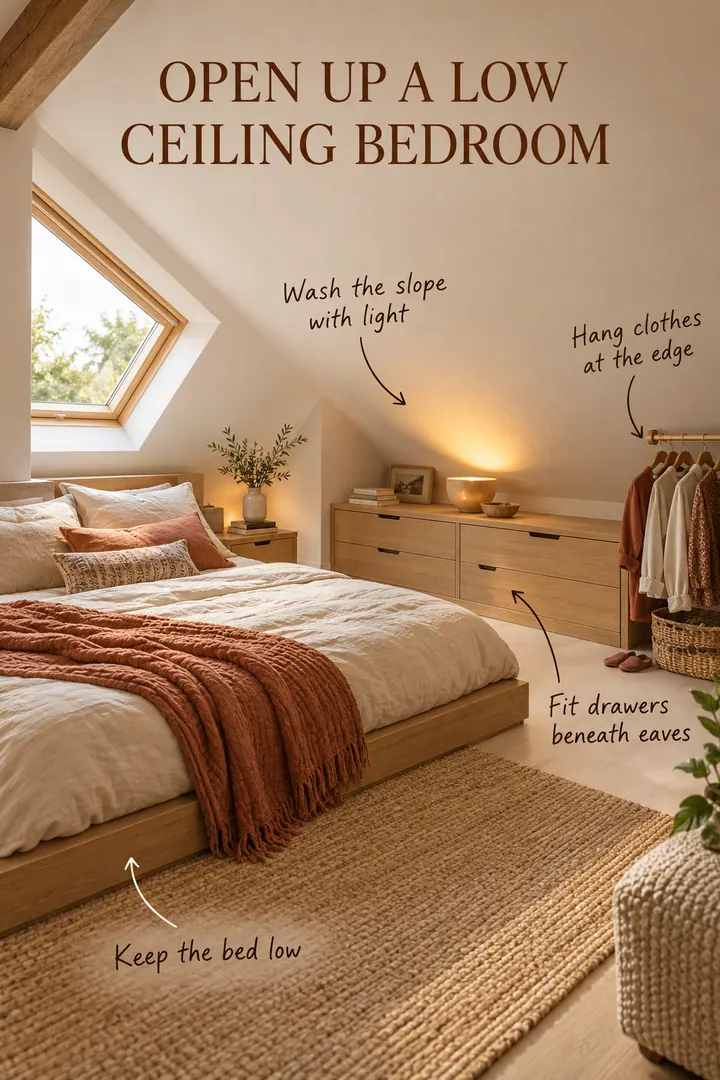
16. A low-ceiling bedroom
Keep the bed low, fit drawers under the eaves, aim soft light upward and put short hanging storage along the edge you rarely walk.
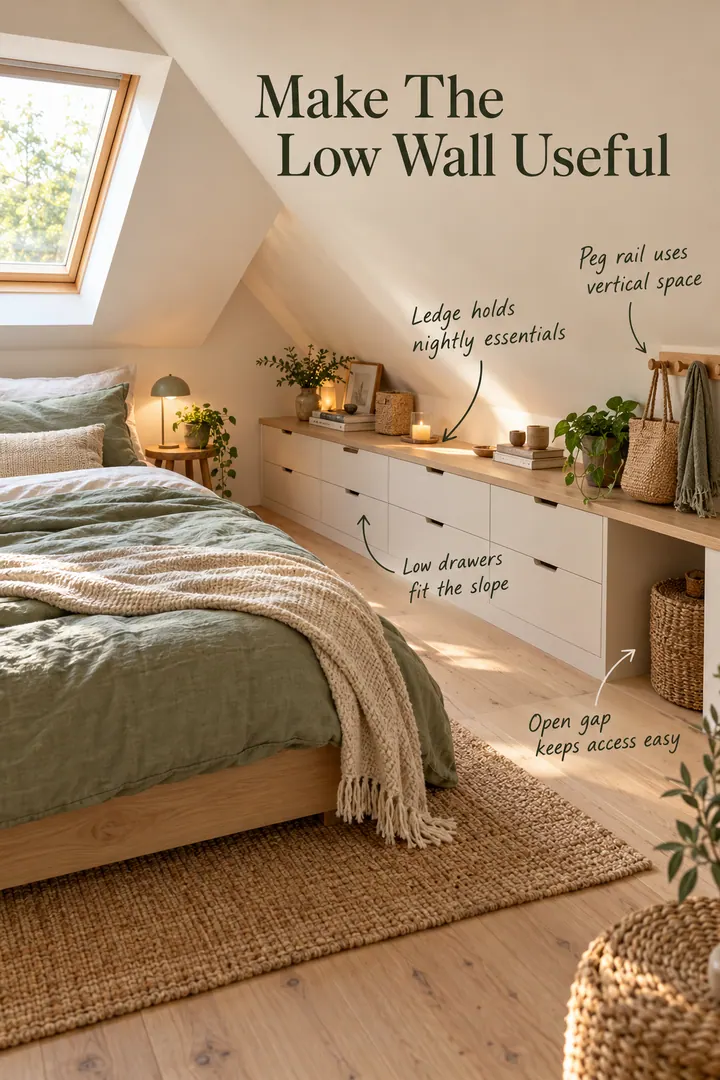
17. Low drawers and a peg rail under a slope
Use the low wall under a sloped ceiling for drawers, a narrow display ledge and a peg rail, and keep open space near the bed.
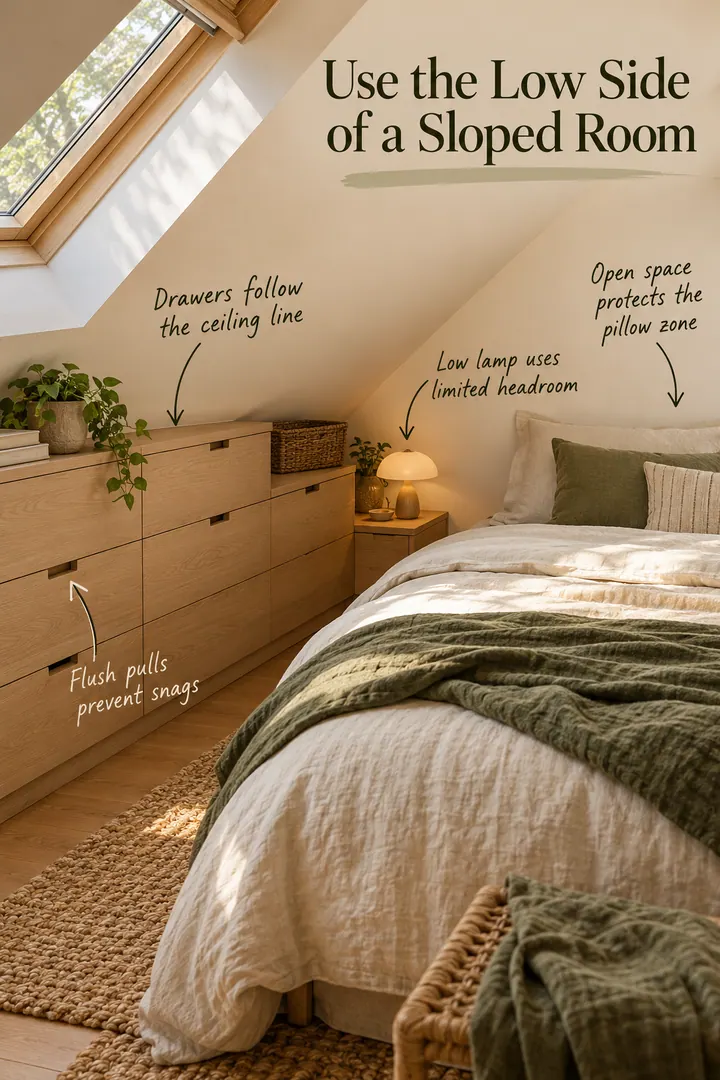
18. Graduated drawers in an attic room
Drawers that step down with the roofline fit the lowest part of the room. Keep the pillow area open and use flush pulls so nothing snags.
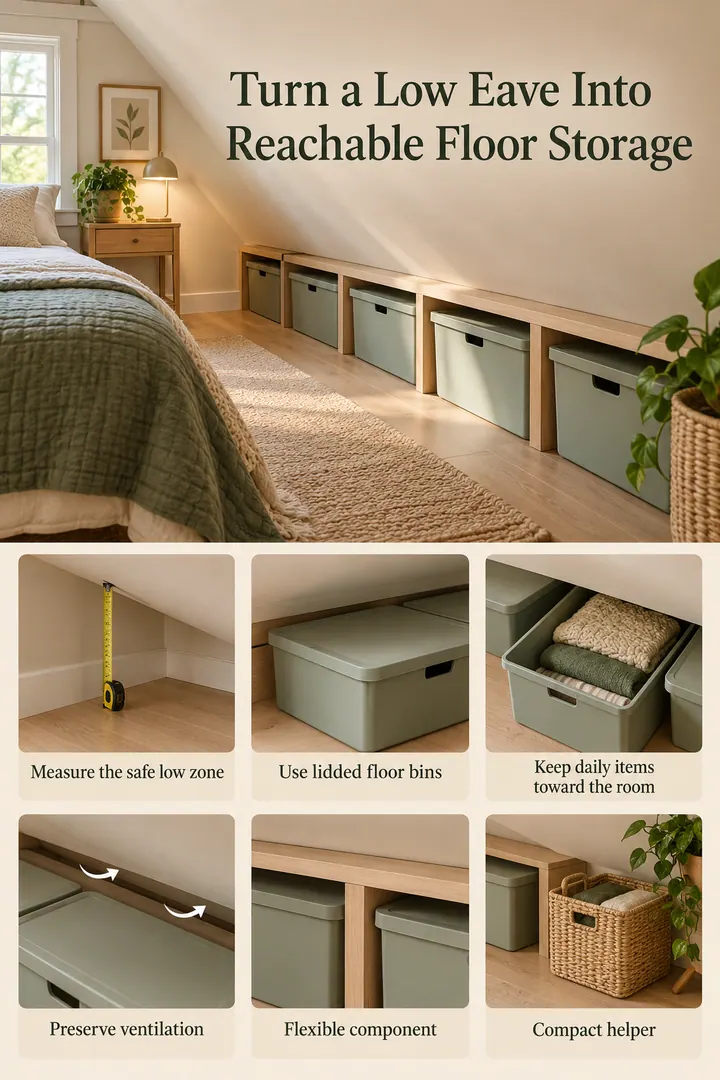
19. A row of lidded bins along the knee wall
If you rent an attic room, a row of lidded floor bins uses the low edge without building anything. Keep daily items toward the room and leave vents clear.
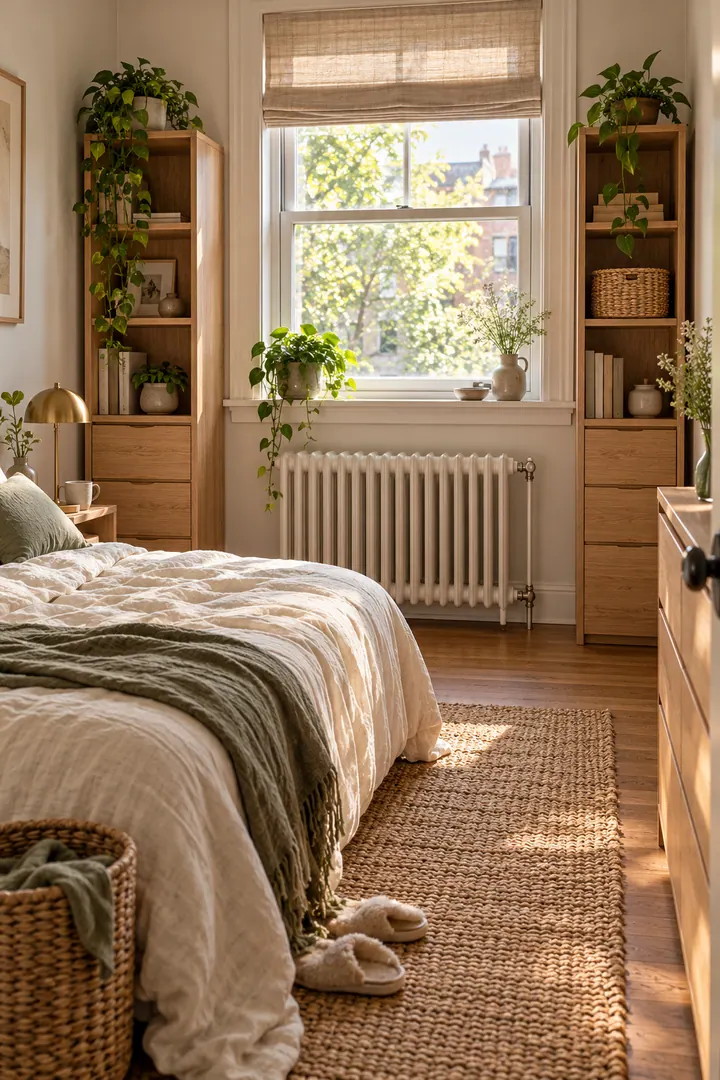
20. Storage towers beside the radiator, not over it
Place narrow storage on both sides of a radiator instead of in front of it. Heat, controls and service access stay clear. Follow the manufacturer's clearances.
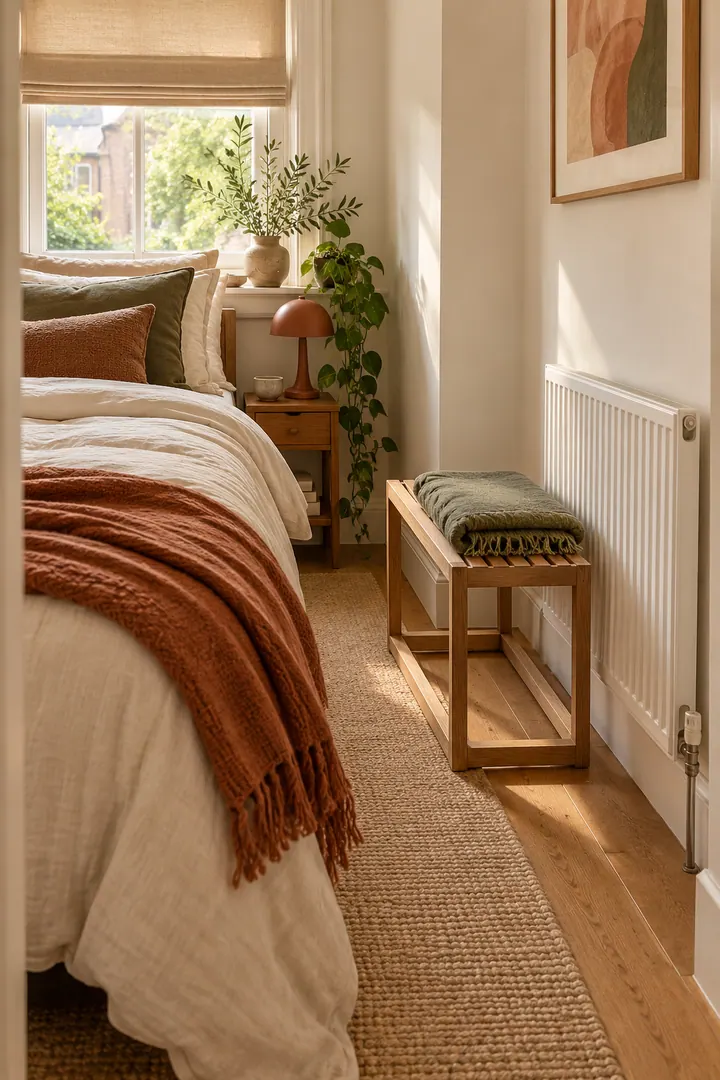
21. An open perch next to the radiator
A narrow open-frame bench beside the radiator gives you a place to sit or drop clothes while air can still circulate around the heater.
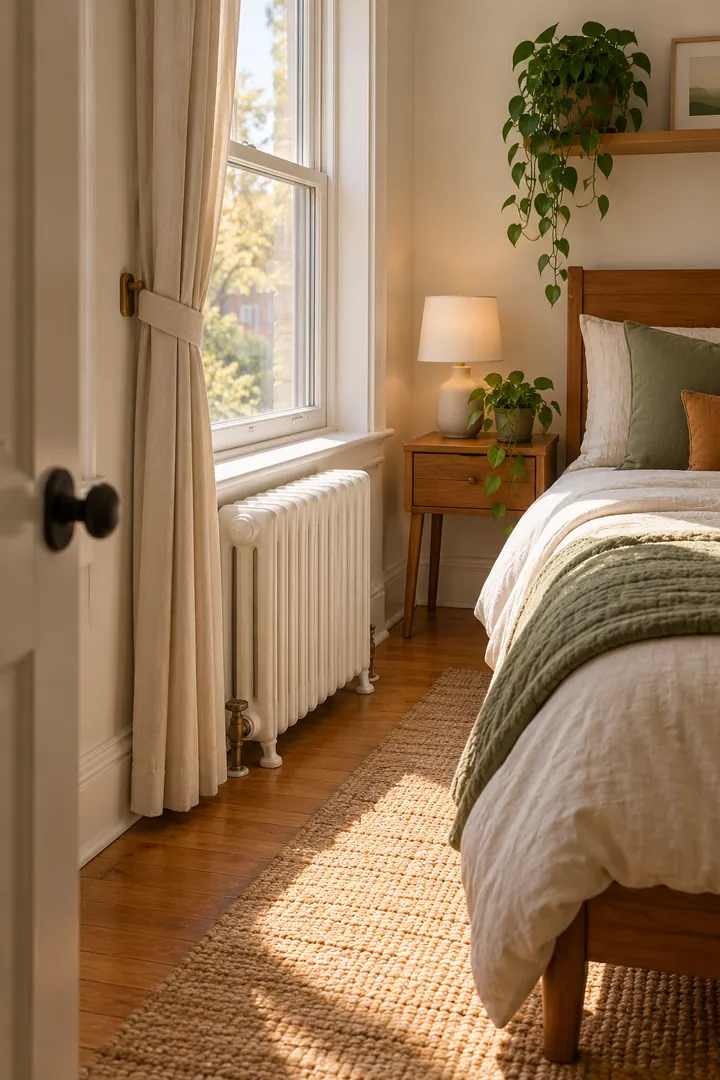
22. Keep the bed and curtains clear of heat
Follow the heater's clearance guidance, keep curtains short or tied back near it, and leave airflow open. Ask your landlord if anything looks unsafe.
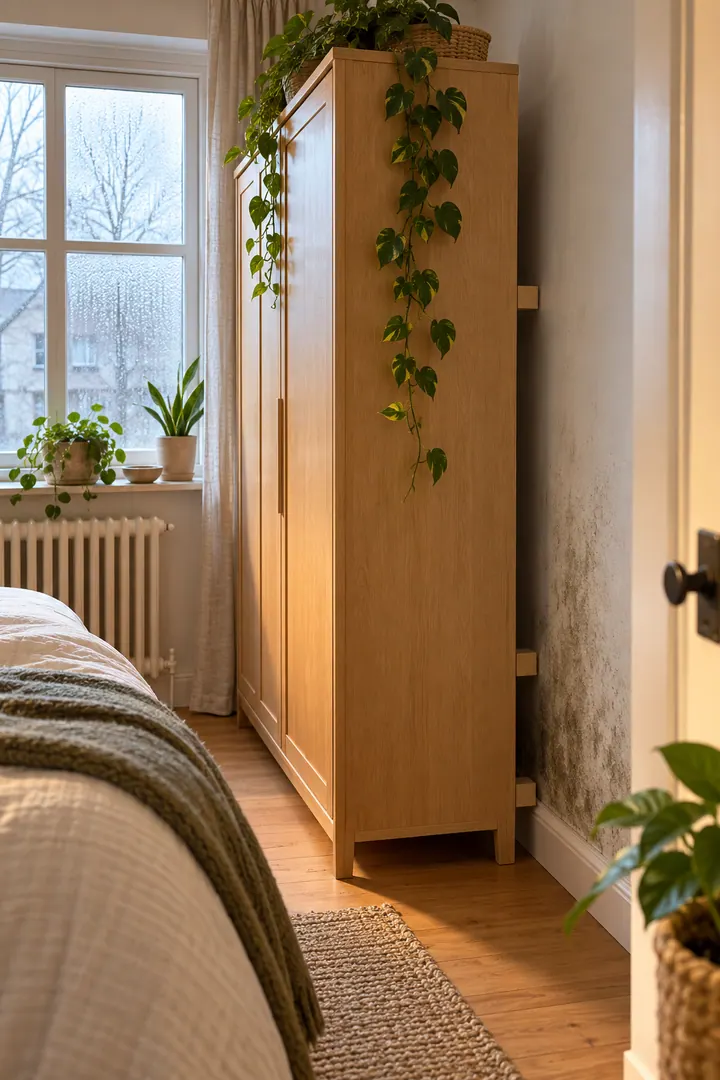
23. Leave a gap at a cold, damp wall
A wardrobe pressed against a cold outside wall can hide damp and mold. Leave a gap for air, check the wall now and then, and report leaks or condensation to your landlord.
Before you buy anything
- Aim for about 24 inches (60 cm) of clear walkway on the side of the bed you use most.
- Sketch the room on paper with the door swing and window marked before moving furniture.
- Never block radiators, vents or electrical panels with furniture.
Questions people ask
Where should the bed go in a narrow bedroom?
Usually along the long wall or offset toward one side, so there is one comfortable walkway from the door. Perfect symmetry is less important than a clear route.
Can a bed go under a window?
Yes. Use a low headboard, keep curtains free to move and make sure you can still open the window.