Ideas · Studio
24 Folding Screen, Rug and Lighting Ideas to Zone a Studio
Folding and rolling screens, acoustic panels, rug layouts and separate pools of light that create zones in a studio apartment and move when you need them to.
This guide has affiliate links. As an Amazon Associate we earn from qualifying purchases, at no extra cost to you. Learn more
Not every divider needs to be furniture. Folding screens, movable panels, rugs and lighting create zones that can be moved, folded or switched off.
Screens are ideal for video calls and guests; rugs and light define zones every day without blocking anything. Keep screens stable and out of the exit route.
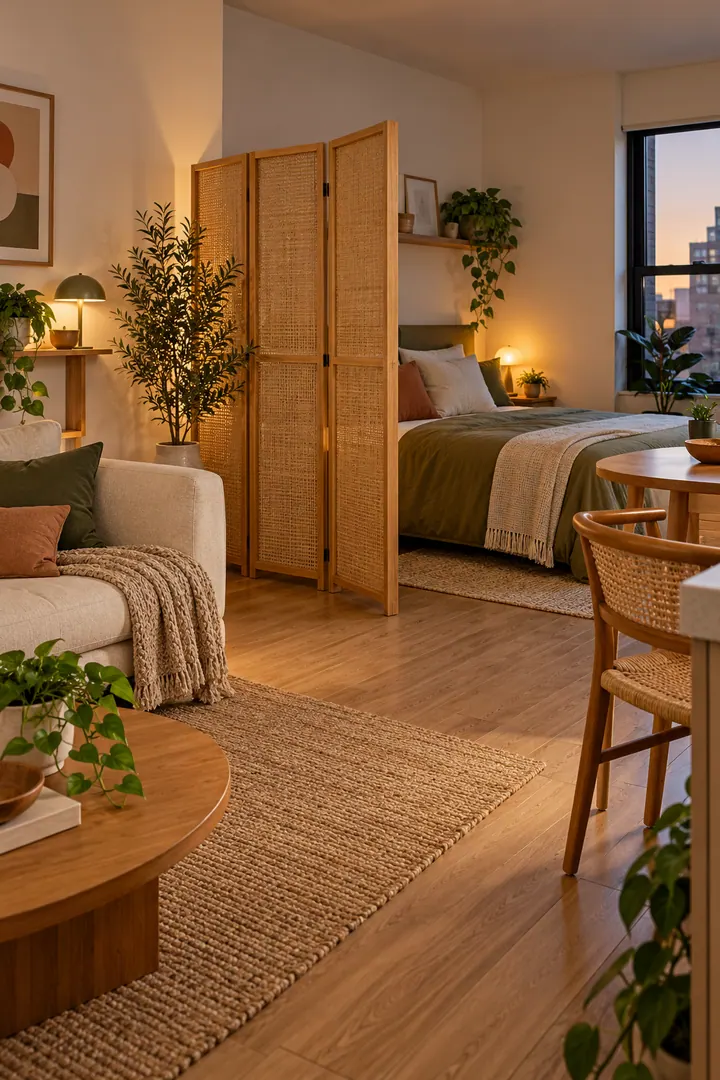
1. A lightweight folding screen
Angle a stable screen for privacy and fold it away for gatherings. Keep routes wide.
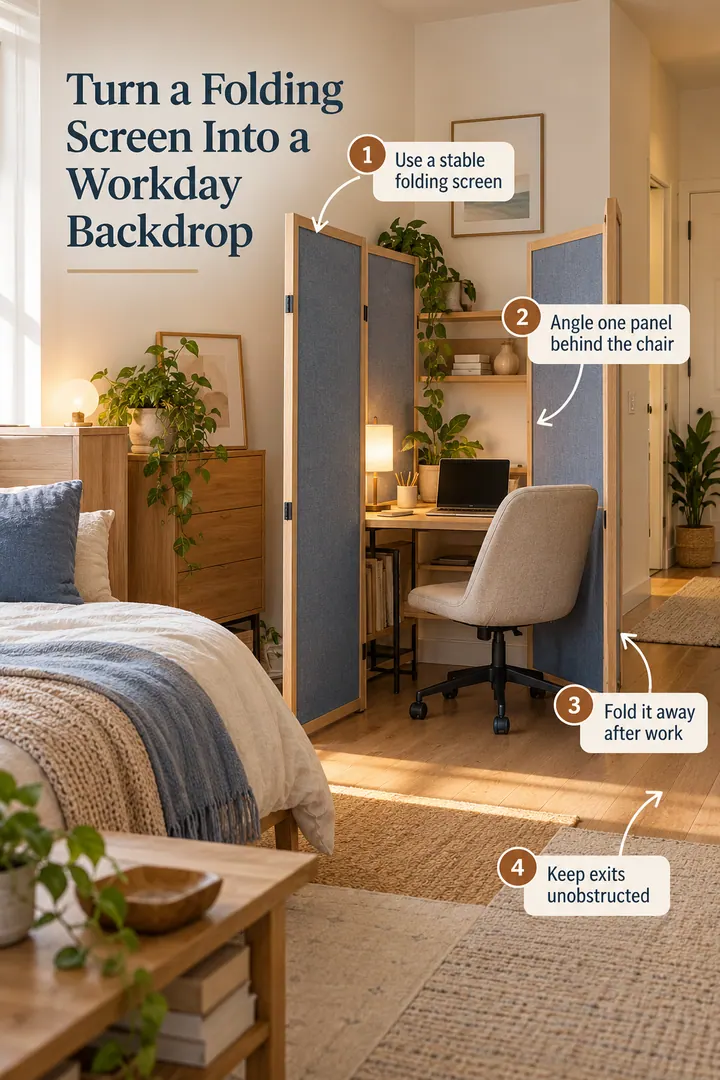
2. A screen behind your chair for calls
One panel angled behind the desk chair hides the bed and living clutter on video calls.
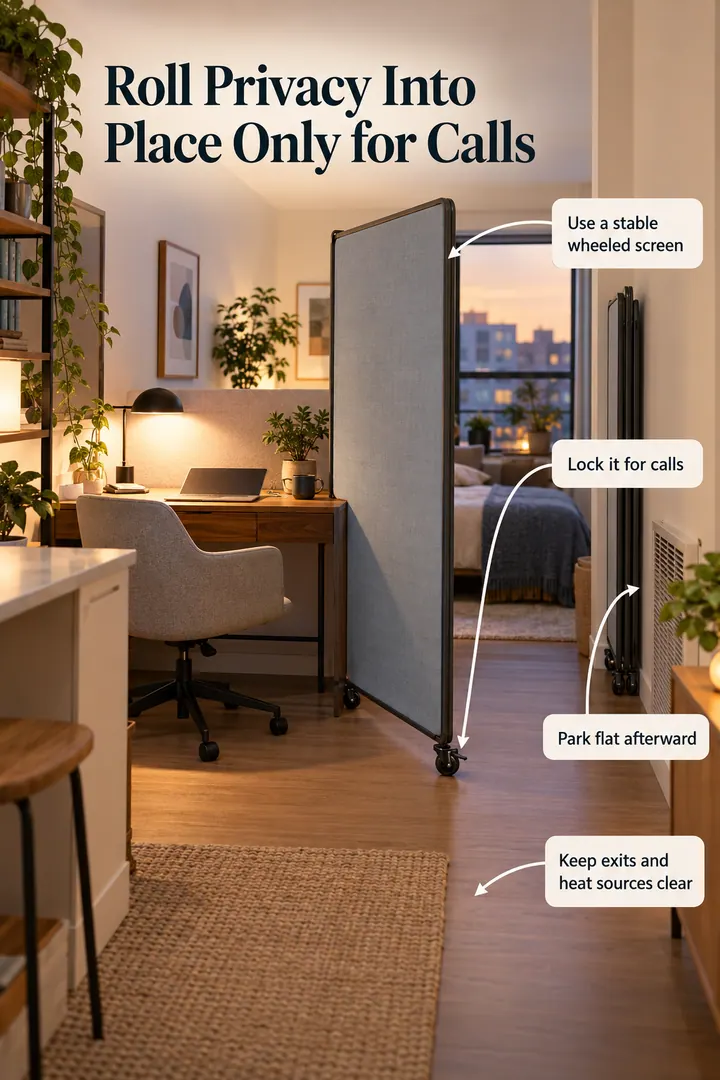
3. A rolling screen for the call zone
A stable wheeled screen locks in place for calls and parks flat afterwards.
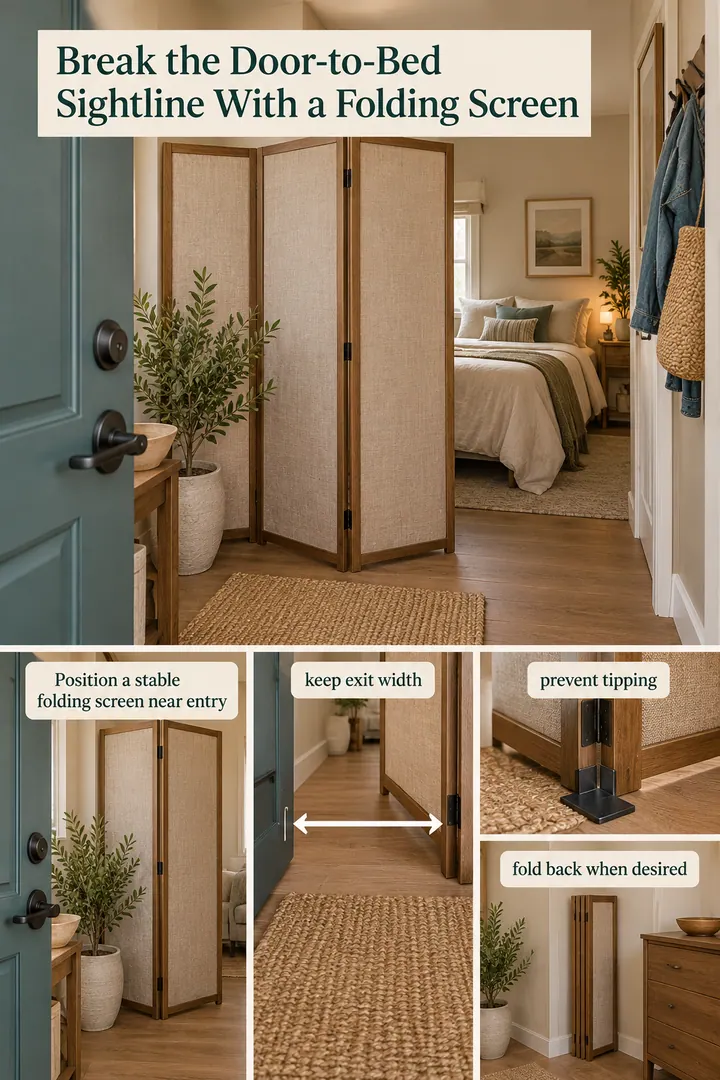
4. A screen near the door
If the bed faces the door, a stable screen near the entry blocks the view. Keep the exit width.
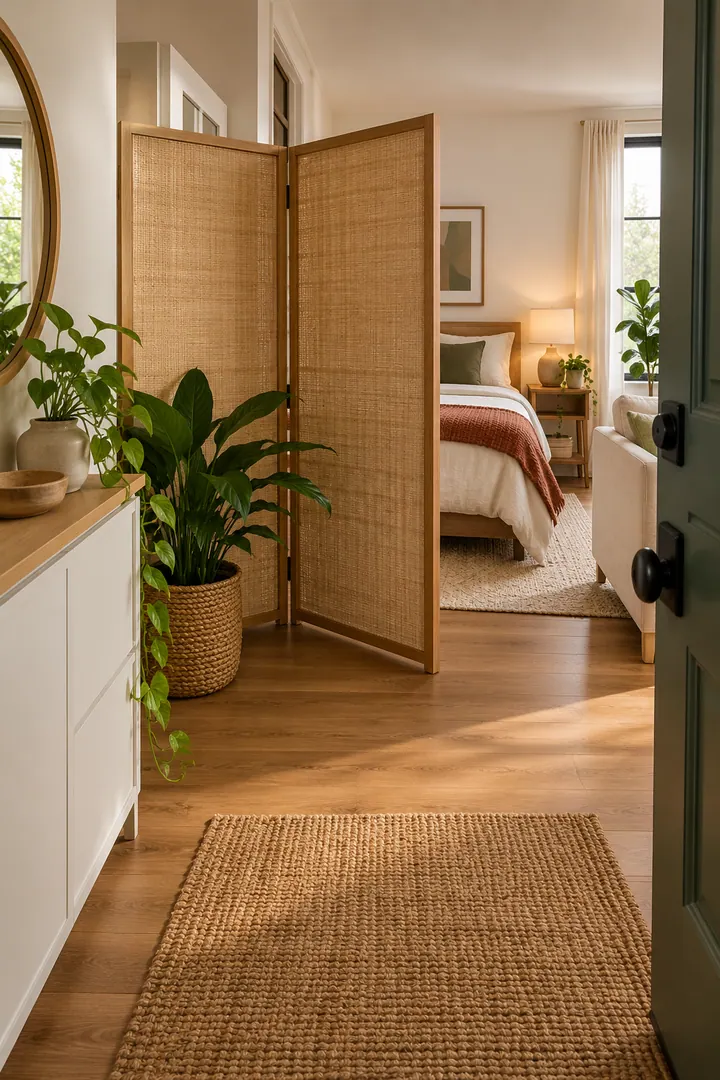
5. Two screens forming an entry corridor
Angle two screens to guide the view away from the bed and create an entry. Keep the door swing clear.
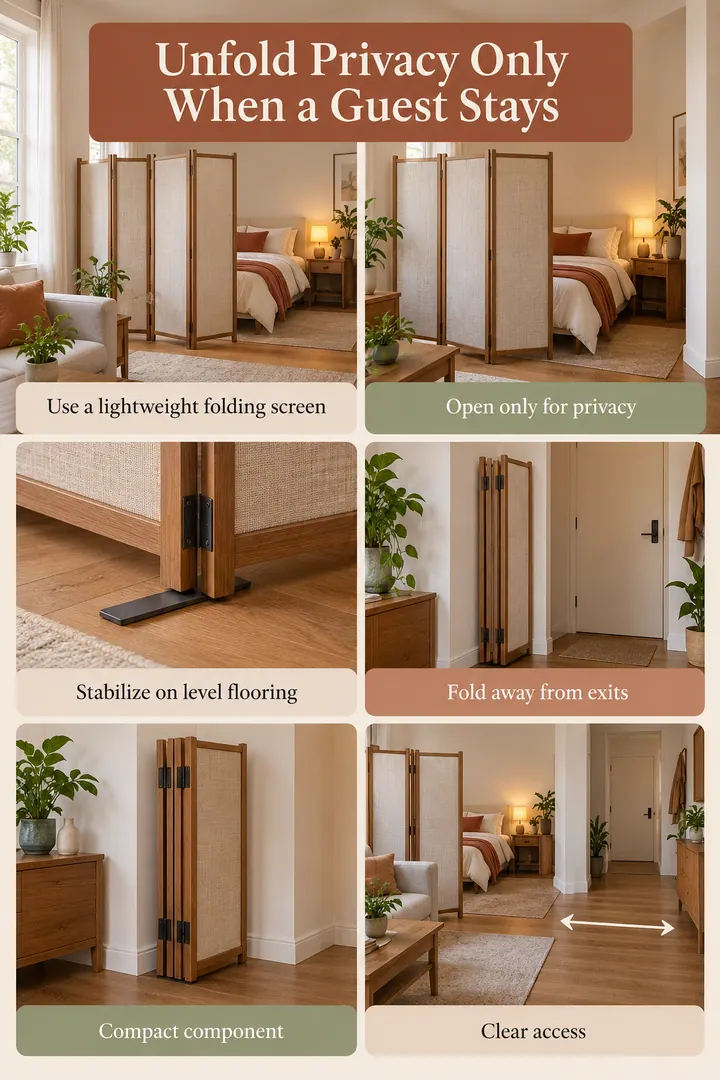
6. A screen for guest privacy
Open a light folding screen only when a guest stays, and fold it away from exits the rest of the time.
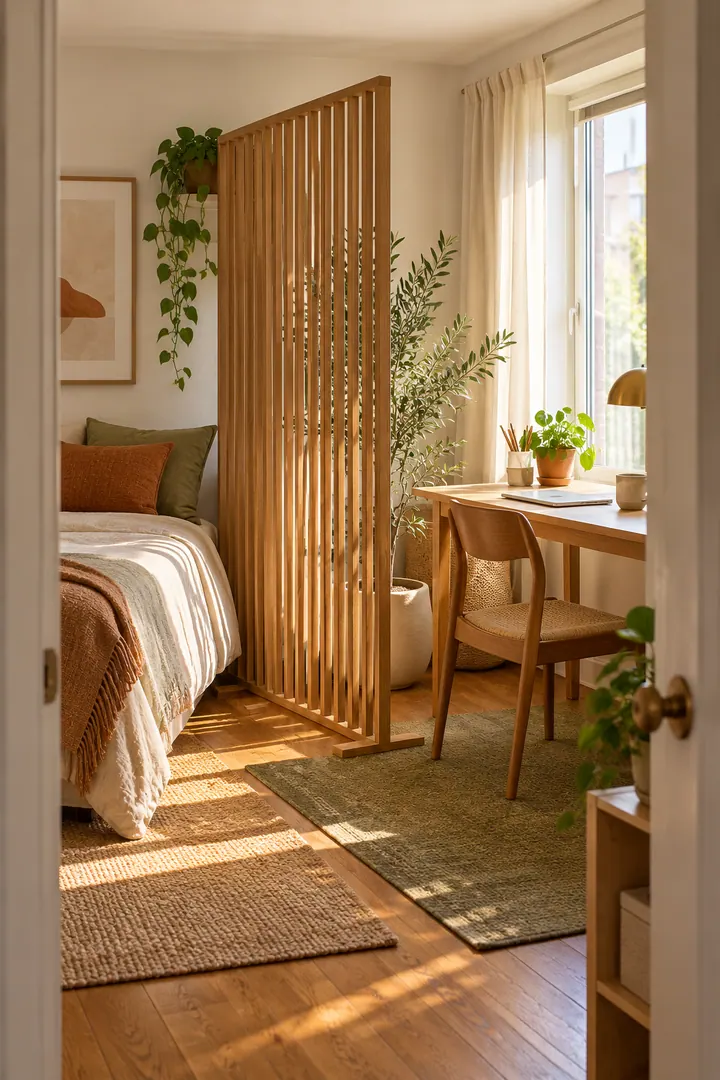
7. A slatted screen that lets light through
A solid screen cuts daylight; a slatted one aligned with the window doesn't.
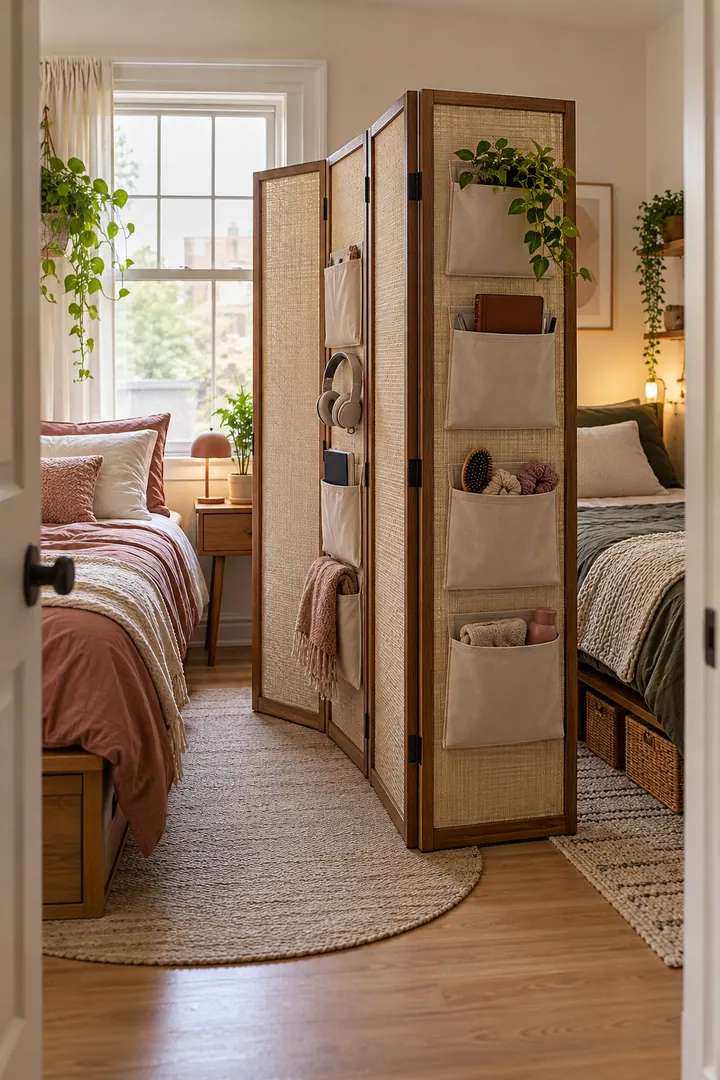
8. A screen with pockets
In a shared bedroom, a stable screen with light pockets adds privacy and a little storage.
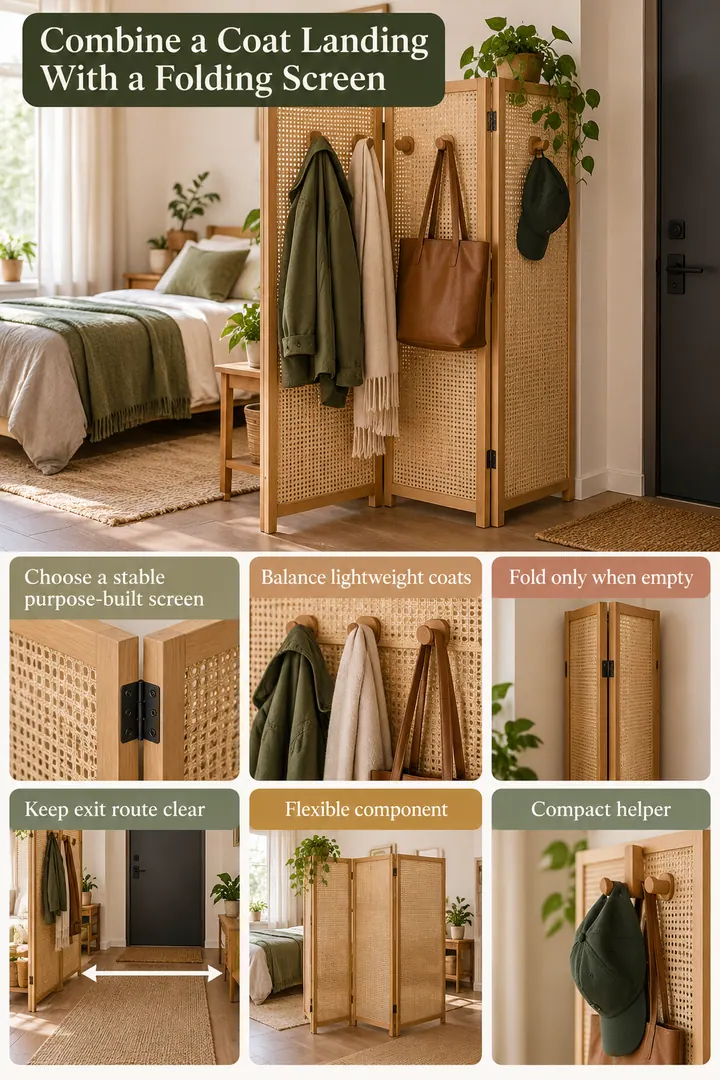
9. A screen that's also a coat rack
A purpose-built screen with hooks combines a coat stand and an entry divider in one footprint.
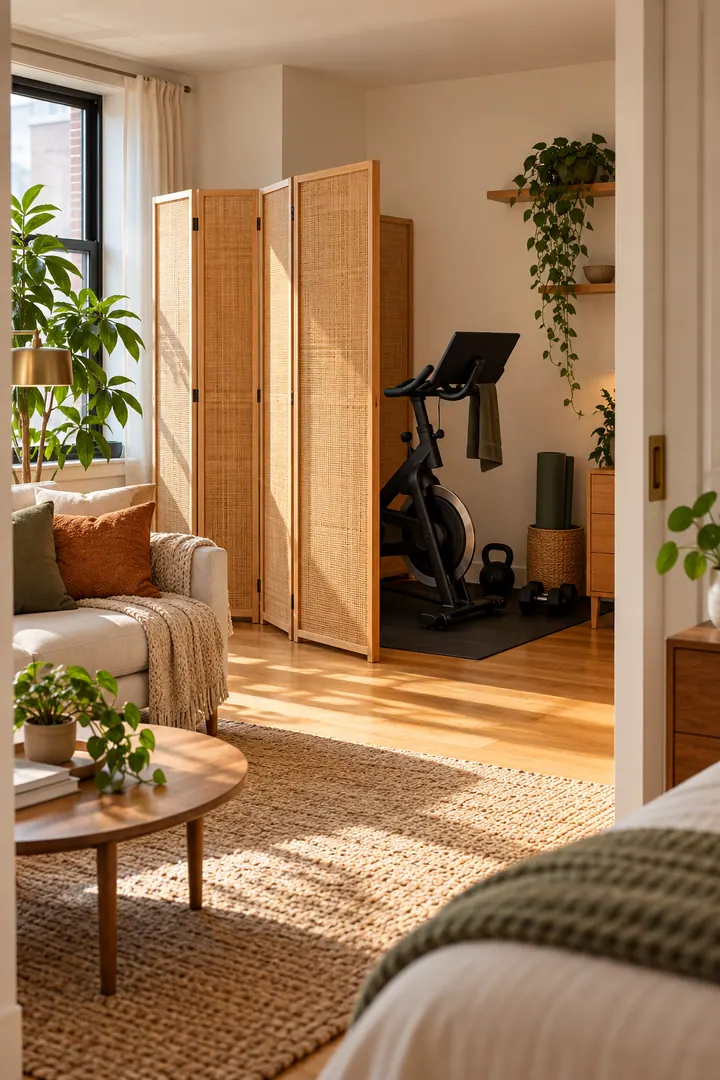
10. Hide the workout corner
Pull a screen in front of the exercise bike after use and fold it clear during workouts.
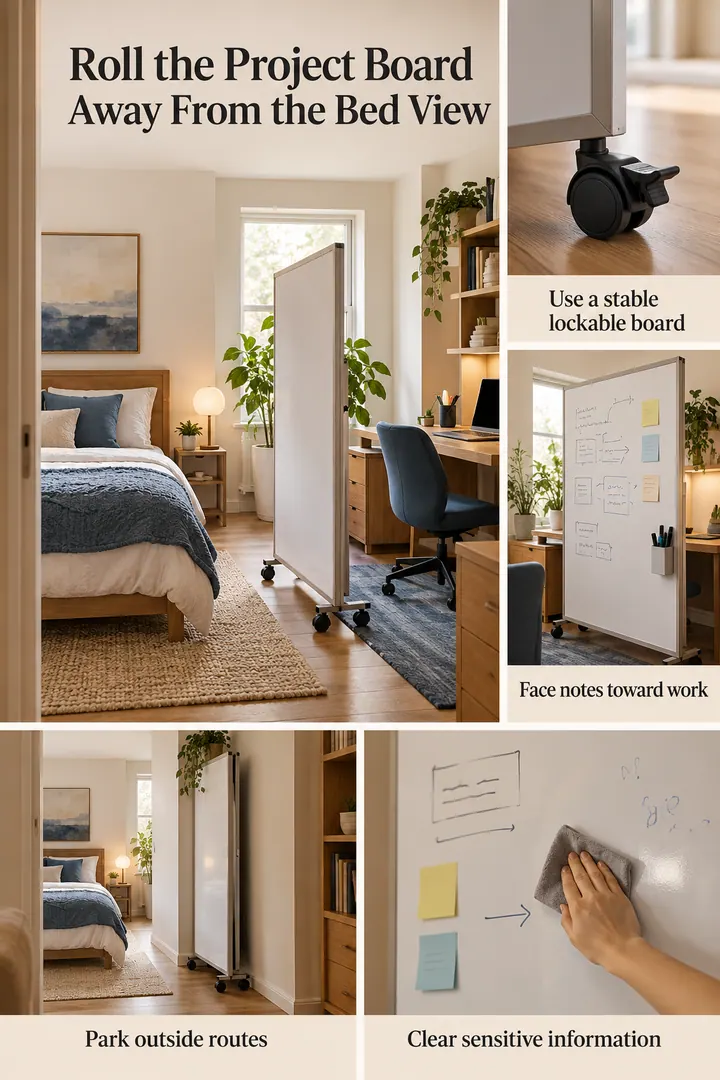
11. A rolling whiteboard as a divider
A lockable rolling board faces your notes toward the desk and hides work from the sleeping side.
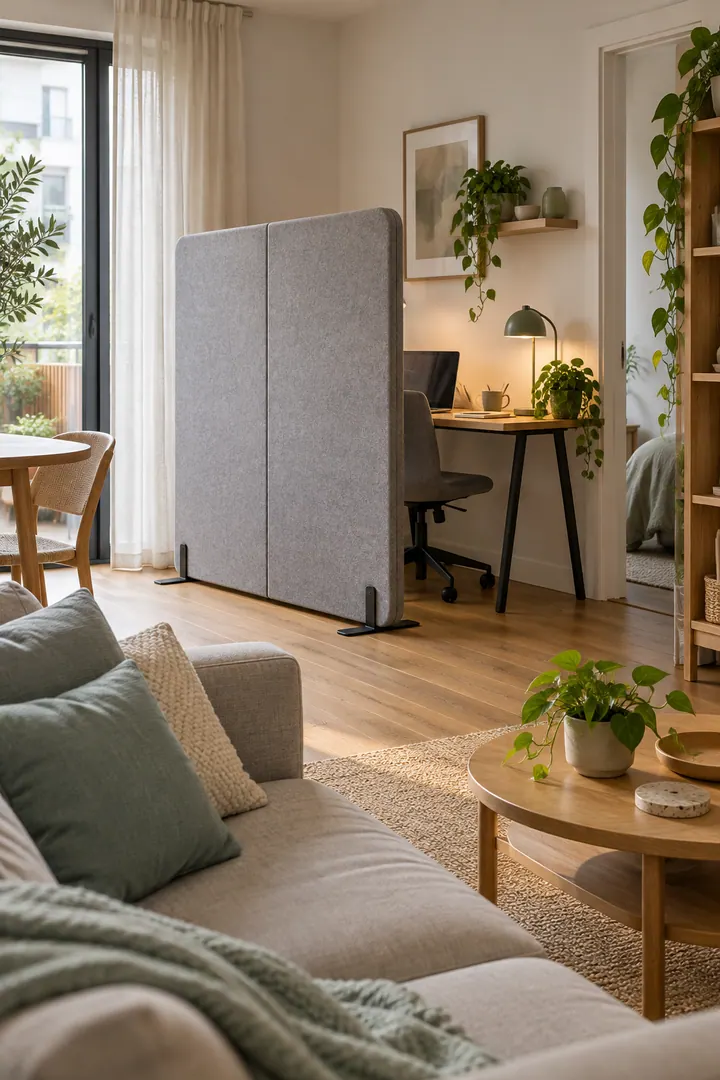
12. An acoustic desk screen
In a shared living room, a freestanding acoustic screen hides work materials and softens sound. Fold it after work.
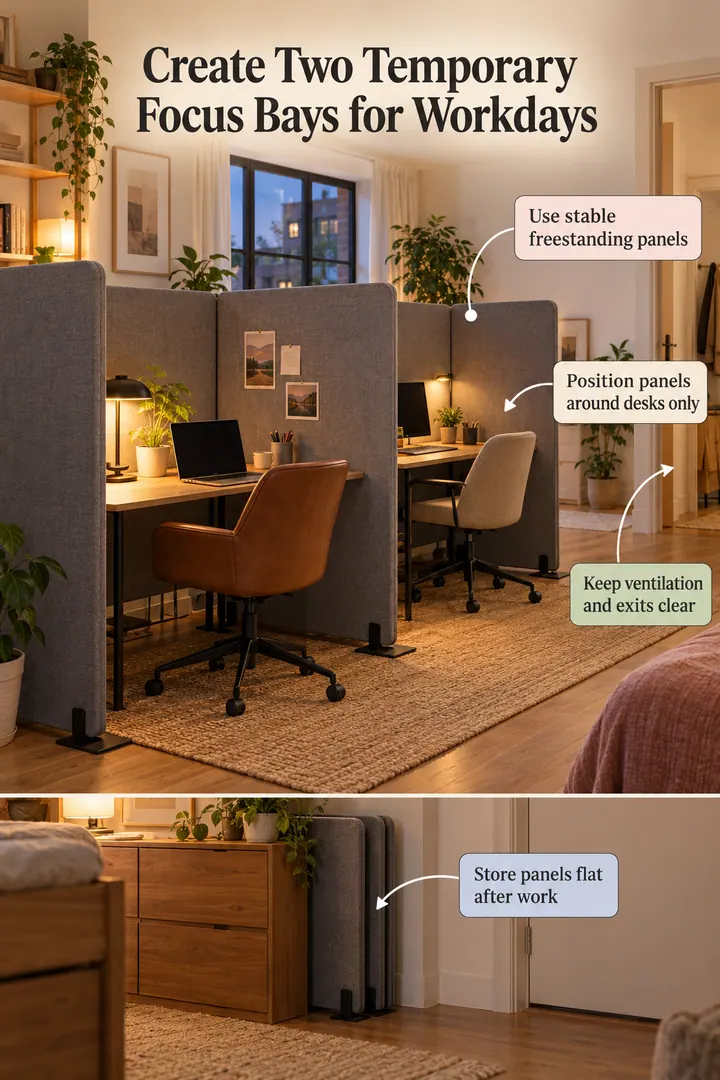
13. Portable acoustic panels around desks
Freestanding panels around a shared office corner cut noise during calls and store flat afterwards.
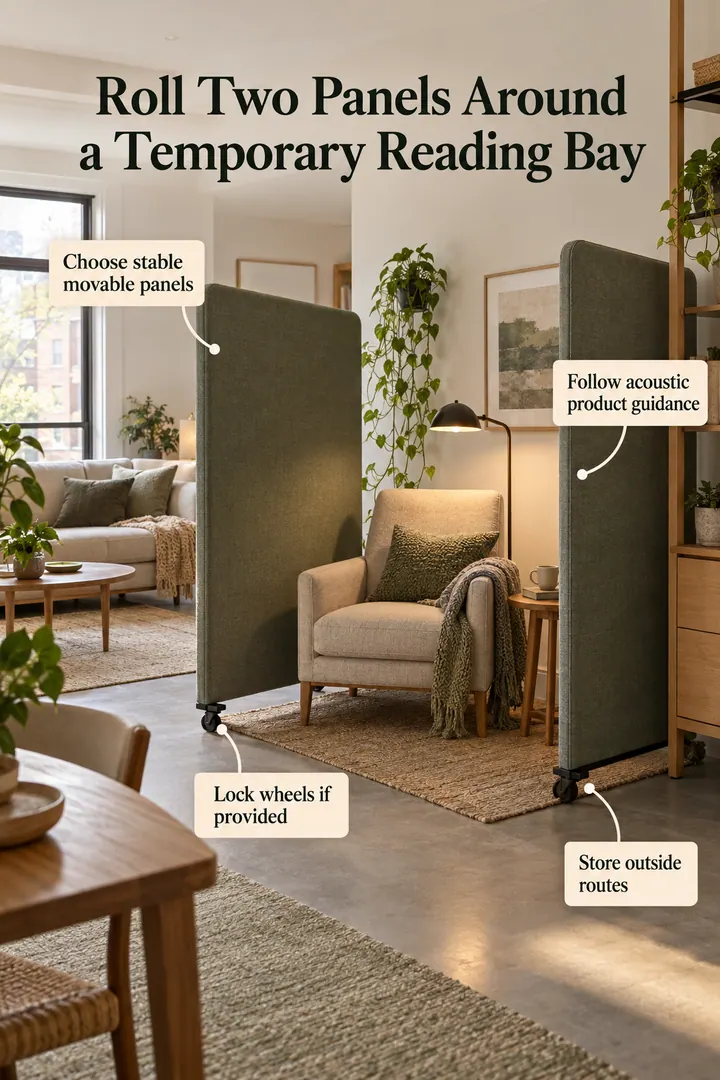
14. Movable panels for a reading bay
Stable movable panels give a reading chair temporary separation. Lock the wheels.
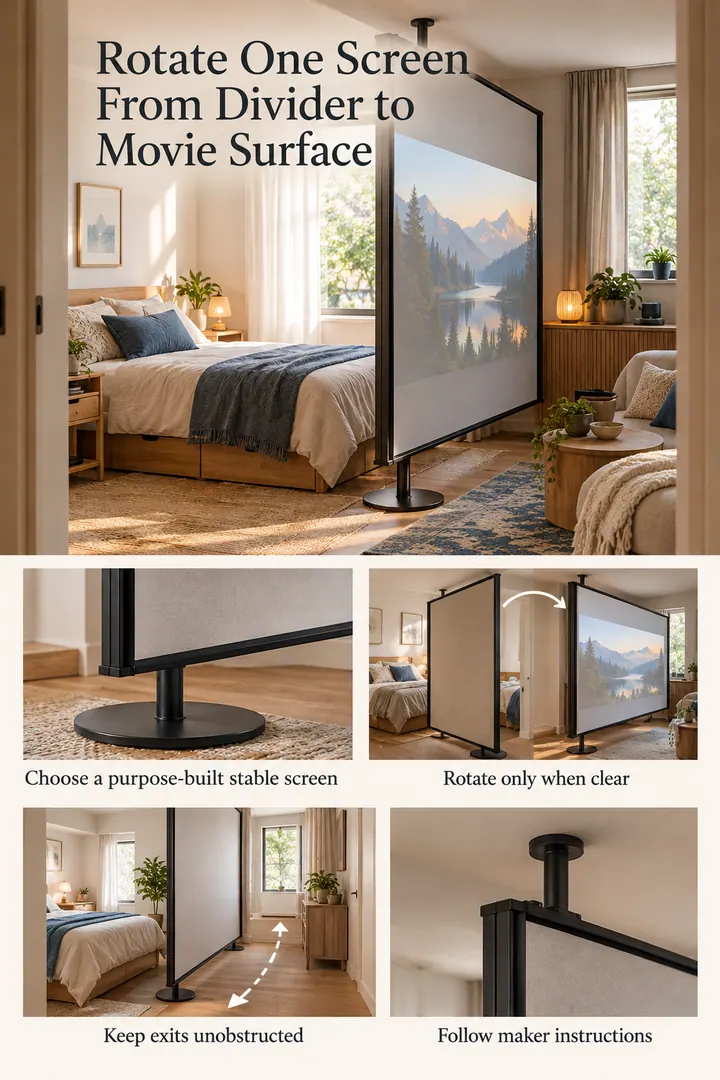
15. A screen that doubles for projection
A purpose-built rotating screen works as a divider and a projection surface.
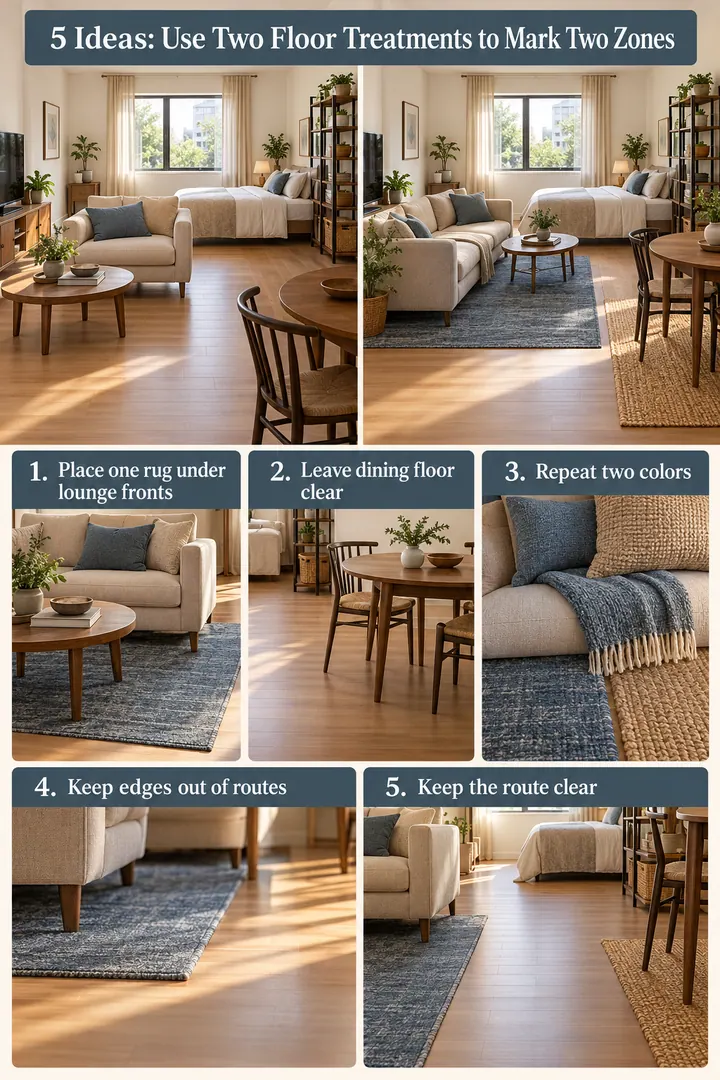
16. One rug under the lounge
Put one rug under the front legs of the lounge furniture, leave the dining floor bare and repeat two colors.
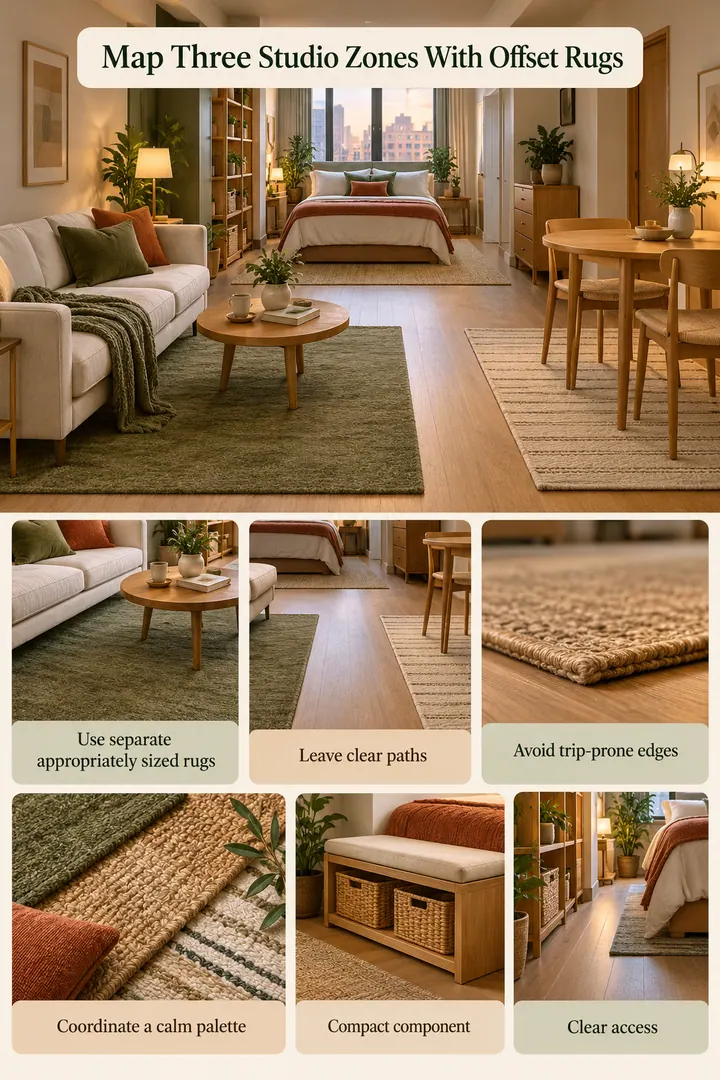
17. A separate rug for each zone
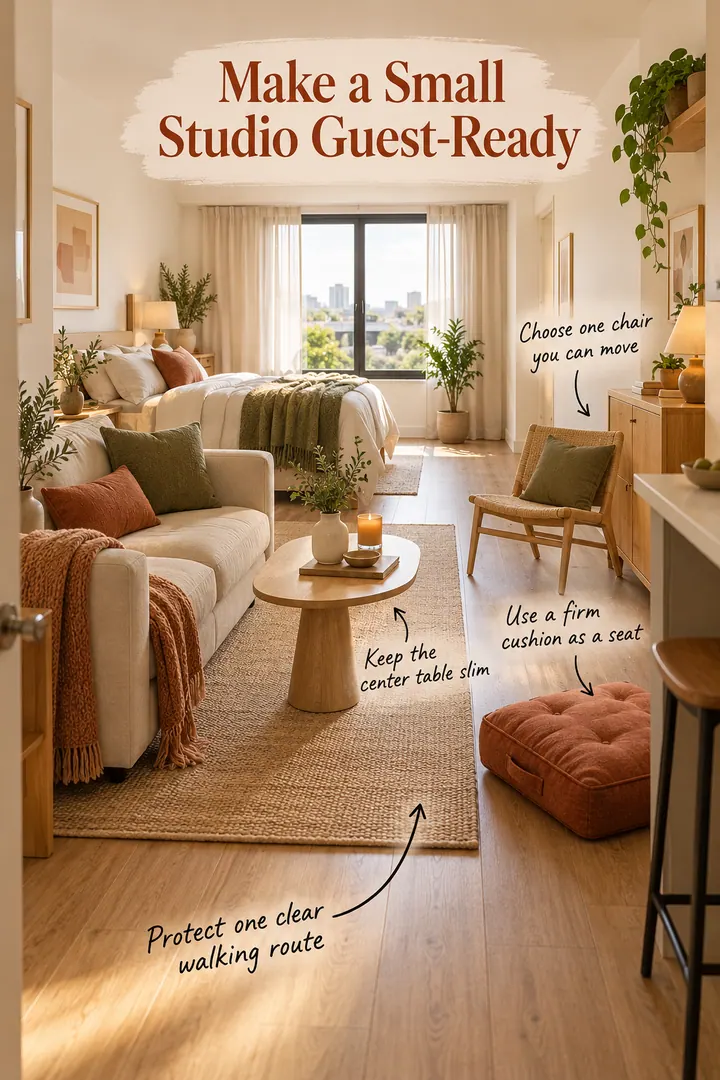
One centered rug blurs every zone. Separate, properly sized rugs with clear paths between them define living, dining and sleeping.
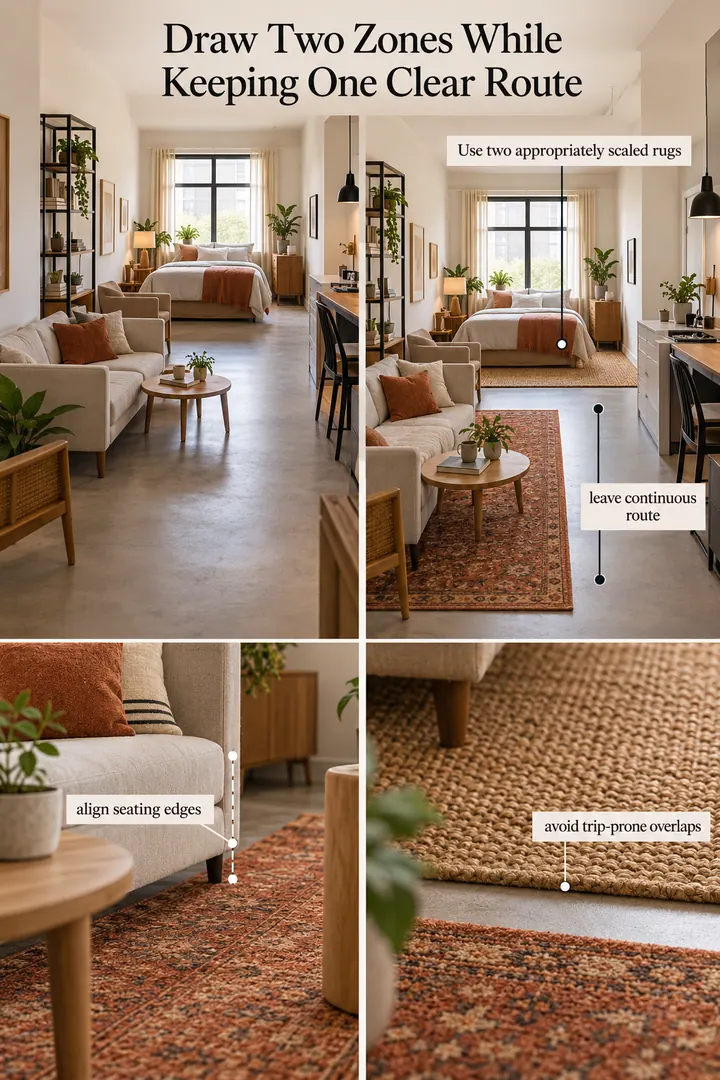
18. Paired rugs along a long studio
Two rugs aligned with the seating create a continuous route from entry to window. Avoid overlapping edges.
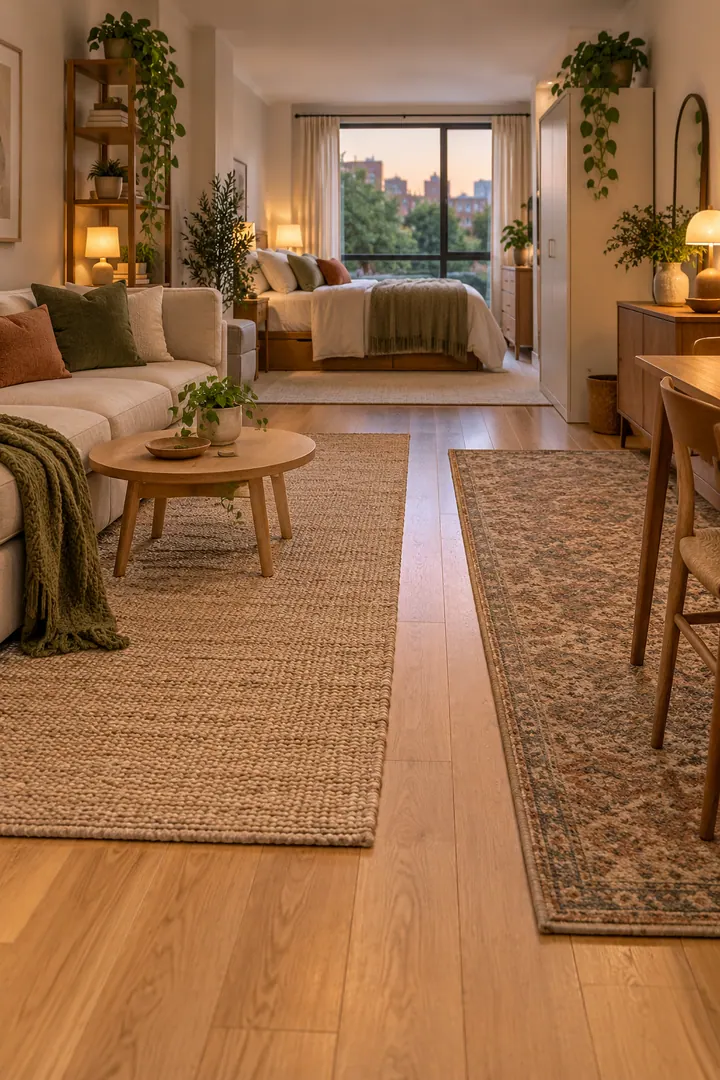
19. Leave floor between rugs
Overlapping rugs create a tripping ridge. Give each zone its own rug with visible floor between.
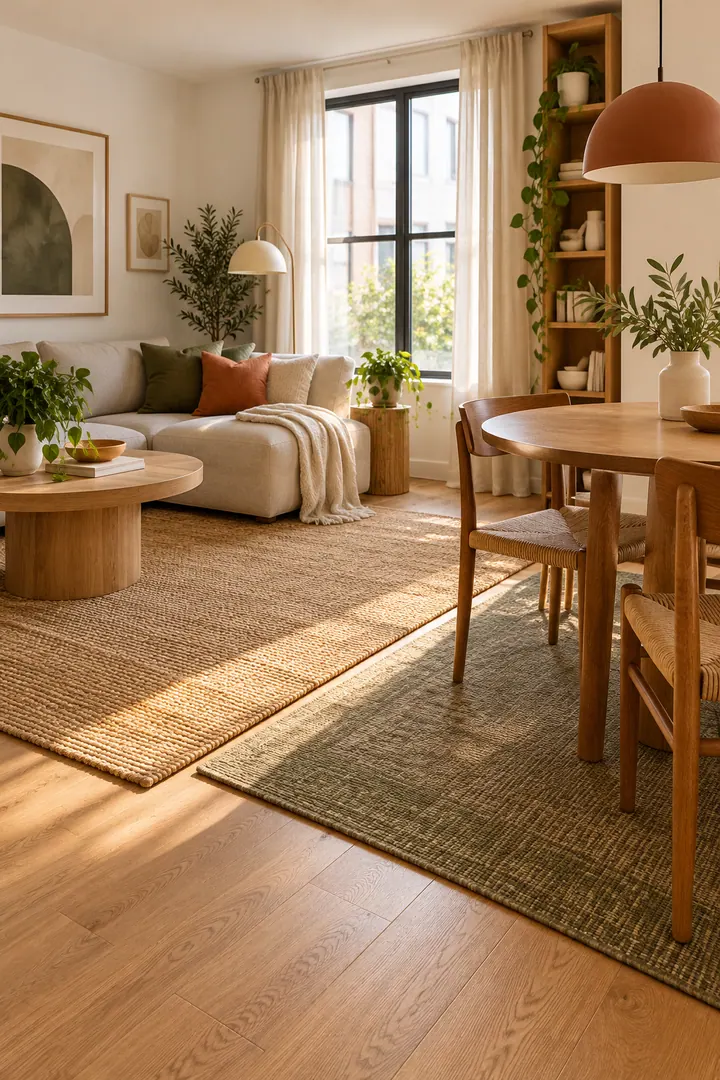
20. Coordinated rugs that connect
Two coordinated rugs define furniture groups; keep their edges flat and a clear route between.
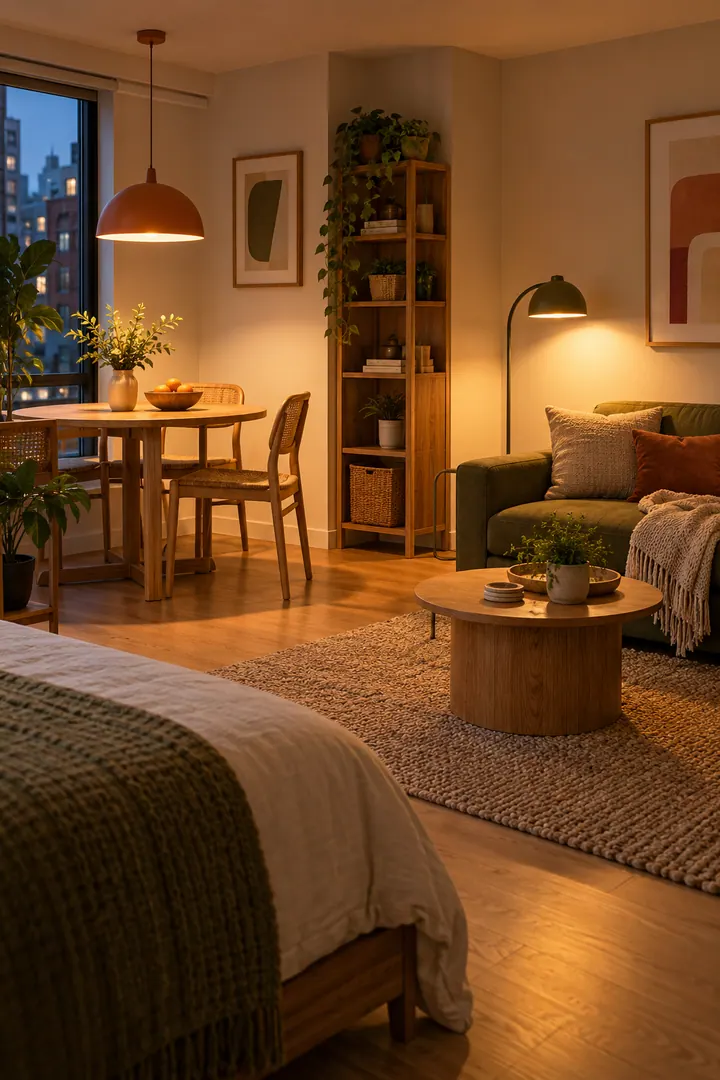
21. Separate pools of light
One ceiling light flattens a studio. Focus light over the dining table and add a low lamp in the lounge.
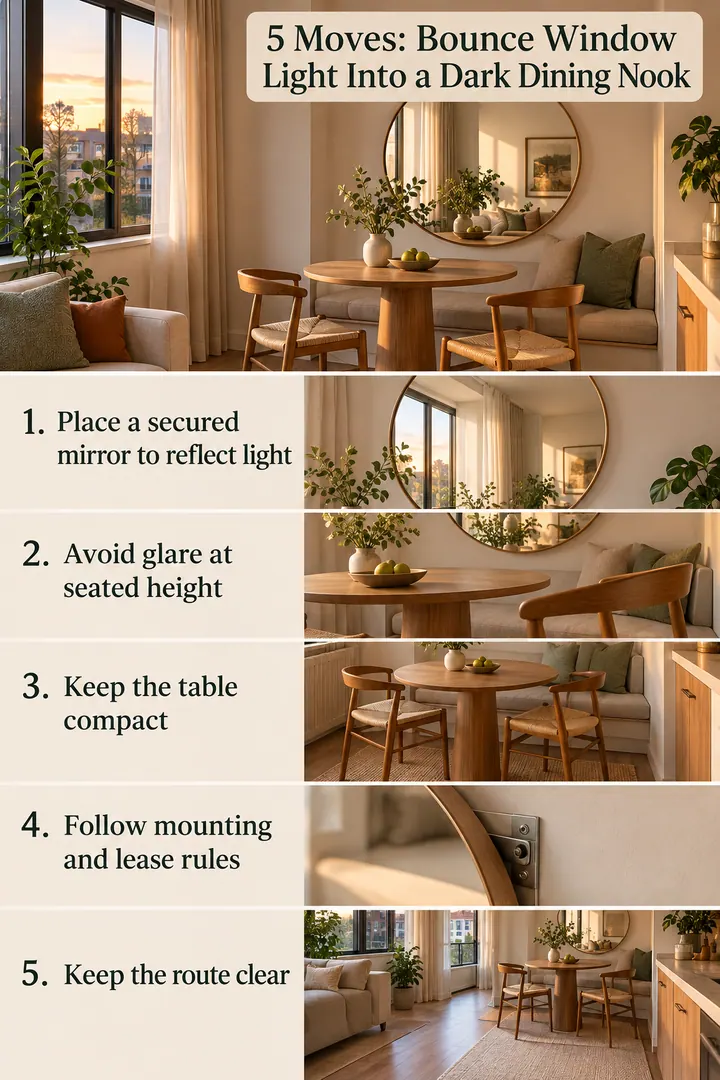
22. A mirror in the dining nook
A secured mirror reflects light into a dining nook. Avoid glare at seated height.
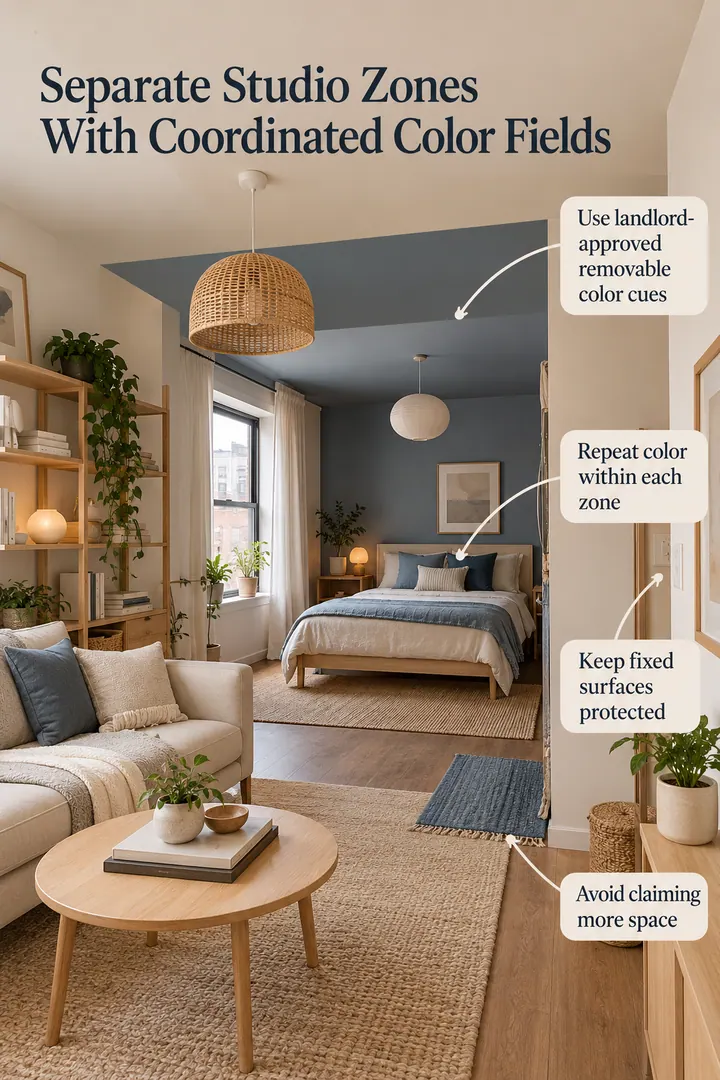
23. Removable color cues per zone
Landlord-approved removable color cues repeated within each zone make the studio read as separate areas.
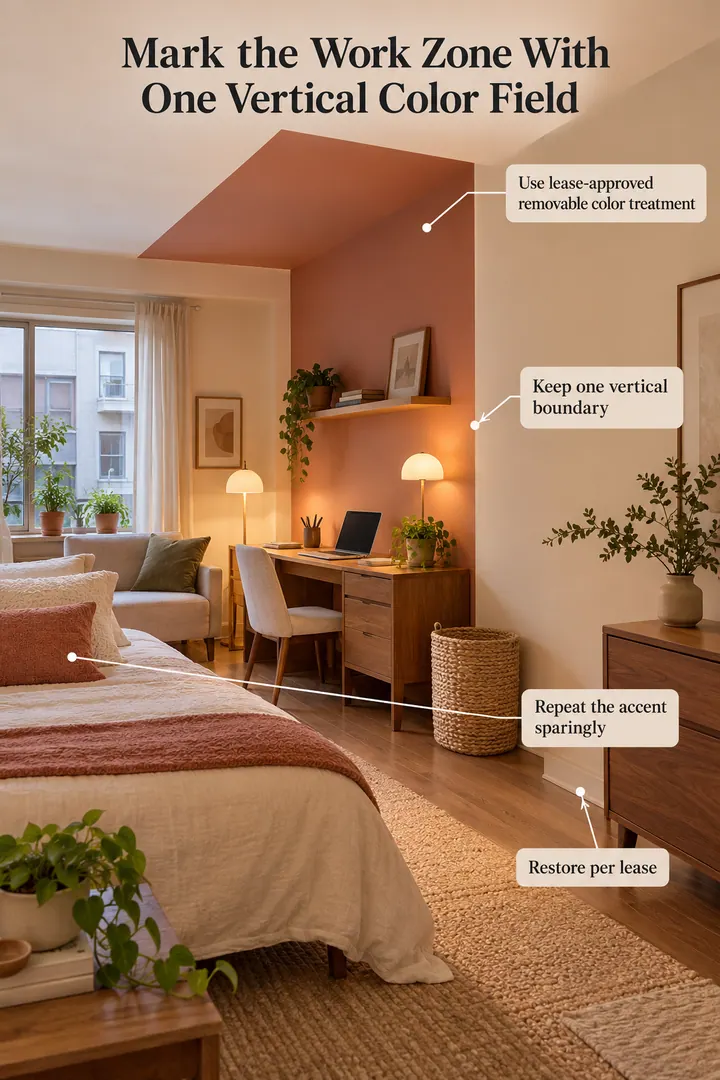
24. A ceiling-height color block
A lease-approved removable color treatment marks one vertical boundary between zones.
Before you buy anything
- Choose screens with a wide, stable base and fold them away from exits.
- Use rug pads to stop slipping and curling edges.
Questions people ask
How do I make zones in a studio apartment?
Use separate rugs and light for each zone, and add a folding screen or curtain where you need privacy.
Where should rugs go in a studio?
Under the front legs of the lounge furniture and under the dining table, with bare floor between zones.