Ideas · Home office
19 Small Desk Organization Ideas That Keep the Surface Clear
Wall levels, task shelves, side drawers, reset channels and end-of-day trays that make a narrow desk work for both screens and handwriting.
This guide has affiliate links. As an Amazon Associate we earn from qualifying purchases, at no extra cost to you. Learn more
A narrow desk fills up in a day: laptop, notebook, cables, a mug, three pens and yesterday's papers. Then there's no room to actually write.
The trick is to move everything that isn't today's work off the surface, to the wall, the sides and under the edge, and to reset at the end of each day.
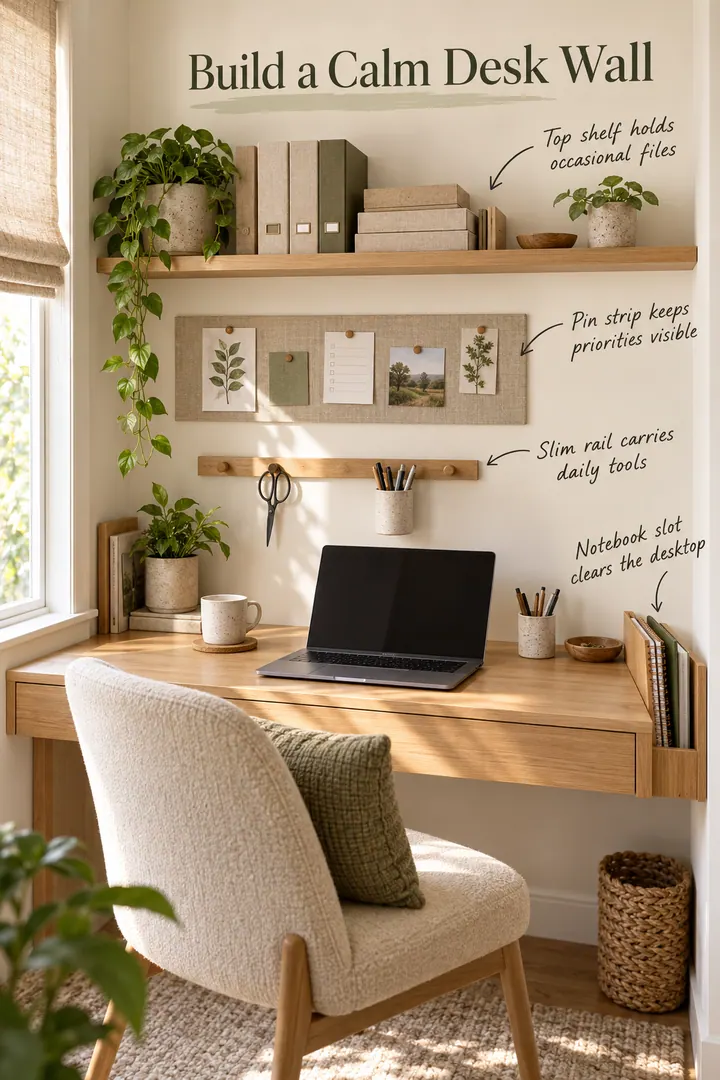
1. Separate levels on the wall
Current notes, daily tools, notebooks and occasional files each get their own level above the desk.
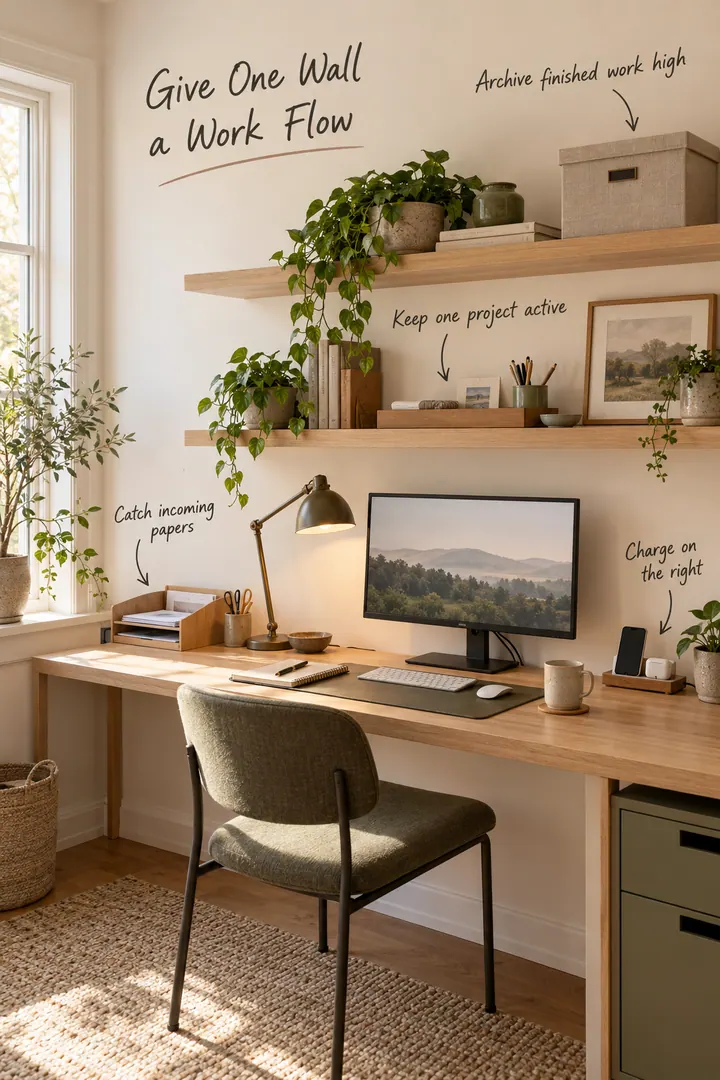
2. A workflow wall
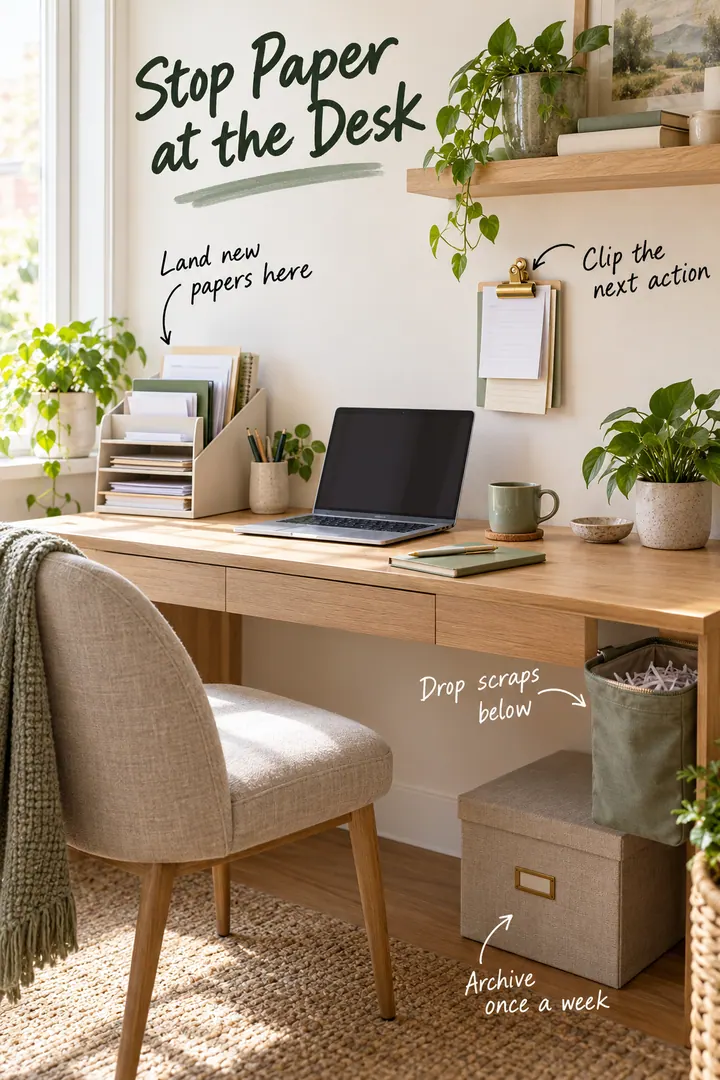
Give incoming papers, the current project, charging and finished files their own places so the surface stays clear.
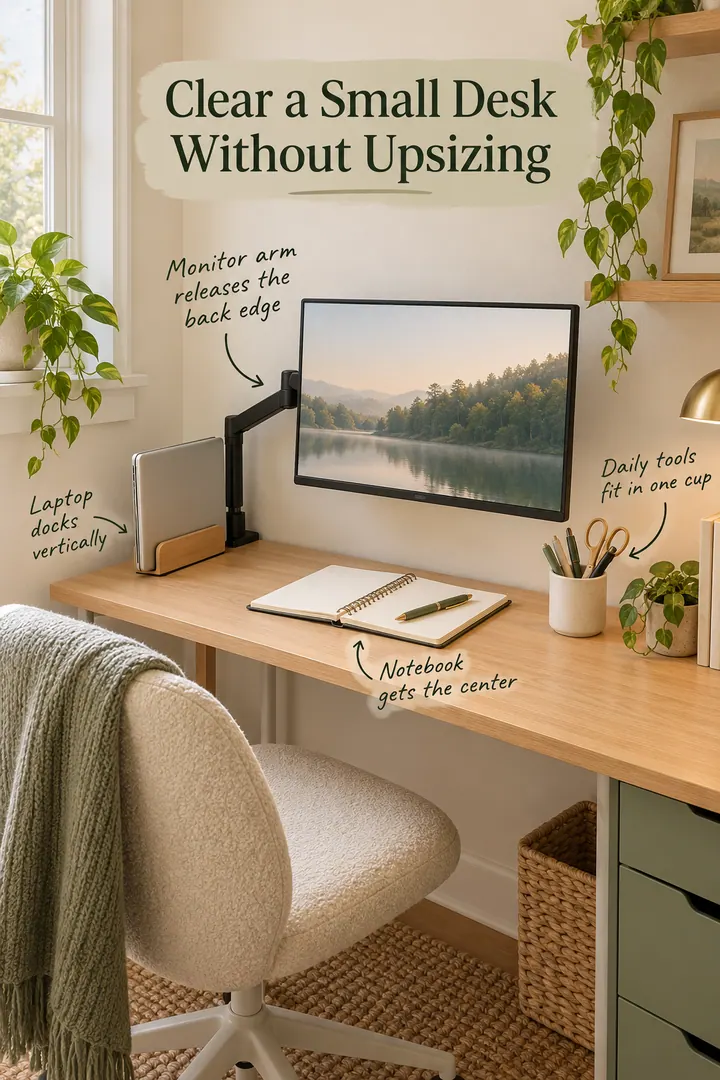
3. A monitor arm and a laptop dock
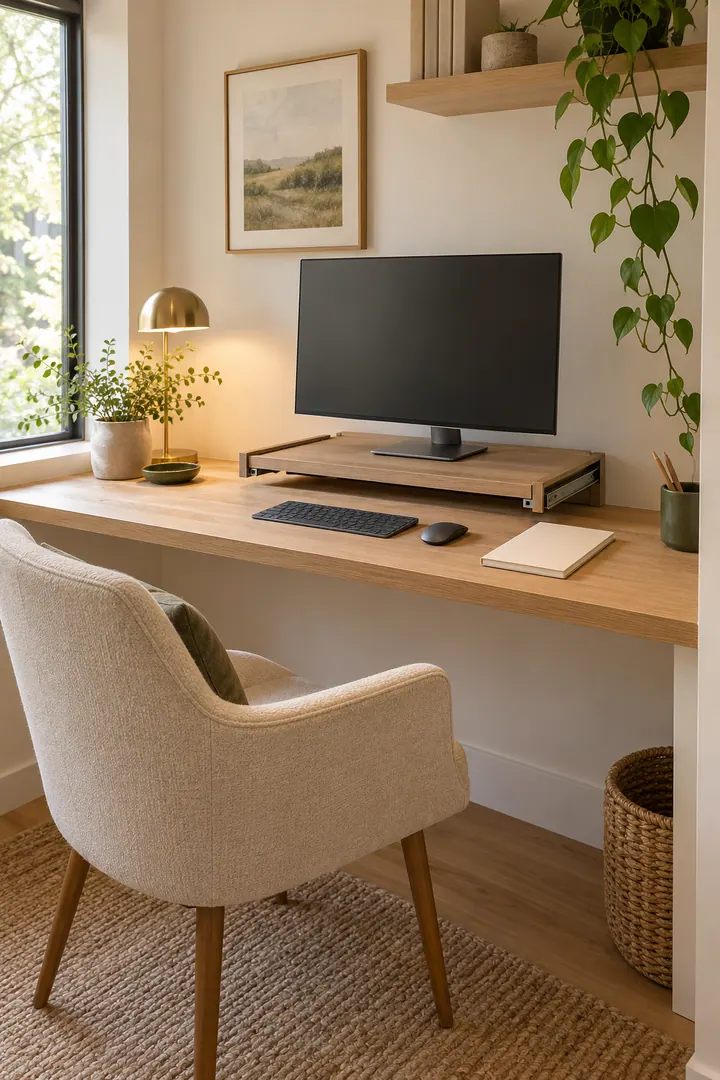
A monitor arm frees the back edge, a vertical dock keeps the closed laptop off the center and tools are limited to one cup.
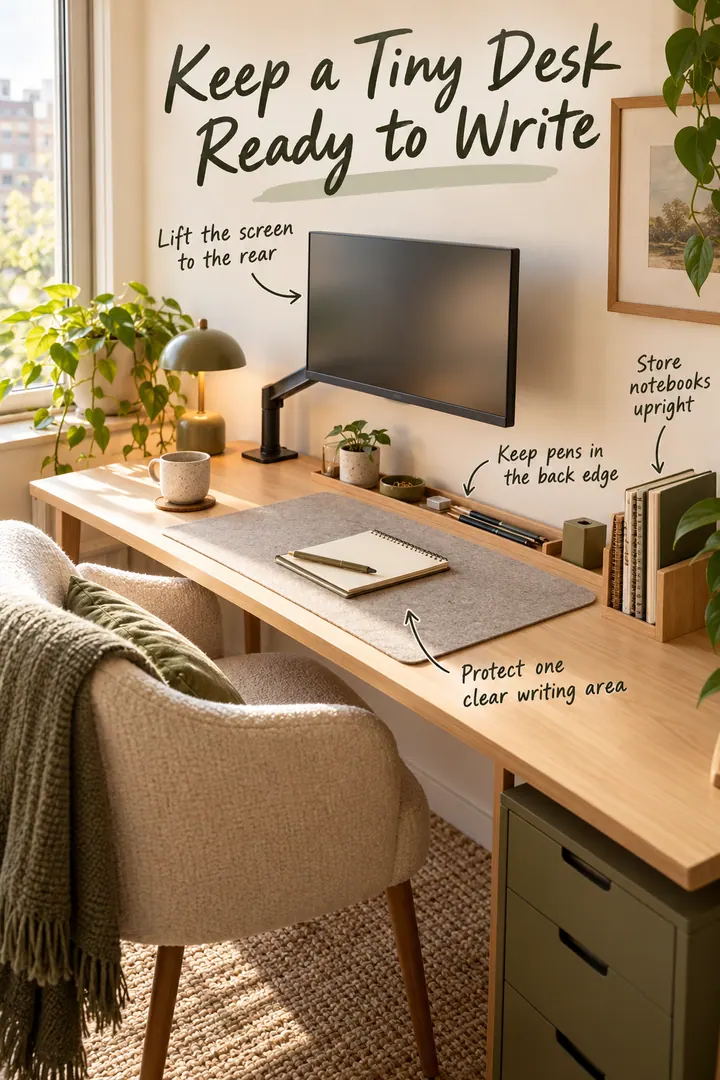
4. Screen and handwriting on one desk
Lift the screen to the back, keep a protected writing mat in front, file notebooks upright and pens in a narrow tray.
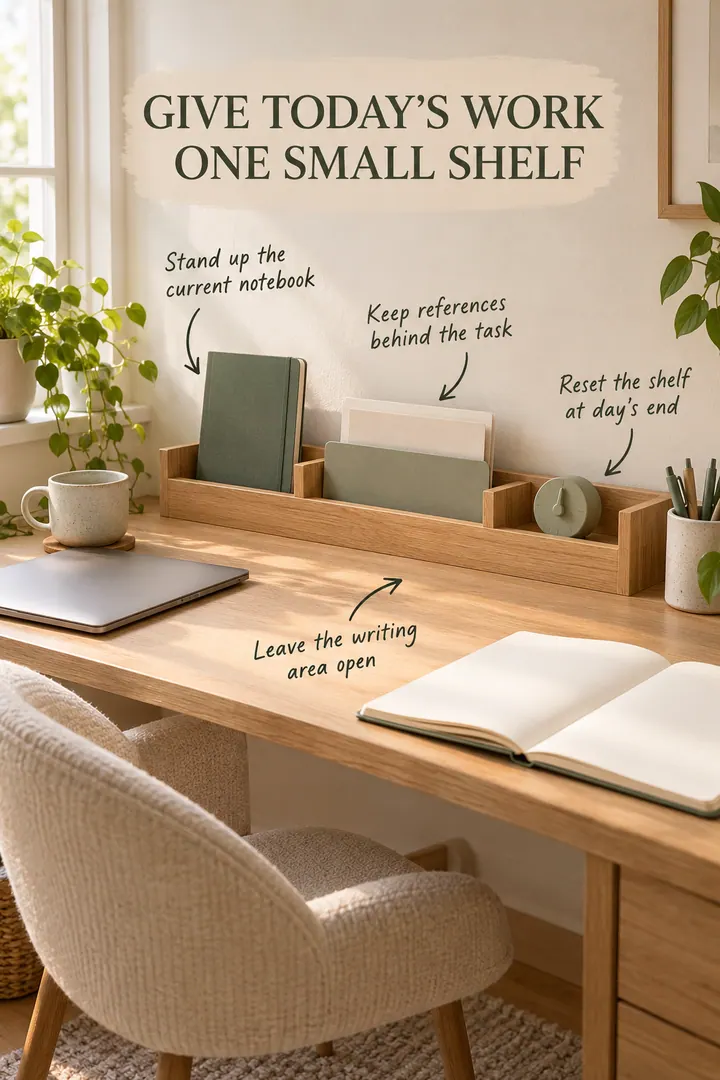
5. A stepped shelf for today's work
A narrow stepped shelf holds only the current notebook, one reference and a timer. Clear it at the end of the day.
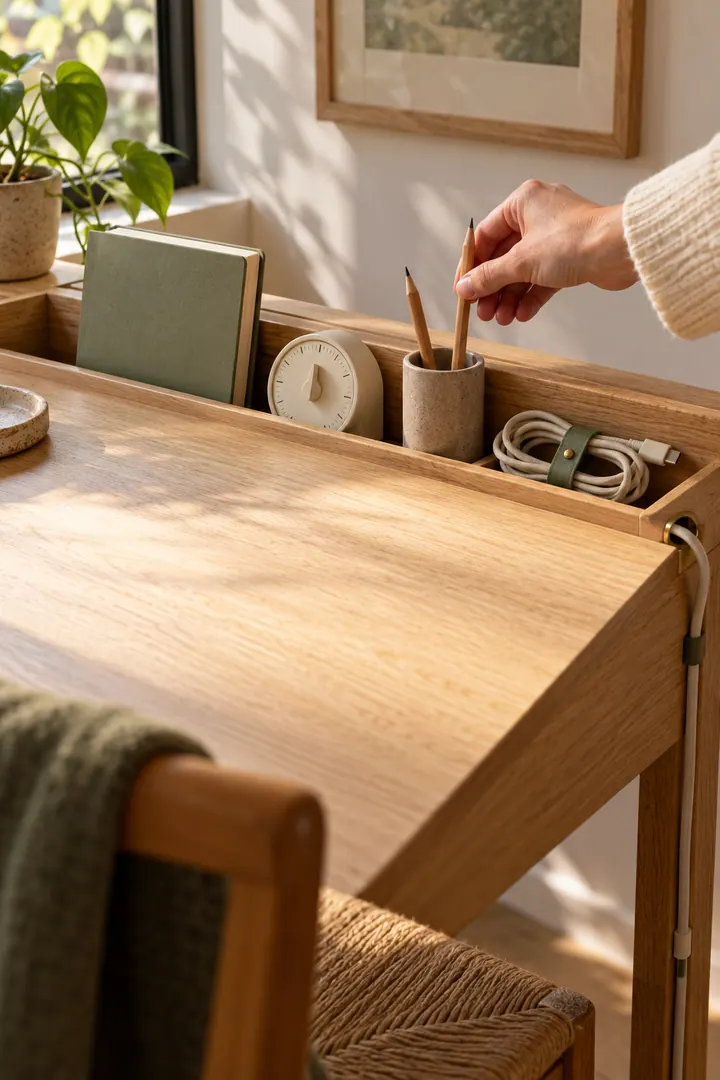
6. A reset channel along the back
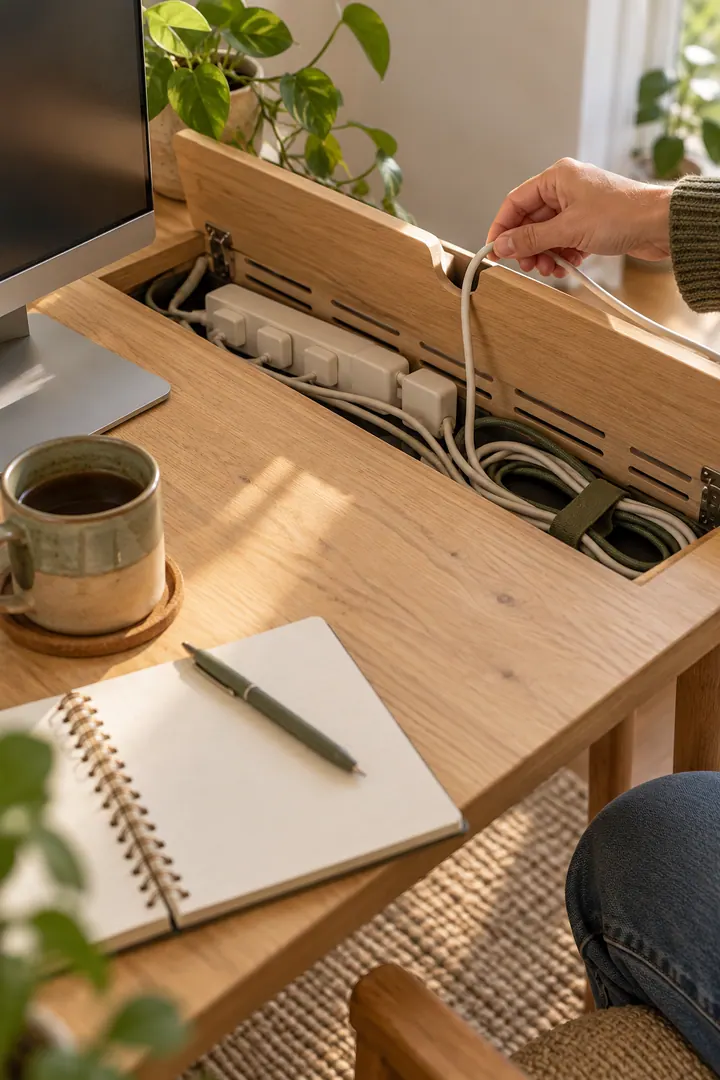
A narrow channel at the back of the desk holds the few tools for current work: notebook, timer, pencils, a charging lead.
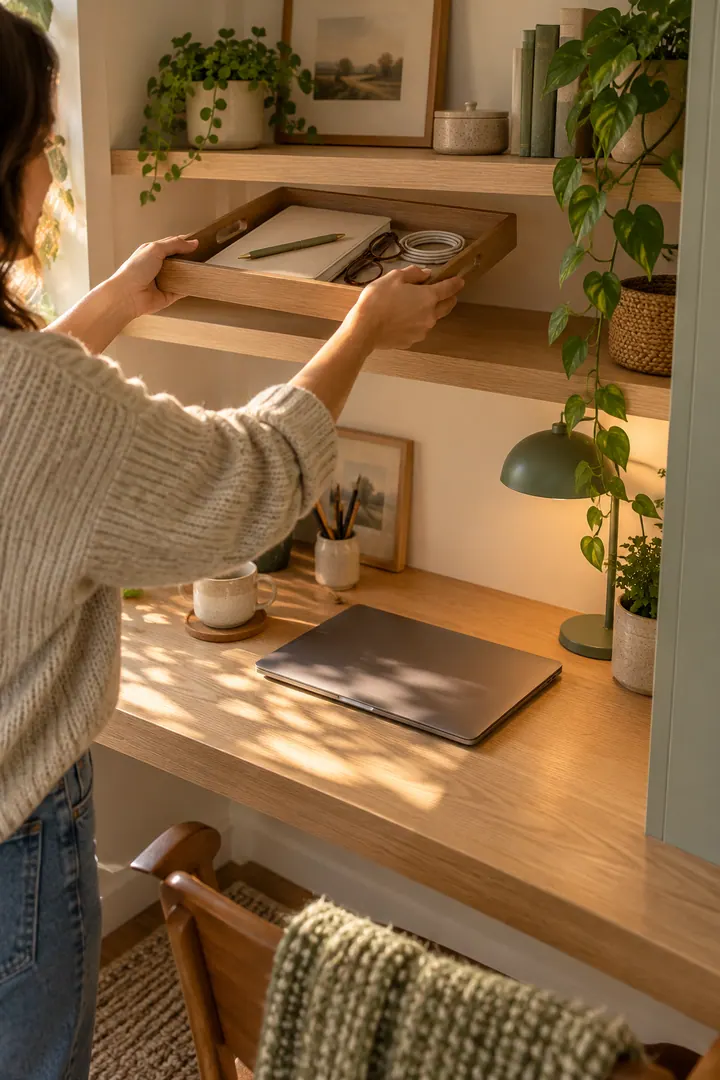
7. An end-of-day tray
Sweep loose items into one slim handled tray and move it to a shelf. The desk clears in one move.
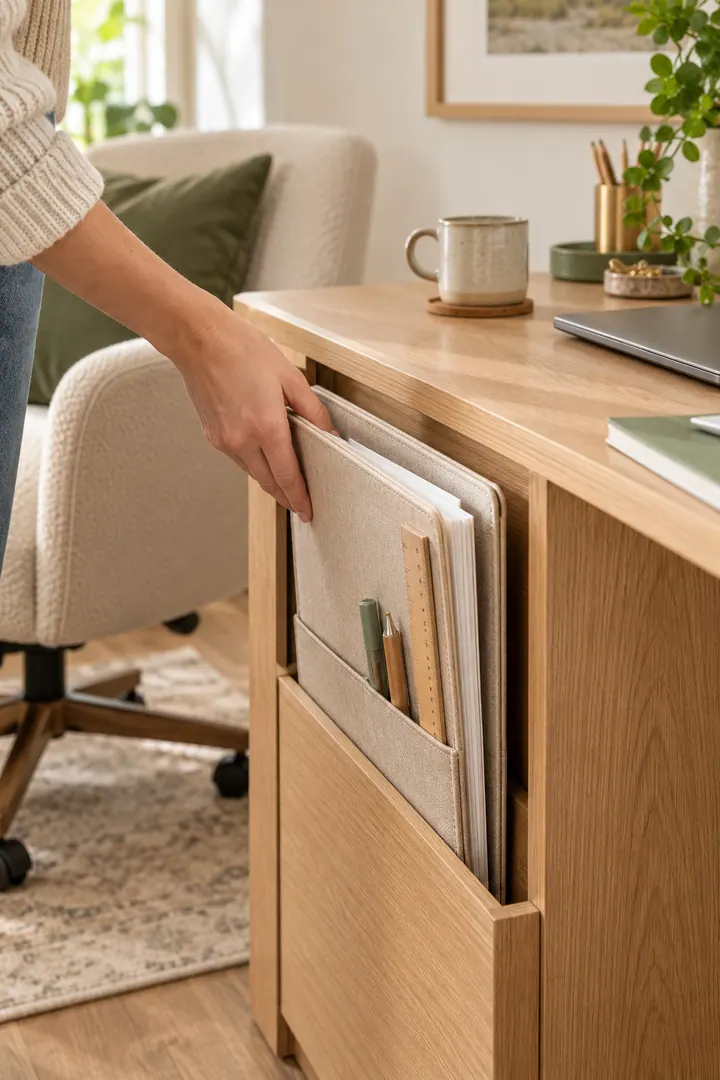
8. A project folio with its own slot
Keep one active project together in a structured folio that slides into a slot beside the desk.
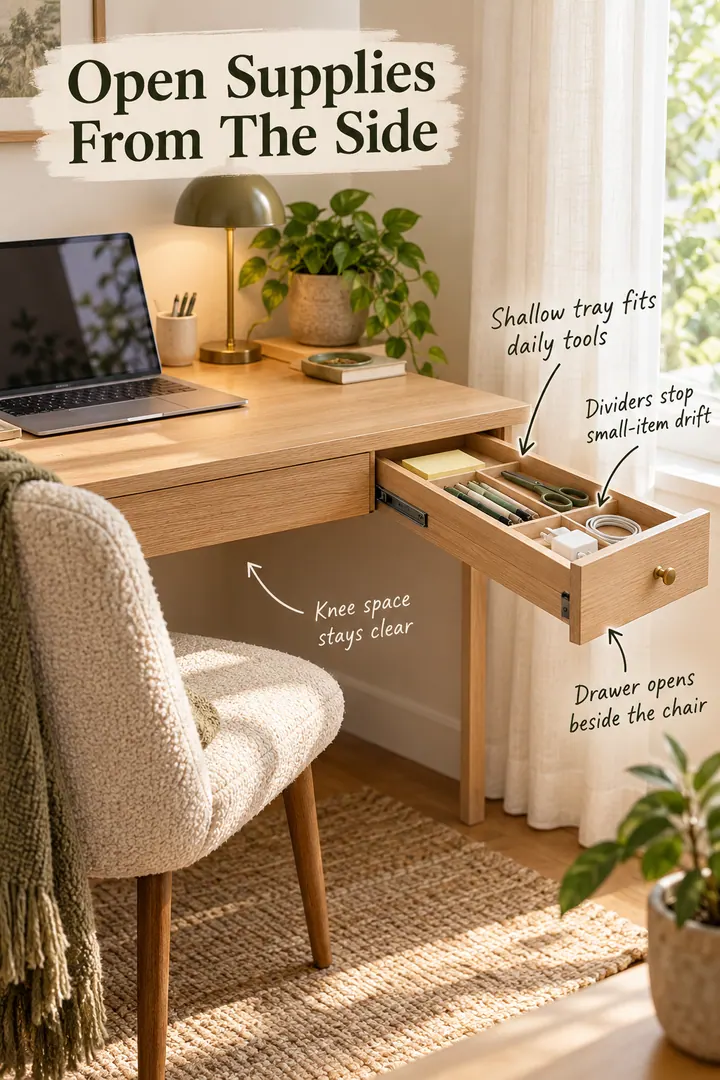
9. A side drawer for stationery
A shallow drawer opening from the short side of the desk keeps stationery beside the chair, not across the surface.
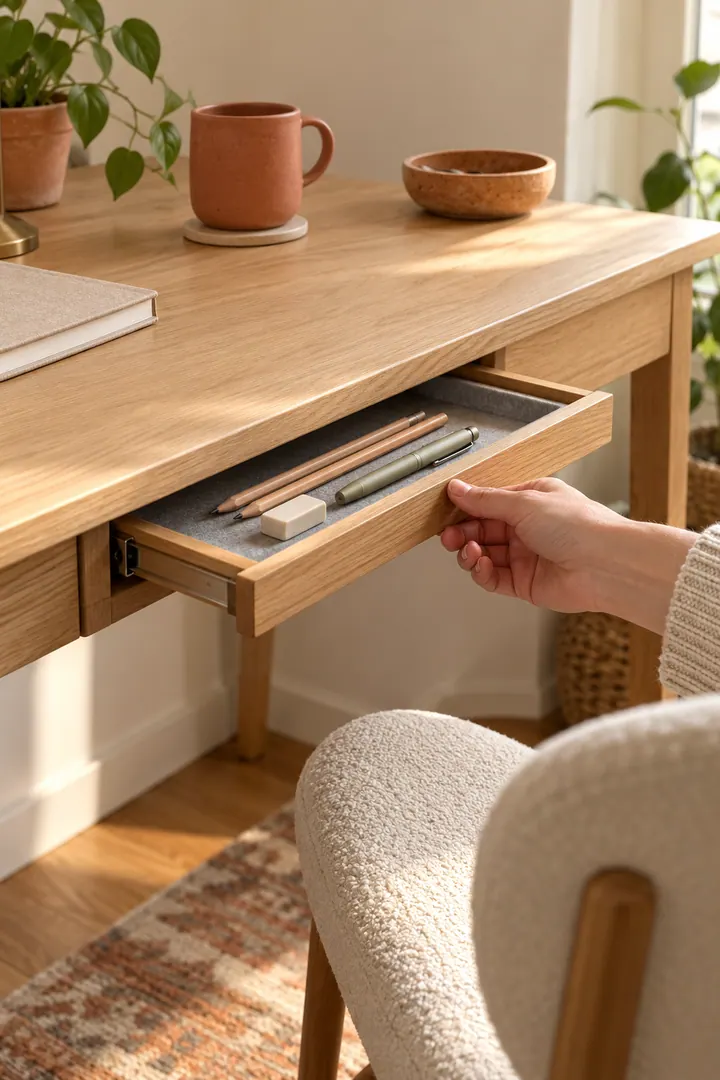
10. A pencil tray in the front edge
A slim tray built into the front edge keeps daily writing tools close without using surface space.
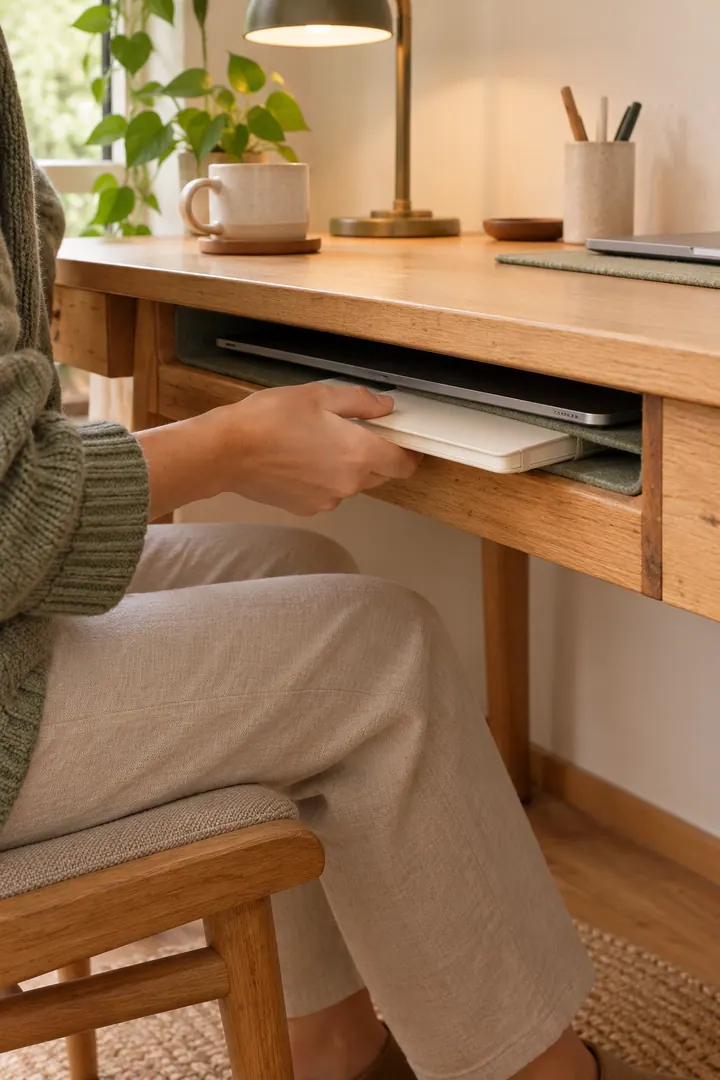
11. A notebook slot in the desk apron
A padded slot inside the apron holds the notebook or tablet you use most.
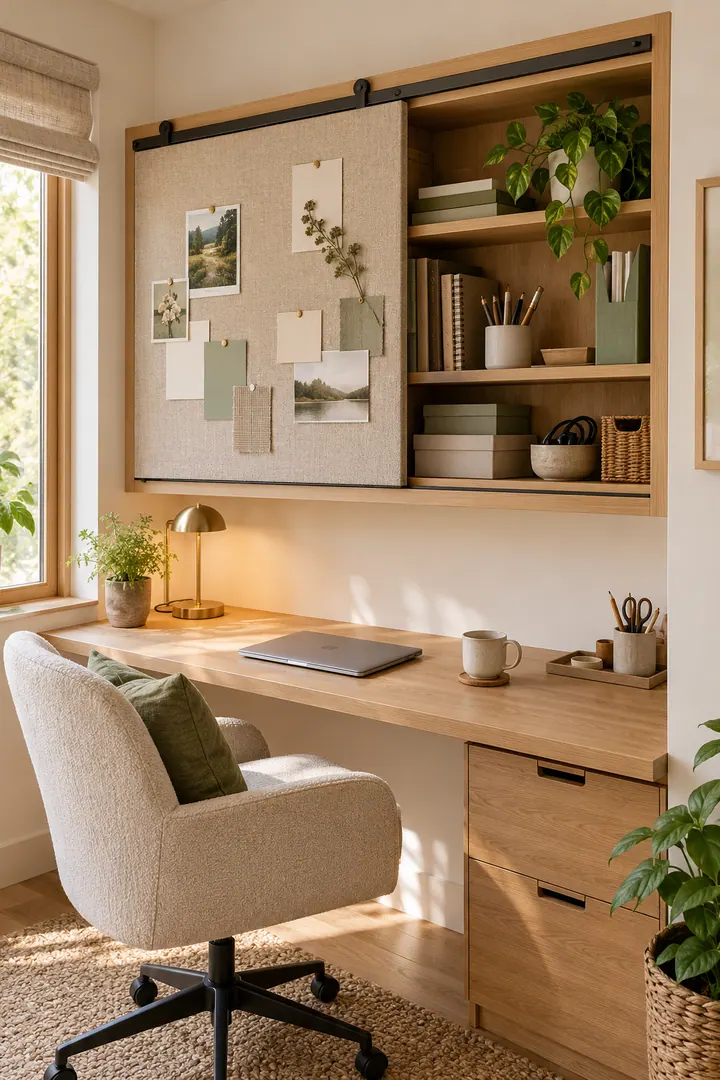
12. A hutch with a sliding pinboard
One sliding fabric panel is a pinboard while projects are active and a calm cover for supplies afterward.
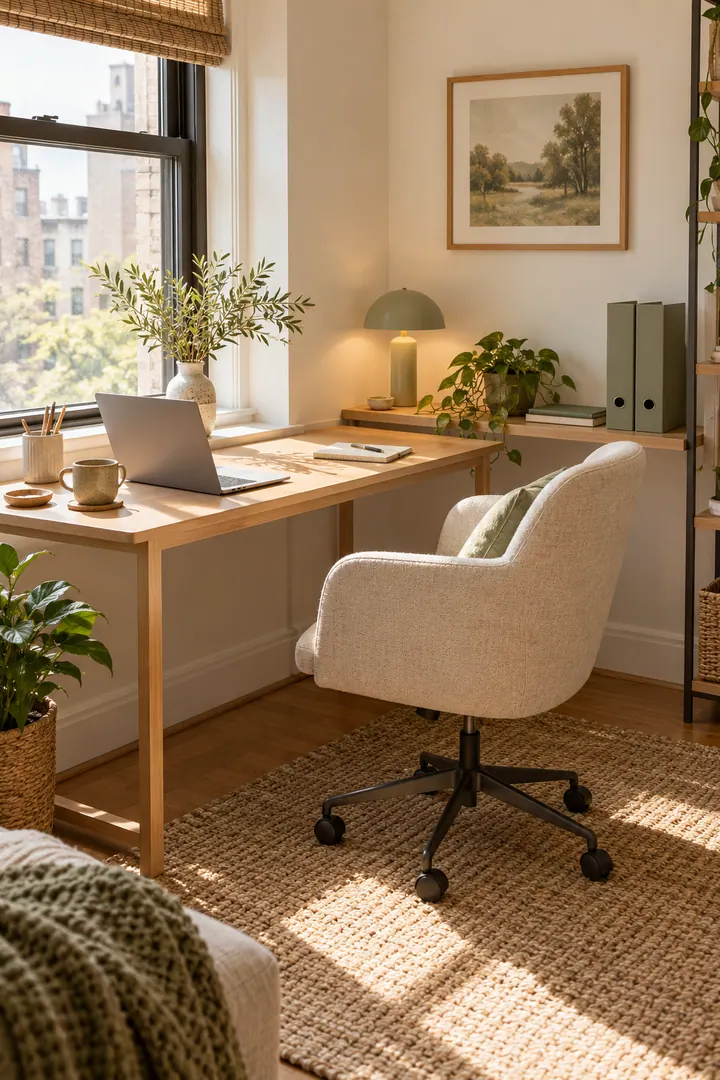
13. A perpendicular reference shelf
A slim shelf behind the work zone holds references and a lamp off the main surface.
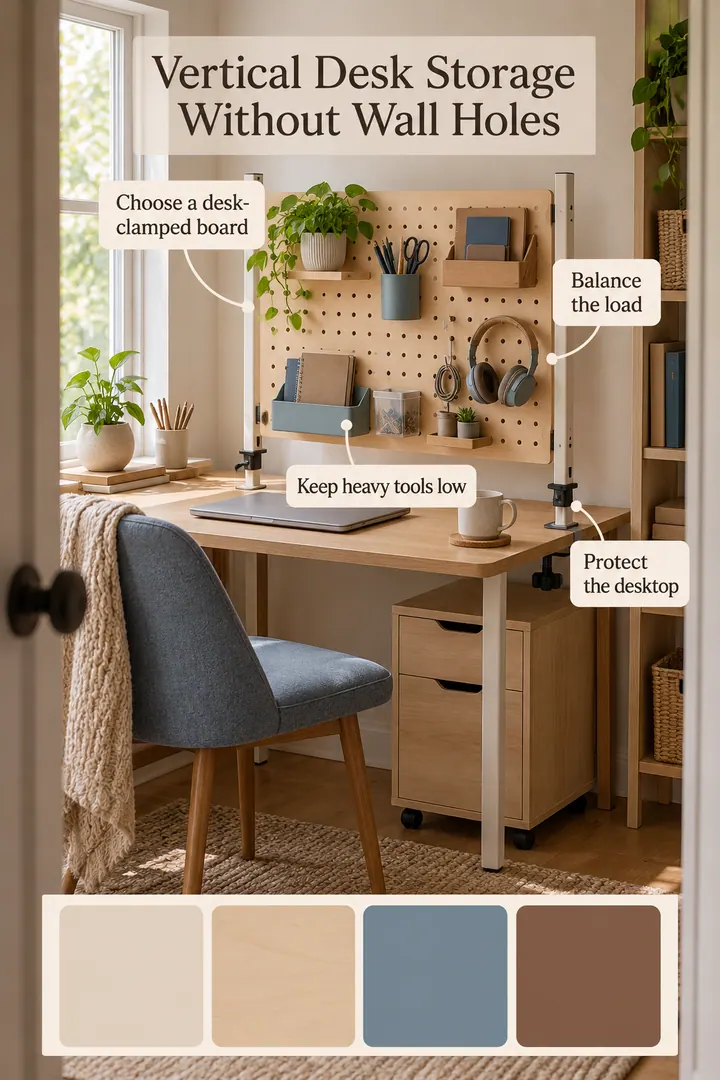
14. A desk-clamped pegboard
A pegboard clamped to the desk gives tools vertical storage. Keep heavy ones low.
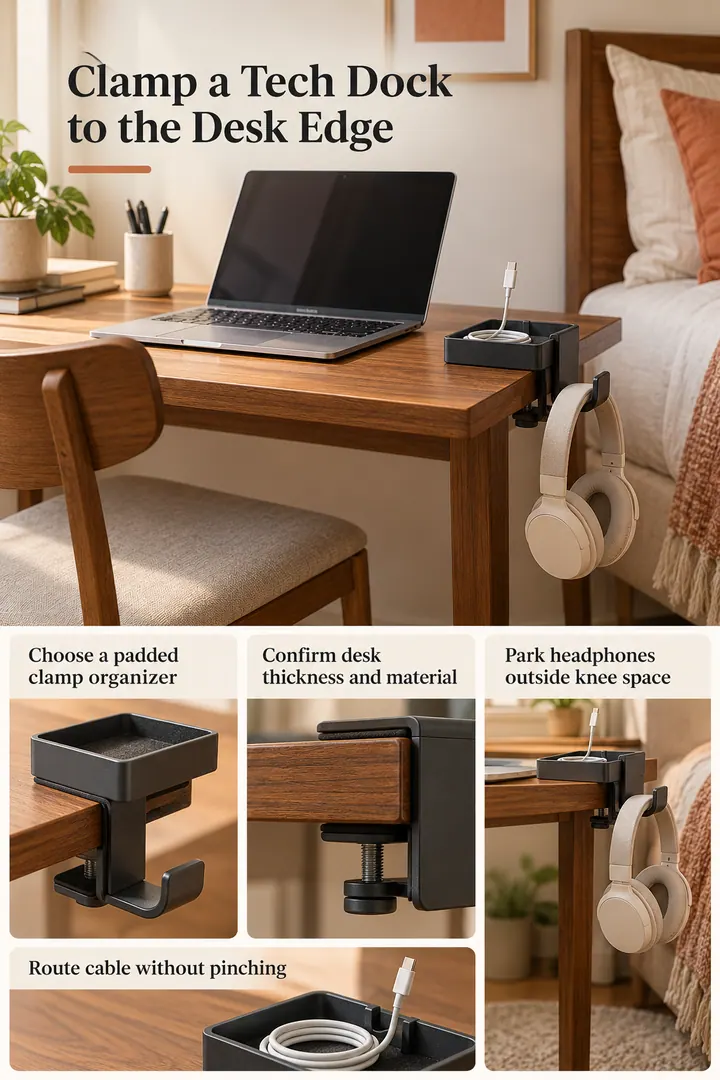
15. A clamp-on edge organizer
A padded clamp organizer on the desk edge holds headphones outside knee space. Confirm desk thickness.
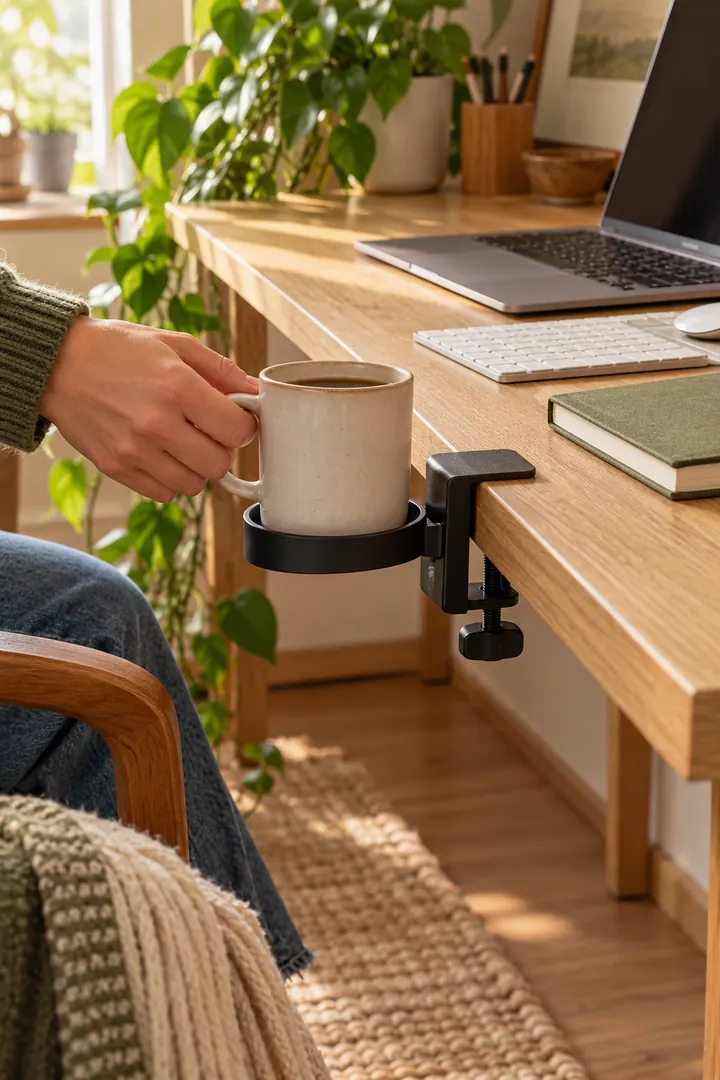
16. A clamp-on cup holder
A cup holder clamped to the outer edge keeps drinks close and away from electronics.
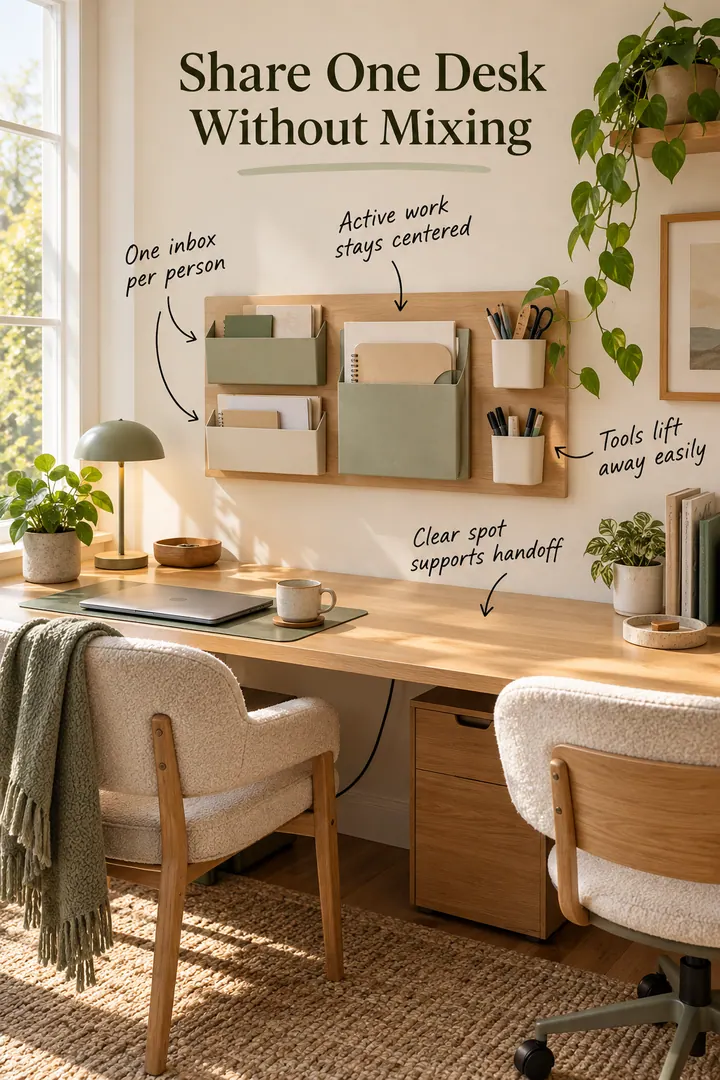
17. Organize a shared desk
Separate inboxes, a central pocket for active work, removable tool cups and one clear landing spot make switching users easy.
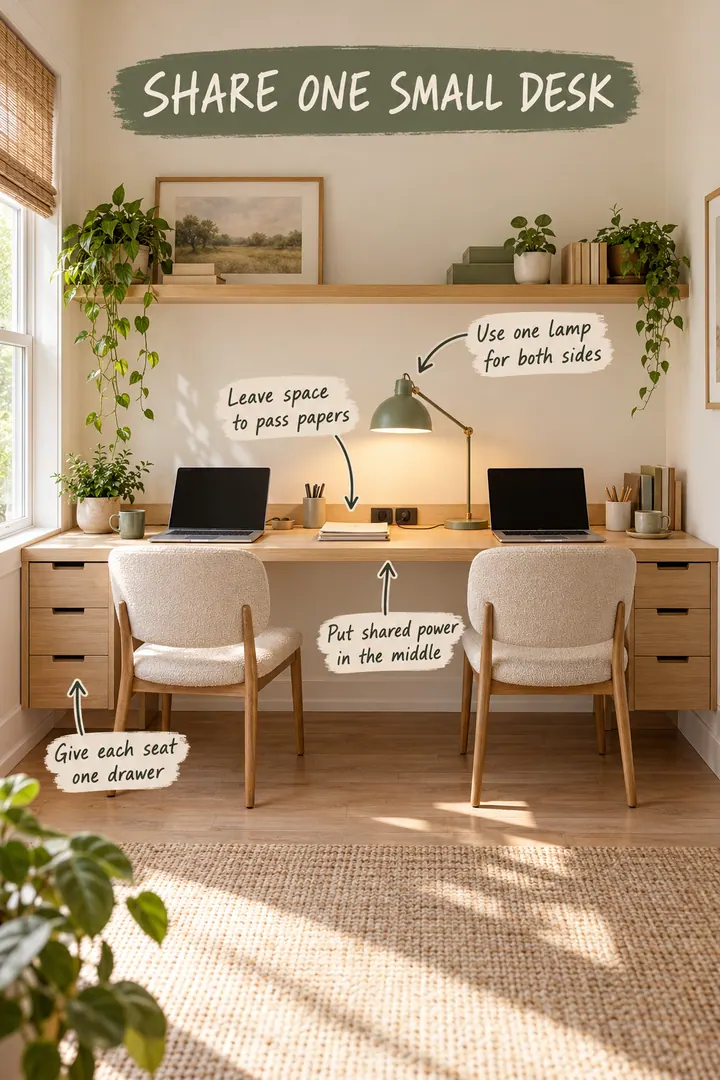
18. One long shallow desk for two
Give each person one drawer, put shared power in the center and keep a zone for passing papers.
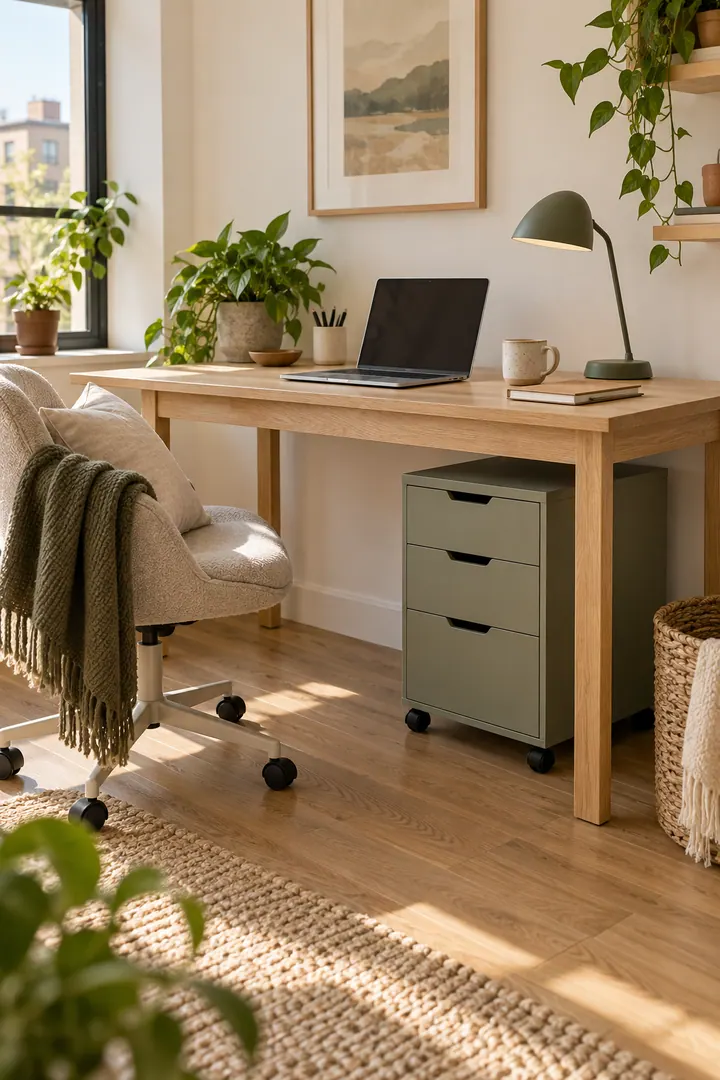
19. A rolling drawer under the desk
A rolling drawer unit tucks under a narrow desk and rolls out when you need supplies.
Before you buy anything
- Keep only today's work on the surface.
- Use the wall above the desk before buying desktop organizers.
Questions people ask
How do I organize a small desk?
Move supplies to the wall and under the edge, use a monitor arm or riser, limit tools to one cup and clear the desk into a tray at the end of each day.
How do I fit a computer and writing space on a narrow desk?
Push the screen to the back on an arm or riser and keep the front strip clear for a notebook.